
Welcome to New Hope Physiotherapy
- Brampton 905-846-4000
- Malton 905-364-3900
- Orangeville 519-217-9300
- admin@newhopephysio.com
Knee Pain During Pregnancy: Causes and Relief Tips
13 Nov 2026
Knee Pain During Pregnancy: Causes and Relief Tips
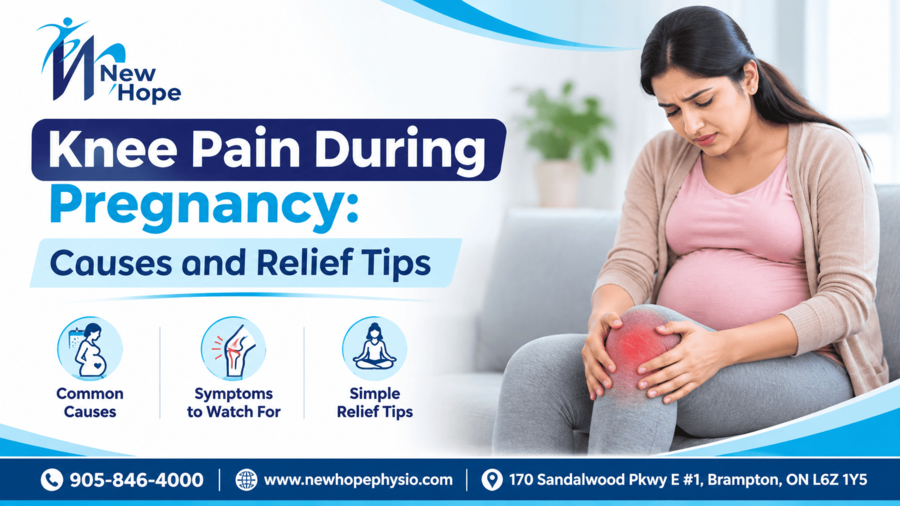
Pregnancy is a special time, but it also brings many changes to your body. One common problem is knee pain during pregnancy. You may notice knee pain while walking, climbing stairs, sitting, or sleeping.
As your baby grows, your body carries more weight. Pregnancy hormones also affect your joints and muscles. These changes can make your knees feel sore, stiff, or uncomfortable.
The good news is that many women can manage mild knee pain with simple home care, gentle exercises, and physiotherapy.
In this blog, we explain what causes knee pain, how to find relief, and when to seek professional help.
Also Read: Back Pain During Pregnancy: Causes, Symptoms, and Relief

What Causes Knee Pain During Pregnancy?
Several changes during pregnancy can affect your knees.
1. Weight Gain
As your baby grows, your body gains weight. This puts extra pressure on your knees, especially when standing or walking.
2. Hormonal Changes
Pregnancy hormones, including relaxin, help loosen the tissues that support your joints. This can change how your joints move and may increase discomfort.
3. Changes in Posture
Your growing belly changes your body’s balance. You may stand or walk differently, putting more stress on your knees.
4. Fluid Retention
Pregnancy can cause swelling in your legs and feet. This may make your knees feel tight or uncomfortable.
5. Muscle Weakness
Less physical activity can weaken the muscles around your knees. Weak muscles may provide less support during daily activities.
Also Read: Steps for Curing Sciatic Nerve Pain During Pregnancy?
Knee Pain During Different Stages of Pregnancy
Knee Pain During Pregnancy: First Trimester
Knee pain in the first trimester may occur because of hormonal changes, existing knee problems, or changes in physical activity. However, knee pain is not always caused by pregnancy.
Knee Pain During Pregnancy: Third Trimester
Knee pain may become more noticeable during the third trimester because of increased body weight, swelling, and changes in walking posture.
Simple movements, such as climbing stairs or getting out of a chair, may become uncomfortable.
Left Knee Pain During Pregnancy
Some women experience pain in only one knee.
Left knee pain during pregnancy may develop because of muscle strain, an old injury, or uneven pressure on the legs.
If one leg becomes suddenly swollen, red, warm, or painful, seek urgent medical attention.
Also Read: 10 Safe Ways to Treat Neck Pain during Pregnancy
How to Get Knee Pain Relief During Pregnancy
Here are some simple ways to reduce discomfort.
- Take short breaks: Avoid standing for long periods.
- Use cold packs: Apply a wrapped ice pack for 10–15 minutes to help relieve pain or swelling.
- Wear comfortable shoes: Choose supportive footwear with good cushioning.
- Elevate your legs: Rest with your legs supported when possible.
- Stay active: Gentle walking or swimming may help reduce stiffness.
- Maintain good posture: Avoid locking your knees when standing.
- Try physiotherapy: A physiotherapist can recommend exercises suited to your pregnancy.
Avoid taking pain medication or using medicated creams without checking with your pregnancy healthcare provider.
Safe Knee Pain Exercises During Pregnancy
Gentle movement can help strengthen your muscles and improve comfort. Get clearance from your pregnancy healthcare provider before starting new exercises.
1. Seated Knee Extensions
Sit on a sturdy chair. Slowly straighten one knee, then lower your foot. Repeat 8–10 times on each side, as comfortable.
2. Standing Heel Raises
Hold a chair for support. Slowly lift your heels off the floor, then lower them. Repeat 8–10 times.
3. Gentle Walking
Walk on a flat surface at a comfortable pace. Start with short walks and increase gradually if you feel comfortable.
Stop any exercise that causes pain, dizziness, or discomfort. Avoid deep squats, jumping, or movements that put excessive pressure on painful knees.
Walking, swimming, and stationary cycling are generally suitable for uncomplicated pregnancies.
Also Read: 5 Common Types of Back Pain You Should Know
Knee Pain Treatment at Home
For mild knee pain, home care may help.
- Place a pillow between your knees while sleeping on your side.
- Use a warm, not hot, compress for muscle stiffness.
- Avoid sitting with your knees bent for too long.
- Drink enough water throughout the day.
- Stretch gently without forcing your joints.
If home remedies do not help, consider a professional assessment.
Can Physiotherapy Help with Knee Pain During Pregnancy?
Physiotherapy may help manage knee pain by improving muscle strength, joint movement, and balance.
A physiotherapist will evaluate your symptoms and come up with a suitable treatment program for you. This treatment program may involve exercises, good posture and modification of activities.
If you are searching for knee pain treatment in Mississauga, knee pain treatment in Brampton, or knee pain treatment near me, New Hope Physiotherapy offers assessment and personalized rehabilitation services.
Also Read: Shoulder Pain Solutions: 7 Essential Exercises for Quick Relief
When Should You See a Healthcare Professional?
Speak with your healthcare provider if:
- Knee pain continues or becomes worse.
- Your knee frequently locks or gives way.
- Walking becomes difficult.
- You develop significant swelling.
- Pain affects your sleep or everyday activities.
Swelling and pain on one leg along with warmness and redness should always be evaluated immediately because it can mean that there is a blood clot. Chest pain and problems with breathing require immediate attention.
Also Read: What Should You Not Do After Cupping?
15 Frequently Asked Questions About Knee Pain During Pregnancy
1. What can I do to relieve knee pain during pregnancy?
Rest when needed, wear supportive shoes, use wrapped cold packs, and try gentle exercises. Physiotherapy may also help reduce discomfort.
2. What is the fastest way to relieve knee pain?
For mild pain, resting your knee and applying a wrapped ice pack for 10–15 minutes may provide temporary relief. The best approach depends on the cause.
3. Why am I having knee pain during pregnancy?
Common causes include weight gain, hormonal changes, muscle weakness, swelling, and changes in posture.
4. What are some home remedies for knee pain during pregnancy?
Try gentle walking, cold packs, comfortable shoes, leg elevation, and supportive sleeping positions. Avoid activities that worsen your symptoms.
5. Is joint pain normal during pregnancy?
Mild joint discomfort is common because pregnancy changes your weight, balance, and joint support. Severe or persistent pain should be assessed.
Also Read: 10 Gentle Workouts to Help Lower Back Pain at Home
6. Is heat or ice better for knee pain?
Ice may help with swelling and recent irritation. Gentle warmth may help with muscle stiffness. Avoid excessive heat, and protect your skin with a towel.
7. When does knee pain start in pregnancy?
Knee pain can begin at any stage. Some women notice discomfort early, while others experience it during the second or third trimester.
8. What vitamin am I lacking if my knees hurt?
Knee pain does not necessarily mean you have a vitamin deficiency. Low vitamin D may contribute to muscle or bone discomfort. Ask your doctor whether testing is needed before taking extra supplements.
9. How can I relieve knee pain at night?
Sleep with a pillow between your knees, avoid uncomfortable positions, and gently stretch your legs before bedtime if approved by your healthcare provider.
10. What sleeping position is best for knee pain?
Side sleeping with a pillow between your knees may reduce pressure and improve comfort. Later in pregnancy, side sleeping is generally recommended.
Also Read: 5 Quick Home Remedies for Leg Cramp Relief and Prevention
11. How can I cure knee pain during pregnancy?
There is no single cure because treatment depends on the cause. Gentle exercises, activity changes, and physiotherapy may improve symptoms. Some pregnancy-related discomfort improves after delivery.
12. Can knee pain during pregnancy predict a boy or girl?
No. Knee pain during pregnancy cannot predict whether you are having a boy or girl. There is no scientific evidence supporting this belief.
13. Is walking good for knee pain during pregnancy?
Gentle walking may help maintain strength and joint movement. Choose comfortable shoes and stop if your pain increases.
14. Can pregnancy cause pain in only one knee?
Yes. One knee may experience more pressure because of an old injury, muscle imbalance, or changes in movement. Sudden one-sided leg swelling or pain needs urgent medical attention.
15. When should I consider physiotherapy for pregnancy knee pain?
Consider physiotherapy when knee pain affects walking, climbing stairs, sleeping, or daily activities. A physiotherapist can assess your movement and suggest pregnancy-appropriate exercises.
Also Read: Frozen Shoulder vs. Rotator Cuff Tear: Key Differences and Symptoms
Get Knee Pain Treatment in Brampton and Mississauga
Are you experiencing knee pain during pregnancy? You do not have to ignore ongoing discomfort.
At New Hope Physiotherapy, our team provides personalized physiotherapy services to help patients manage knee pain, improve mobility, and stay active.
Whether you need knee pain relief, safe knee pain exercises, or professional rehabilitation advice, our physiotherapy team can help you explore suitable treatment options.
New Hope Physiotherapy
170 Sandalwood Pkwy E, Unit 1, Brampton, ON L6Z 1Y5
905-846-4000
Medical disclaimer: This blog provides general educational information and is not a substitute for medical advice. Always consult your pregnancy healthcare provider before starting exercises or treatment.
Gauravdeep Randhawa – Physiotherapist
Gauravdeep Randhawa is a caring and experienced physiotherapist with over 17 years of experience helping patients recover and improve their quality of life.
She started her own practice in Canada in 2009 and has treated many patients with muscle, joint, sports, neurological, and pelvic health conditions. She has also owned and operated multidisciplinary clinics.
Gauravdeep is a Certified Manual Therapist and has completed training in Contemporary Medical Acupuncture and Pelvic Floor Therapy. She uses hands-on treatment, personalized exercise programs, and evidence-based care to support each patient’s recovery.
Her goal is to help people reduce pain, restore movement, improve function, and achieve long-term wellness in a comfortable and supportive environment.
Also Read: Neck Pain Solutions: Quick 5-Minute Exercises for Daily Relief
Leave a Comment