
Welcome to New Hope Physiotherapy
- Brampton 905-846-4000
- Malton 905-364-3900
- Orangeville 519-217-9300
- admin@newhopephysio.com
5 Quick Home Remedies for Leg Cramp Relief and Prevention
 3 Jun 2025
- newhope
- 0 Comments
- 22167
5 Quick Home Remedies for Leg Cramp Relief and Prevention
Leg cramps are often sudden and may cause extreme pain for periods of ten seconds up to many minutes. A charley horse is a sudden, involuntary muscle cramp, most often affecting the calf. It can cause intense pain and may make it difficult to carry out daily activities or sleep comfortably. If you get leg cramps at night or on your muscles during the day, being aware of how to manage and avoid them naturally is very useful. Here are five ways you can quickly treat and stop leg cramps at home.
Also Read: What Is The Fastest Way To Cure Shoulder Pain?
5 Quick Home Remedies for Leg Cramp Relief
Also Read: Unravelling the Mystery: Dry Needling vs. Acupuncture
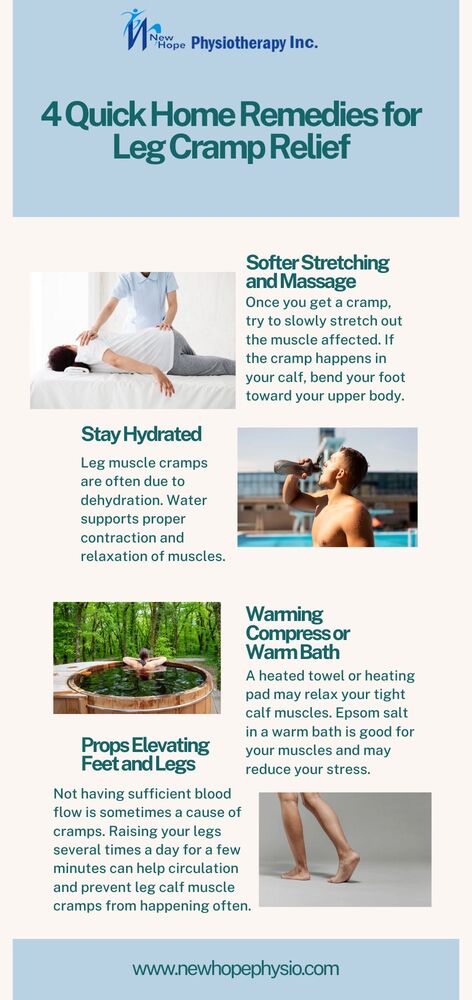
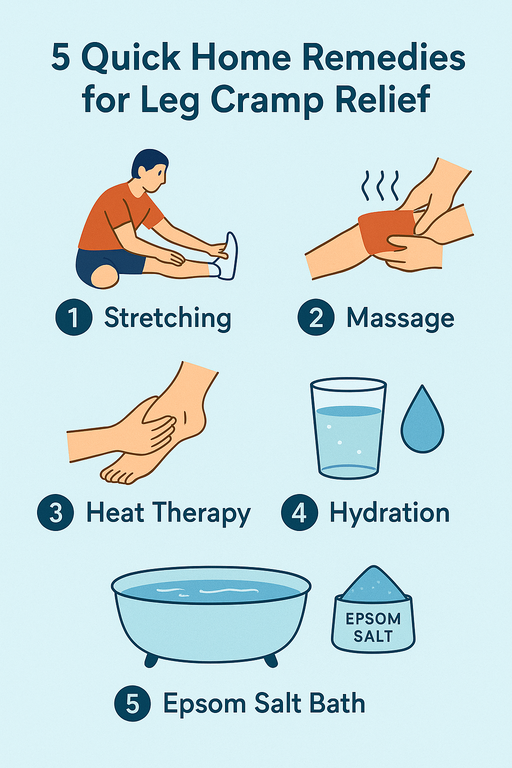
1. Gentle Stretching and Massage
Once you get a cramp, try to slowly stretch out the muscle affected. If the cramp happens in your calf, bend your foot toward your upper body. Stretch the area out and then use gentle circles to massage it. It may improve blood circulation and ease the tension the muscle spasm causes. Stretching your legs daily before you sleep may prevent cramps at night.
Also Read: 5 Common Types of Back Pain You Should Know
2. Stay Hydrated
Dehydration may contribute to muscle cramps, particularly after heavy sweating or exercise. Water supports proper contraction and relaxation of muscles. Drink enough water during the day, mostly when it’s very hot or after exercising. Some electrolyte-rich drinks can make up for the minerals that are lost during sweat.
Also Read: National Physiotherapy Month 2026: Call Now for Same-Day Appointment
Also Read: Knee Pain After Sitting Too Long: Causes and Tips
3. Warming Compress or Warm Bath
A heated towel or heating pad may relax your tight calf muscles. Epsom salt in a warm bath is good for your muscles and may reduce your stress. Applying heat to an injury makes blood vessels expand and speeds up muscle recovery.
Also Read: 5 Conditions Causing Your Shoulder Pain
4. Healthy Foods High in Magnesium and Potassium
It is possible for a mineral deficiency to bring about leg cramps. Have more leafy greens, nuts, seeds, bananas, avocados and sweet potatoes in your meals to meet your need for magnesium and potassium. Pregnant individuals with leg muscle cramps must be extra attentive to nutrition requirements.
Also Read: 10 Best Exercises for Lower Back Pain Relief
5. Props Elevating Feet and Legs
Not having sufficient blood flow is sometimes a cause of cramps. Raising your legs several times a day for a few minutes can help circulation and prevent leg calf muscle cramps from happening often. Lying with a pillow beneath your calves supports healthy blood circulation while you are asleep.
These are good home remedies for quickly relieving muscle cramps. Still, having serious or lasting cramping means you should talk to a doctor, especially if it happens with another medical issue.
Also Read: Two types of Chiropractor
Also Read: The Path to Becoming an Acupuncturist in Canada: How Long Does It Take?
Can Physiotherapy Help With Recurring Leg Cramps?
Yes, physiotherapy may help if you experience leg cramps again and again. Leg cramps can happen because of tight muscles, muscle weakness, overuse, poor flexibility, or changes in physical activity. Sometimes, there may be other reasons behind frequent cramps.
A physiotherapist can assess your legs, muscles, joints, strength, flexibility, and movement to better understand what may be contributing to the problem.
Depending on your needs, physiotherapy for recurring leg cramps may include:
- Gentle stretching: Helps improve flexibility and reduce muscle tightness.
- Strengthening exercises: Helps support the muscles and improve their ability to handle daily activities.
- Massage and hands-on therapy: May help relax tight muscles and improve movement.
- Movement advice: A physiotherapist can identify movements or activities that may be putting extra stress on your muscles.
- Home exercises: Simple exercises and stretches can help you manage symptoms and reduce the chance of cramps returning.
If your leg cramps happen often, disturb your sleep, or make walking and exercise difficult, consider speaking with a healthcare professional. A physiotherapist can assess your symptoms and develop a treatment plan based on your individual needs.
If you are looking for physiotherapy in Brampton for recurring leg cramps, New Hope Physiotherapy can help assess your condition and recommend appropriate treatment. Call 905-846-4000 to book an appointment at our Brampton clinic.
Also Read: Managing Scoliosis in the Elderly: Key Exercises for Better Spine Alignment
Medical Disclaimer:
This content is for general information only and is not a substitute for professional medical advice, diagnosis, or treatment. If leg cramps are severe, frequent, persistent, or linked with swelling or other unusual symptoms, consult a qualified healthcare professional.
FAQs
Q1. What are the usual reasons why people get leg cramps?
Dehydration, imbalanced electrolytes, excessive sitting or standing for long, hard workouts and some medications are the main reasons for leg muscle cramps. Also, decreased circulation and being pregnant can lead to this condition.
Also Read: 10 Gentle Workouts to Help Lower Back Pain at Home
Q2. How can you quickly get rid of leg cramps?
To ease a leg cramp quickly, stretch, massage the muscle tenderly, heat the area and try drinking water with electrolytes. Most of the time, these moves will quickly stop a cramp.
Q3. Can leg cramps be common for pregnant women?
Leg muscle cramps can take place during pregnancy, stressing the muscles more as the pregnancy gets closer to the third trimester. Good hydration, a healthy diet high in minerals and using the foot rest during your flight will often help.
Also Read: Shoulder Pain Solutions: 7 Essential Exercises for Quick Relief
Q 4: What should I do when a leg cramp starts suddenly?
When a leg cramp starts, gently stretch the affected muscle and massage the area. Walking slowly or applying a warm towel can also help relax the muscle and reduce pain.
Q 5: Can drinking water help prevent leg cramps?
Yes. Dehydration is a common cause of leg cramps. Drinking enough water throughout the day helps keep your muscles working properly and may reduce the risk of cramps.
Q 6: Is a warm compress good for leg cramps?
Yes. Applying a warm compress or taking a warm bath can improve blood flow and relax tight muscles, providing quick relief from leg cramps.
Also Read: What Should You Not Do After Cupping?
Q 7: What foods can help prevent leg cramps?
Foods rich in potassium, magnesium, and calcium, such as bananas, spinach, yogurt, and nuts, may help prevent muscle cramps and support healthy muscle function.
Q 8: Can stretching help stop leg cramps from coming back?
Yes. Regular stretching, especially before bed and after exercise, can keep muscles flexible and reduce the chances of future leg cramps.
Also Read: 10 Safe Ways to Treat Neck Pain during Pregnancy
Leave a Comment