

Welcome to New Hope Physiotherapy
- Brampton 905-846-4000
- Malton 905-364-3900
- Orangeville 519-217-9300
- admin@newhopephysio.com
10 Gentle Workouts to Help Lower Back Pain at Home
 7 Jul 2025
- newhope
- 0 Comments
- 43240
10 Gentle Workouts to Help Lower Back Pain at Home
Lower back pain can make sitting, walking, bending, and even sleeping uncomfortable. The good news is that gentle movement may help reduce stiffness and improve mobility. Below are 10 simple lower back pain exercises you can try at home. Start slowly, and stop any exercise that significantly increases your pain.
Also Read: Upper Back Pain vs. Lower Back Pain
Book your appointment with New Hope Physiotherapy in Brampton today. Call 905-846-4000 to get started.
10 Gentle Workouts to Help Lower Back Pain at Home
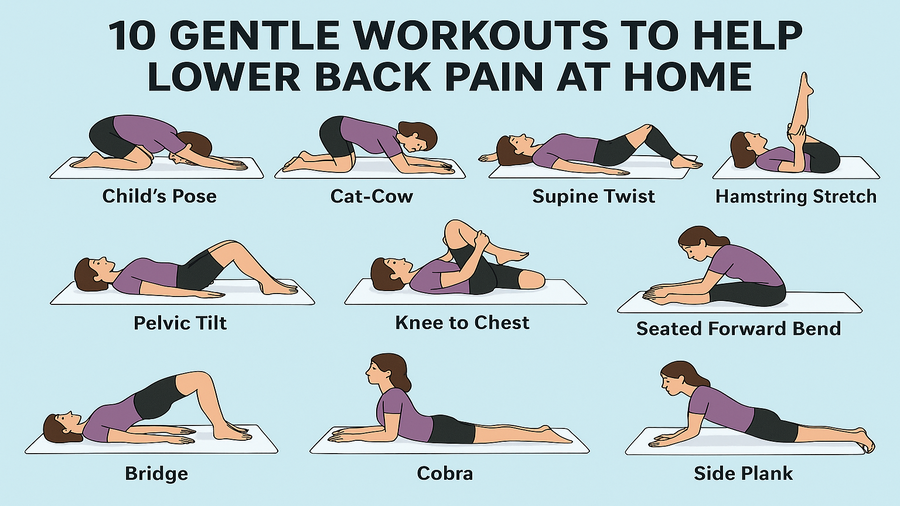
1. Cat-Cow Stretch
The yoga-oriented movement enhances the movement of the spinal cord as well as taking pressure off the lower back. It is among the most recommended stretches in case of a lower back pain and can be performed early in the morning or once a person has been sitting all day.
Also Read: 5 Quick Home Remedies for Leg Cramp Relief and Prevention
2. Child’s Pose
This relaxing posture stretches the spine, the hips, as well as the thighs without putting a strain on the body hence causing more relaxation and decrease in stiffness which is a factor to the causes of lower back pain such as stress and poor alignment.
Also Read: Shoulder Pain Solutions: 7 Essential Exercises for Quick Relief
3. Pelvic Tilts
Get a toned core and straighten the spine by doing simple pelvic tilts. They are the best possible lower back workouts even to the inexperienced.
4. Knee-to-Chest Stretch
This exercise works the gluten and the back muscle. It is particularly useful in the way of knowing how to ease lower back pain due to tight muscles or idleness.
Also Read: Top 10 Home Remedies for Reducing Neck Pain and Headaches
5. Forward Bend Seated
It is a nice hamstring stretch and a relaxation of the back muscles. The exercise is also beneficial in case you are wondering how to get rid of back pain quickly at home and without much movement.
6. Supine Twist
This twisting movement makes spines supple and releases straining muscles of the back giving an relieving effect of relieving lower back pains.
7. Glute Bridges
Glute bridges build up the glutes and core, which prevents the spine and contributes to struggling the main reason that leads to the back pain problem: muscle imbalance.
Also Read: Cupping Therapy: How Often Should You Schedule Sessions for Optimal Results?
8. Wall Sits
Wall sits are used to strengthen the lower body which corrects the spinal position. The following lower back pain exercises are easy but efficient.
9. Cobra Stretch
A gentle cobra or prone extension may feel comfortable for some people with lower back pain, but it is not suitable for everyone. Stop if the movement increases your symptoms or causes pain, numbness, or tingling down your leg.

10. Walking
Merely 15-20 minutes a day of brisk walking can make the circulation faster and the muscles stiffened in the back loosened aiding in the long-term relief of lower backache.
These movements can be slowly alleviated with discomfort and flexibility based on consistency with them. Remember you have to move slowly and when you experience sharp ache avoid moving.
What Exercises Can I Safely Do at Home When My Lower Back Hurts?
If your lower back hurts, gentle movement may help reduce stiffness and keep your back flexible. However, you should avoid exercises that make your pain worse. Start slowly and stay within a comfortable range.
When Should I Stop Exercising?
Exercise should not cause sharp or severe pain. Stop the exercise if your symptoms become worse or you develop new pain, numbness, tingling, or weakness.
If your lower back pain is severe, keeps coming back, or is making everyday activities difficult, consider speaking with a healthcare professional. A physiotherapist can assess your symptoms and recommend exercises based on the cause of your lower back pain.
The right exercises can help improve movement, strength, and flexibility, but not every exercise is suitable for every person.
FAQs
Q1: Is it possible to perform these exercises during lower back pain daily?
Yes, it is possible to do light exercises such as stretching and other movements daily. Nevertheless, it is necessary to listen to your body and sleep when a person feels it is necessary.
Q2: Are they safe during early pregnancy lower back pains?
Most of these workouts can be performed without any risk in early pregnancy, however, you should consider talking to your doctor before engaging in a new activity.
Q3: What is the relieving time of lower back pain?
Periods of relief are different. Some individuals will notice progress in a few days and others might require several weeks of constant practice in order to noticeable ache reduction in their lower back.
Also Read: Unravelling the Mystery: Dry Needling vs. Acupuncture
Q4: Are there any exercises I should avoid?
Avoid exercises that cause sharp pain or put too much pressure on your back, like heavy lifting or sudden twisting movements. Always start slowly and talk to a physiotherapist if you are unsure.
Q5: How often should I do these workouts?
You can usually do these exercises 3 to 5 times a week. Gentle stretching and light movements can even be done daily for better flexibility and pain relief.
Also Read: What Is the Best Sleeping Position for Frozen Shoulder?
Q6: Can I do these exercises if my back is in pain?
Yes, but only gentle exercises that do not increase your pain. Stop immediately if the pain becomes worse and consult a healthcare professional for proper guidance.
Also Read: What Should You Not Do After Cupping?
Q7. What exercises should I avoid if I have lower back pain?
Avoid heavy weightlifting, deep squats, sit-ups, toe touches, and high-impact activities that increase pain. Always choose exercises that are gentle and approved by your healthcare provider.
Q8. What helps back pain in old age?
Regular stretching, light exercise, good posture, physiotherapy, and staying active can help reduce back pain in older adults. Applying heat or cold packs may also provide relief.
Q9. What not to do in lower back pain?
Do not lift heavy objects, avoid sudden twisting movements, and do not stay in bed for long periods. Ignoring ache or continuing activities that worsen symptoms should also be avoided.
Q10. How long does lower back pain usually last?
Most lower back pain improves within a few days to a few weeks. If the ache lasts longer than six weeks or becomes severe, it is important to seek medical attention.
Also Read: Frozen Shoulder vs. Rotator Cuff Tear: Key Differences and Symptoms
Q11. Is it better to sit or lay down with lower back pain?
It depends on your ache. Lying down for a short time can help reduce ache, but staying in bed for too long may make your back feel stiffer. Sitting for long periods can also increase lower back pain. The best option is to change positions often, take short walks, and use good posture. Gentle movement usually helps your back recover faster.
Q12. Should I use a pillow for lower back pain?
Yes, a pillow can help support your lower back while you sleep. If you sleep on your back, place a pillow under your knees. If you sleep on your side, put a pillow between your knees. This helps keep your spine in a comfortable position and may reduce lower back pain.
Q13. When should you not ignore lower back pain?
Do not ignore lower back pain if it is very severe, lasts for more than a few weeks, or spreads down your legs. You should also see a healthcare professional if you have numbness, weakness, trouble controlling your bladder or bowels, or pain after a fall or accident.
Q14. Is walking good for lower back pain?
Yes, gentle walking can help many people with lower back pain. Walking improves blood flow, reduces stiffness, and keeps your muscles active. Start with short walks and stop if the pain gets much worse.
Q15. What should you not do with lower back pain?
Avoid heavy lifting, sudden twisting movements, and staying in bed for too long. Do not ignore ongoing pain or push through severe discomfort. Follow your healthcare provider’s advice and stay active with safe, gentle movements.
Also Read: 5 Conditions Causing Your Shoulder Pain
Q16. What is the best sleeping position for back pain?
Sleeping on your back with a pillow under your knees is best. It helps keep your spine straight. Side sleeping with a pillow between your knees also helps.
Q17. How to immediately relieve lower back pain at home?
To get quick relief from lower back pain at home, try using a heating pad or ice pack for 15–20 minutes. Gentle stretching, short walks, and resting in a comfortable position may also help reduce pain and stiffness. Avoid heavy lifting, sudden movements, and sitting for too long. If the pain continues or gets worse, consult a physiotherapist or healthcare professional.
Q18. What are the best gentle workouts for lower back pain at home?
Gentle workouts like walking, pelvic tilts, knee-to-chest stretches, cat-cow stretches, and bridges may help reduce lower back pain. These exercises can improve flexibility, strengthen back muscles, and reduce stiffness. Start slowly and avoid movements that increase your pain. For the best results, try gentle exercises for 10–15 minutes a day, as long as they feel comfortable. If your pain is severe or getting worse, consult a physiotherapist.
Q19. Is heat or ice better for back pain?
Ice is best for fresh injuries (first 48 hours). Heat helps relax tight muscles and reduce long-term stiffness.
Q20. What to Drink to Stop Back Pain?
Drinking enough water helps keep your body hydrated and supports muscle and spinal health. You can also try warm ginger tea or turmeric milk, which contain ingredients with anti-inflammatory properties. However, no drink can directly cure back pain.
Also Read: How to Manage Sciatica Pain After Long Hours of Sitting
Q21. What exercises actually help with mild lower back pain?
Gentle exercises like walking, pelvic tilts, knee-to-chest stretches, and cat-cow stretches may help reduce mild lower back pain. These movements can improve flexibility, reduce stiffness, and strengthen the muscles that support your spine. Start slowly and avoid exercises that make your pain worse.
Q22. What exercises can reduce lower back pain when lying down?
If your lower back hurts when you lie down, try gentle pelvic tilts, single knee-to-chest stretches, or slow lower back rotations. You can also place a pillow under your knees when lying on your back or between your knees when sleeping on your side. If the pain continues or gets worse at night, consult a healthcare professional.
Q23. What helps lower back pain the most?
For many people, staying active, taking short walks, and doing gentle stretching exercises can help relieve lower back pain. Physiotherapy can also help by improving posture, strengthening weak muscles, and addressing the causes of pain. Avoid staying in bed for long periods, as too much rest may increase stiffness.
Q24. What are the best exercises for lower back pain?
Some helpful exercises for lower back pain include:
-
Cat-cow stretch: Helps improve spinal flexibility.
-
Pelvic tilts: Gently activate your abdominal muscles.
-
Bird-dog exercise: Strengthens your back and core.
-
Glute bridges: Strengthen your hips and buttocks.
-
Walking: Keeps your body moving and reduces stiffness.
Choose exercises that feel comfortable and stop if your pain increases.
Q25. How can I prevent lower back pain?
You can reduce your risk of lower back pain by maintaining good posture, exercising regularly, and strengthening your core muscles. Avoid sitting for long hours without breaks. When lifting heavy objects, bend your knees and keep the object close to your body. Maintaining a healthy weight and using a supportive mattress may also help.
Q26. How do I relieve lower back pain from sitting all day?
If you sit for long hours, try standing up and walking around every 30 to 60 minutes. Keep your feet flat on the floor, support your lower back, and position your computer screen at a comfortable height. Gentle stretches, short walks, and regular exercise can help reduce muscle tightness and discomfort.
Q27. How do I fix lower back pain after a workout?
If you experience lower back pain after exercising, reduce activities that make the pain worse and allow your muscles time to recover. Gentle walking, light stretching, and applying heat or ice may help. Check your exercise technique and avoid lifting weights that are too heavy. If the pain is sharp, severe, or does not improve, consult a physiotherapist.
Need Help With Lower Back Pain?
Don’t let lower back pain affect your daily activities! At New Hope Physiotherapy, our team can assess your condition and create a personalized treatment and exercise plan to help reduce pain, improve movement, and prevent future problems.
Book your physiotherapy appointment today!
905-846-4000
Note: If back pain is accompanied by new bladder or bowel control problems, numbness around the groin, or significant leg weakness, seek urgent medical attention.
Gauravdeep Randhawa, Registered Physiotherapist
Gauravdeep Randhawa is a caring and experienced physiotherapist with over 17 years of experience helping patients recover and improve their quality of life.
She started her own practice in Canada in 2009 and has treated many patients with muscle, joint, sports, neurological, and pelvic health conditions. She has also owned and operated multidisciplinary clinics.
Gauravdeep is a Certified Manual Therapist and has completed training in Contemporary Medical Acupuncture and Pelvic Floor Therapy. She uses hands-on treatment, personalized exercise programs, and evidence-based care to support each patient’s recovery.
Her goal is to help people reduce pain, restore movement, improve function, and achieve long-term wellness in a comfortable and supportive environment.
Medical Disclaimer:
These exercises are for general information only and are not a substitute for medical advice. Stop if you feel increased pain, numbness, dizziness, or discomfort. Speak with a doctor or physiotherapist before starting any new exercise program, especially if you have an injury or medical condition.
Also Read: Leg Cramps During the Night: Causes, Relief, and Care
Leave a Comment