

Welcome to New Hope Physiotherapy
- Brampton 905-846-4000
- Malton 905-364-3900
- Orangeville 519-217-9300
- admin@newhopephysio.com
Yoga For Tight Hamstrings: 5 Poses To Improve Flexibility
 22 Jul 2025
- newhope
- 0 Comments
- 4042
Yoga For Tight Hamstrings: 5 Poses To Improve Flexibility
Tight hamstrings characterize most of the people who spend a long time in a sitting position, most runners, or one is just not in a form of routine stretching. Their hamstring muscles that are in the rear of your thighs are important throughout your daily activities and in sports activities. These muscles are tetrapod muscles that when tight are capable of causing discomfort, limited movement and even putting a person under the risk of sustaining a hamstring injury. Fortunately Yoga provides simple albeit productive methods of releasing stress and becoming more flexible in this region.
Also Read: Sciatica vs Hamstring Pain: What You Need to Know
These are the five most amazing yoga poses to relax some tight hamstrings and enhance the overall flexibility of the lower body:
Yoga for Tight Hamstrings
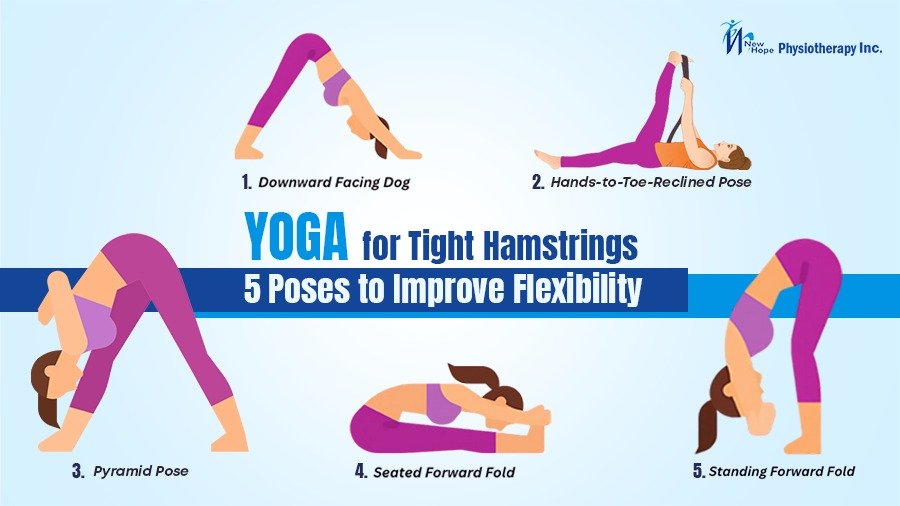
1. Downward-Facing Dog (Adho Mukha Svanasana-)
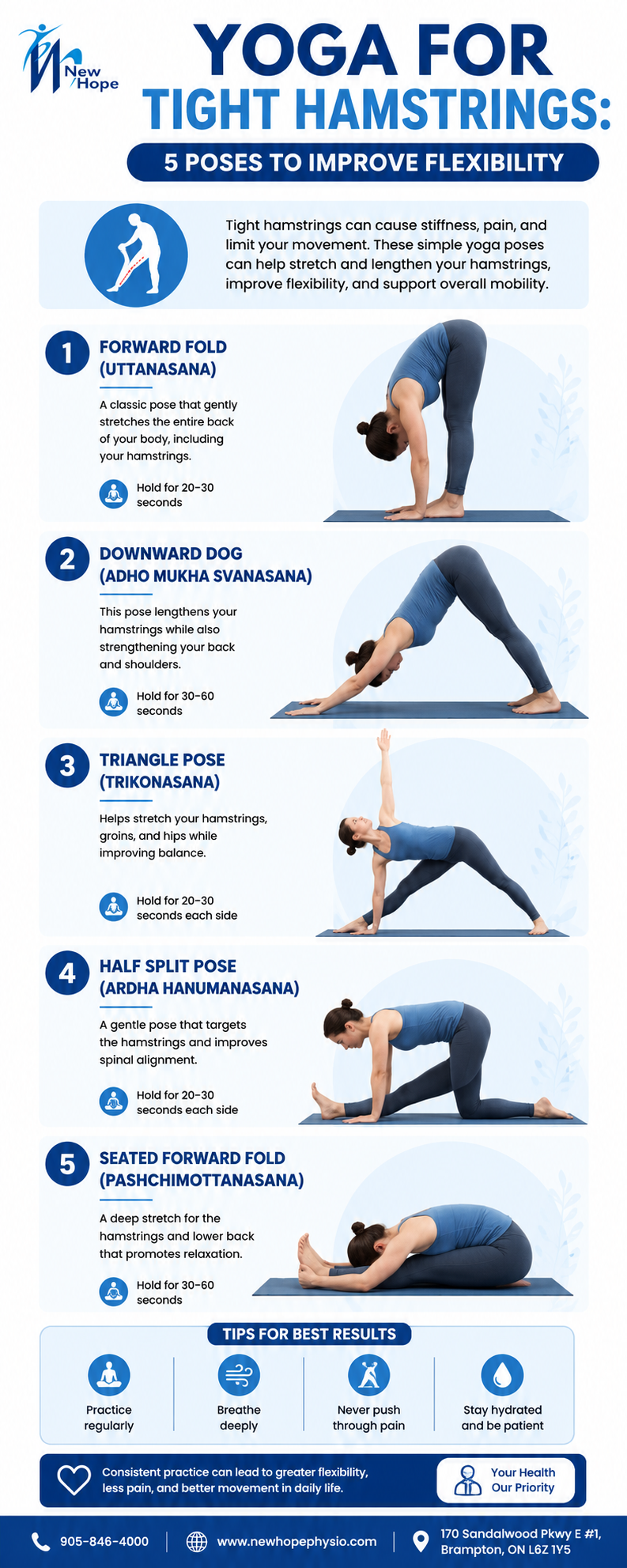
This basic yoga posture acquires the back, the calves muscles, and the hamstrings. Begin on all fours, then bring your hips up to the ceilings, the straighter your legs can be, the better. Ensure that you concentrate on making your spine long but pushing your heels together into the ground lightly.
2. Standing Forward Fold (Uttanasana)
An ideal yoga pose to stretch hamstring muscles and relax the mind. Still standing tall, on an exhale, bend forward at the hip bringing your hands either to the floor or the shins. Allow your head to get heavy, do not lock knees.
Also Read: 10 Gentle Workouts to Help Lower Back Pain at Home
3. Pyramid Pose (Parsvottanasana)
Such a pose provides more intensity of stretch, which is perfect in case one wants to exercise their hamstring to have an improvement. Take one foot forward and tilting the other (back foot) slightly out. Hinge down the hips and fold upon your front leg with both legs straight.
4. Hands-to-Toe-Reclined Pose (Supta Padangusthasana)
Lie on the back and raise one leg up to the ceiling with an index toe or use a strap. It is one of the best hamstring yoga exercises to use during the rehabilitation stage when one is recovering stiffness, injury of hamstring curl, or the hamstring curl itself.
Also read: 5 Quick Home Remedies for Leg Cramp Relief and Prevention
5. Paschimottanasana: (Seated Forward Fold)
It is a traditional pose that extends to the back of the body. It is a seated pose with the legs outstretched and the upper body folding at the hip and extending forward to the feet. It has been likened to seated hamstring curls in the respect to hitting the muscle group yet with a reduced stress.
Doing these poses in the normal yoga practice can make your hamstring flexibility progressively increase. Yoga also helps to recover the effect of strain or overuse which are usually linked to rigorous hamstring exercises or sports activities. When you have a previous hamstring injury or not, warming up and getting to know your body is very important.
Also Read: 11 Sciatica Stretches for Quick Pain Relief
FAQs
Q1. How many times in a week should I practice yoga to tighten my hamstrings?
Carrying out exercises 3-4 times per week can result in significant improvements in flexibility. Combine your yoga with some other hamstring classes and activities such as hamstring curl variations or seated hamstring curls to see best results.
Q2. Is it possible to avoid hamstring injuries with the help of yoga?
Yes, yoga stretching and movements systematically can decrease the tension, increase mobility and chances of getting a hamstring injury, particularly when combined with warm-ups and hamstring workouts.
Also Read: 5 Conditions Causing Your Shoulder Pain
Q3. Can novices take part in these yoga poses?
Absolutely! The five poses can be adapted to the beginners. Straps, yoga blocks or knee bends may be applied to keep you comfortable when stretching to loosen up tight hamstrings.
Q4. How to increase flexibility in tight hamstrings?
You can improve tight hamstrings with regular stretching, yoga, and light exercise. Warm up before stretching and practice 3–5 times a week. Staying consistent helps improve flexibility over time.
Q5. How to loosen tight hamstrings in yoga?
Yoga poses such as Downward Dog, Standing Forward Fold, and Reclining Hand-to-Big-Toe Pose can help loosen tight hamstrings. Move slowly, breathe deeply, and avoid forcing the stretch.
Also Read: 10 Safe Ways to Treat Neck Pain during Pregnancy
Q6. What are 5 yoga poses to improve flexibility?
Five common yoga poses for flexibility are:
- Downward Dog
- Standing Forward Fold
- Seated Forward Bend
- Triangle Pose
- Butterfly Pose
Practicing these poses regularly can help improve overall flexibility.
Q7. How long does it take for tight hamstrings to loosen?
Most people notice some improvement within 4 to 8 weeks of regular stretching and yoga. Results depend on age, activity level, and how consistent you are with your routine.
Q8. What are common mistakes in yoga for flexibility?
Common mistakes include:
- Stretching too hard
- Holding your breath
- Skipping warm-up exercises
- Comparing yourself with others
- Practicing inconsistently
Gentle and regular practice is the safest way to improve flexibility.
Also Read: What Should You Not Do After Cupping?
Q9. What yoga poses can help with hamstring flexibility?
Gentle yoga poses such as Downward-Facing Dog, Standing Forward Fold, Reclined Hand-to-Big-Toe Pose, and Low Lunge can help improve hamstring flexibility. Move slowly and avoid forcing the stretch.
Q10. What not to do with tight hamstrings?
Do not bounce, force a deep stretch, or stretch through sharp pain. Avoid sudden movements and heavy exercise if your hamstrings are very tight. Gentle, regular stretching is usually a better approach.
Q11. How long does it take to loosen really tight hamstrings?
It can take several weeks to improve very tight hamstrings. Stretching regularly, staying active, and strengthening the legs can help. The time needed depends on the cause and severity of the tightness.
Q12. What are some easy hamstring stretches for seniors?
Older People can try a seated hamstring stretch, lying hamstring stretch with a towel or strap, or a gentle standing stretch while holding a sturdy chair. Keep the movement comfortable and avoid overstretching.
Conclusion
Our hamstrings bear a lot of stress during an intense workout and are prone to tightness when we sit down all day without moving. A mindful approach to stretching out, toning up and benefiting our hamstrings is a practice using yoga.


Leave a Comment