
Welcome to New Hope Physiotherapy
- Brampton 905-846-4000
- Malton 905-364-3900
- Orangeville 519-217-9300
- admin@newhopephysio.com
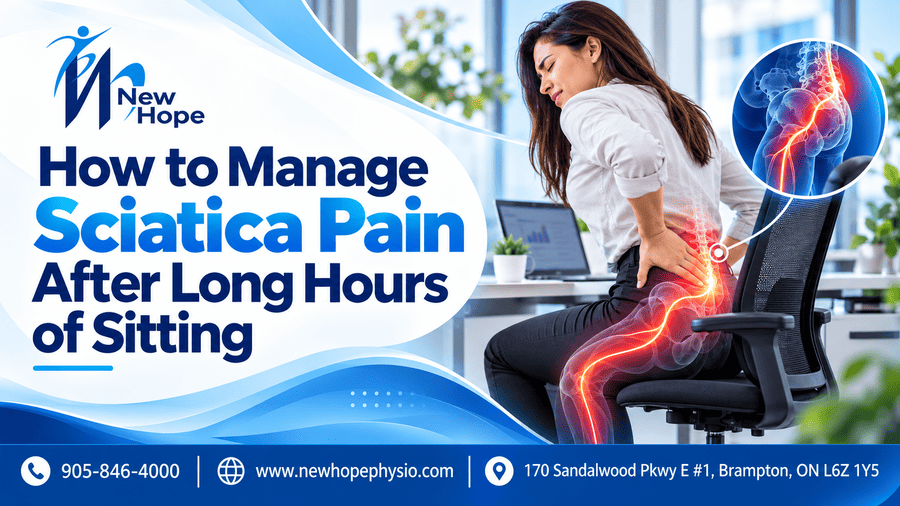
How to Manage Sciatica Pain After Long Hours of Sitting
19 Oct 2026
How to Manage Sciatica Pain After Long Hours of Sitting
Do you feel pain in your lower back, hips, or legs after sitting for a long time? You may be experiencing sciatica pain after sitting.
Many people spend hours sitting at a desk, driving, or working on a computer. Sitting for too long can make existing sciatic nerve pain worse. It may cause discomfort, stiffness, tingling, or numbness in the legs.
The good news is that simple lifestyle changes, gentle exercises, and physiotherapy may help you manage sciatica pain after long hours of sitting.
In this blog, we explain the causes, symptoms, exercises, and helpful tips for sciatica pain relief.
Also Read: Lower Back Pain vs. Sciatica: What’s the Difference and How to Treat It?
What Is Sciatica Pain?
Sciatica is pain caused by irritation or pressure on the nerves that form the sciatic nerve.
The sciatic nerve runs from the lower back through the buttocks and down each leg.
Common sciatica pain symptoms include:
- Sharp or burning pain in the lower back, buttocks, or leg
- Tingling or a pins-and-needles feeling
- Numbness in the leg or foot
- Pain that increases while sitting
- Weakness in the affected leg
- Difficulty sitting or walking comfortably
Sciatica usually affects one side of the body. The pain may be mild or severe.
Also Read: 5 Common Types of Back Pain You Should Know
Why Does Sitting Too Long Make Sciatica Worse?
Sciatica from sitting too long is a common concern among office workers, drivers, and people who spend several hours sitting.
Long periods of sitting may increase discomfort by:
- Putting extra pressure on the lower back
- Keeping the body in one position
- Increasing stiffness in the hips and back
- Irritating sensitive nerves
- Reducing opportunities for regular movement
Poor sitting posture may also contribute to discomfort.
If you experience sciatica pain when sitting, changing positions regularly may help.
Also Read: Sciatica vs Hamstring Pain: What You Need to Know
How to Relieve Sciatica Pain After Sitting
Here are some simple ways to manage sciatica at home or at work.
1. Take Regular Movement Breaks
Avoid sitting in one position for several hours.
Try standing up or walking around every 30–45 minutes. Even a short movement break may help reduce stiffness.
2. Maintain Good Sitting Posture
Proper sitting posture can improve comfort.
- Keep your feet flat on the floor.
- Support your lower back.
- Relax your shoulders.
- Avoid leaning forward for long periods.
- Keep your computer screen at eye level.
3. Use Heat Therapy
A warm compress may help relax tight muscles and reduce discomfort.
Apply gentle heat for 15–20 minutes. Avoid excessive heat, especially if you have reduced skin sensation.
4. Stay Physically Active
Gentle walking, swimming, and suitable exercises may help you stay mobile.
Avoid prolonged bed rest unless your healthcare provider advises otherwise.
Also Read: What Should You Not Do After Cupping?
Best Sciatica Relief Exercises for People Who Sit All Day
Gentle exercises may improve flexibility and reduce stiffness.
1. Seated Figure-Four Stretch
Sit on a chair with both feet supported. Place one ankle over the opposite knee and gently lean forward if comfortable. Hold for 15–20 seconds, then switch sides.
2. Knee-to-Chest Stretch
Lie on your back with your knees bent. Slowly bring one knee toward your chest. Hold gently for 10–15 seconds and switch legs.
3. Cat-Cow Exercise
Get onto your hands and knees. Slowly round your back, then gently return toward a natural position. Repeat five to ten times without forcing the movement.
These sciatica stretches for sitting all day are not suitable for everyone. Stop any movement that increases shooting pain, tingling, or numbness. A physiotherapist can recommend exercises based on your condition.
Also Read: World Arthritis Day 2026: Common Arthritis Mistakes to Avoid
How to Prevent Sciatica Pain When Sitting in a Car
Driving for several hours can make sciatic nerve pain worse.
Try these simple tips:
- Adjust your seat to support your lower back.
- Keep your knees in a comfortable position.
- Avoid sitting too far from the steering wheel.
- Take walking breaks during long journeys.
- Use a small lumbar cushion if it improves comfort.
These changes may help reduce discomfort during long drives.
How Can Physiotherapy Help With Sciatica Pain?
Physiotherapy is one option for sciatica pain treatment.
A physiotherapist can assess your symptoms, movement, strength, and posture.
Your treatment plan may include:
- Gentle stretching and strengthening exercises
- Posture and sitting-position advice
- Movement and flexibility training
- Exercises to support your lower back
- Advice for managing symptoms at work and home
Physiotherapy focuses on improving movement, reducing pain, and helping you return to daily activities.
Also Read: 10 Gentle Workouts to Help Lower Back Pain at Home
When Should You Seek Medical Help?
Consult a healthcare professional if your sciatica is worsening, is severe, or is affecting your daily activities.
Seek emergency medical care if you develop new bladder or bowel control problems, numbness around the groin, or severe or worsening leg weakness. These may indicate a serious nerve problem.
15 Frequently Asked Questions About Sciatica Pain
1. Is sciatica pain worse after sitting?
Yes. Sitting for long periods can increase pressure and irritation around sensitive nerves, making sciatica pain worse for some people.
2. Is sitting all day bad for sciatica?
Prolonged sitting may increase discomfort and stiffness. Taking regular breaks and changing positions can help manage symptoms.
3. How to fix sciatica from sitting too long?
Start with short walking breaks, better lower-back support, and gentle exercises. Physiotherapy may help identify the cause and develop a treatment plan.
4. How long does it take for sciatica to stop hurting?
Many people improve within a few weeks. Some cases take several months, depending on the cause and severity.
5. Does touching your toes help sciatica?
Not always. Deep forward bending can worsen symptoms for some people. Avoid forcing this stretch if it increases leg pain.
Also Read: Shoulder Pain Solutions: 7 Essential Exercises for Quick Relief
6. What are the best ergonomic chairs for people with sciatica from sitting?
Look for chairs with adjustable height, good lumbar support, comfortable cushioning, and supportive armrests. No single chair works for everyone.
7. Where can I find adjustable standing desks to help reduce sciatica pain in Canada?
Adjustable desks are available from Canadian office furniture retailers, IKEA, Staples, and online office equipment stores. Choose one that allows comfortable sitting and standing positions.
8. What is the longest time sciatica can last?
Sciatica sometimes lasts for months or longer. Persistent pain should be assessed by a healthcare professional.
9. When should I see a physiotherapist for sciatica?
Consider physiotherapy when pain affects sitting, walking, sleeping, or working, or when symptoms are not improving.
10. How to relieve sciatica pain in 30 seconds?
There is no guaranteed 30-second cure. Standing up, gently walking, or changing positions may provide quick relief for some people.
11. What are the best sciatica pain stretches?
Gentle hip stretches, knee-to-chest movements, and selected back exercises may help. The best stretch depends on your symptoms.
12. Can walking help reduce sciatic nerve pain?
Yes. Gentle walking can support movement and reduce stiffness. Start with short distances and increase gradually as tolerated.
13. How to cure sciatica permanently?
There is no guaranteed permanent cure for every case. Many people recover with time, activity changes, and appropriate treatment, although symptoms may return.
14. What provides immediate relief for sciatica pain?
Changing positions, taking a short walk, or using gentle heat may provide temporary relief. Treatment depends on the underlying cause.
15. Can physiotherapy prevent sciatica pain from coming back?
Physiotherapy may help lower the risk of recurring symptoms through strengthening, movement training, and better daily habits. However, it cannot guarantee prevention.
Also Read: Unravelling the Mystery: Dry Needling vs. Acupuncture
Final Thoughts
Sciatica pain after long hours of sitting can make everyday activities uncomfortable. However, regular movement, supportive sitting positions, gentle exercise, and professional guidance may help.
If you experience ongoing sciatic nerve pain, do not ignore your symptoms.
At New Hope Physiotherapy in Brampton, our physiotherapy team can assess your condition and recommend a personalized treatment plan to help improve movement and manage pain.
Disclaimer: This article provides general health information and is not a substitute for professional medical advice, diagnosis, or treatment.
Prabhjot Kaur, Registered Physiotherapist
Prabhjot Kaur is a Registered Physiotherapist with over 10 years of clinical experience. She has been practicing since 2015 and holds a Master’s degree in Physiotherapy with a specialization in Neurology. She provides personalized care for people with neurological and musculoskeletal conditions. Her areas of focus include orthopedic and neurological rehabilitation, pain management, therapeutic exercises, balance and mobility training, and injury recovery. Prabhjot believes in a patient-centered approach and works closely with each individual to reduce pain, improve movement, restore function, and help them return to their daily activities with greater confidence and independence. She is registered with the College of Physiotherapists of Ontario.


Leave a Comment