
Welcome to New Hope Physiotherapy
- Brampton 905-846-4000
- Malton 905-364-3900
- Orangeville 519-217-9300
- admin@newhopephysio.com
What Should You Not Do After Cupping?
 28 Apr 2026
- newhope
- 0 Comments
- 7392
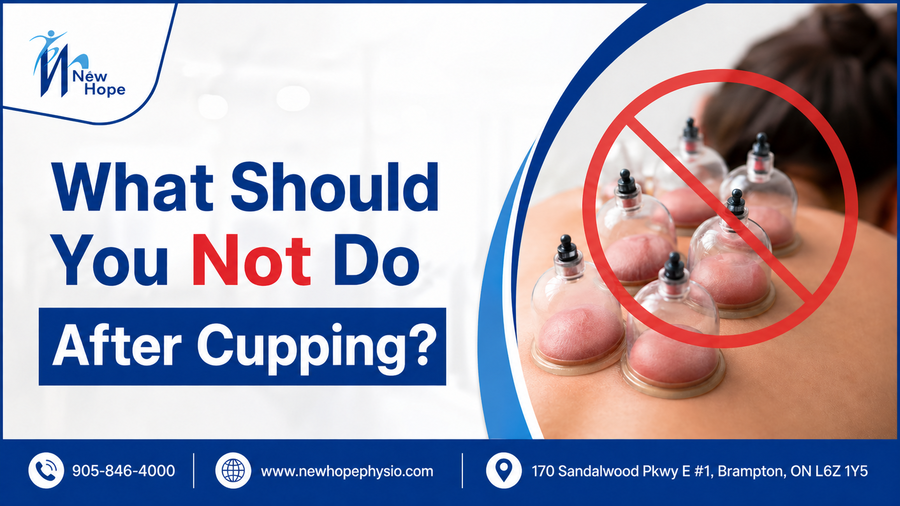
What Should You Not Do After Cupping?
Did you ever think about what people do after cupping that could lessen the effects or even be painful? Cupping, with its rich history of cupping therapy, is one of the oldest forms of treatment known to human beings, renowned for its effectiveness in increasing blood flow, relieving muscle pain and stiffness, and for boosting your mood. But there are things you should do after cupping therapy.
Also Read: Can Cupping Therapy Help Relieve Back Pain?
Don’t Make These Mistakes After Cupping
Following cupping suction therapy, your body will be in a recovery period. The most common mistake is subjecting your skin to cold right away. This includes cold showers, air conditioning or being outside in cold weather without being well covered. Your skin may feel sensitive after cupping. Avoid anything that causes discomfort or irritation to the treated area, and follow the specific aftercare instructions provided by your practitioner.
It’s also important to avoid exercise. While you may feel relaxed and at peace due to the benefits of cupping, your muscles are stimulated and need to recover. This will exacerbate pain or reduce the effects of the treatment.
Avoid alcohol immediately after treatment if your practitioner recommends it. There is no need to suggest that everyone must avoid caffeine unless there is a specific reason. You are helping your body remove toxins, and these things can slow down the process. Instead, have warm water or herbal tea.
Also Read: 9 Easy Tricks to Relieve Lower Back Pain
Also Read: 10 Gentle Workouts to Help Lower Back Pain at Home
Skincare & Lifestyle Precautions
It’s normal to have bruises before and after cupping therapy but they need to be treated. Don’t rub, scratch and apply chemicals on the skin. It will damage the skin and cause it to heal more slowly.
When searching for a “cupping therapy near me”, many people often overlook the aftercare instructions. Whether you choose cupping therapy in Brampton, Mississauga, or Orangeville, proper aftercare is important. Your physiotherapist can guide you on the right aftercare steps for your treatment to help support the best results.
Also Read: Dry Cupping vs Wet Cupping: Key Differences & Treatments
Listen to Your Body
After the treatment, you may feel relaxed, sore or even a little fatigued. This is normal. Avoid mentally and physically overtaxing yourself. Be sure to rest, hydrate and eat well.
Ignoring these signs and symptoms can reduce the effectiveness of your cupping therapy and also prolong your recovery. So, this therapy is more effective with aftercare.
Also Read: 7 Surprising Benefits of Cupping Massage Therapy
Medical Disclaimer
This information is for general education only and is not a substitute for professional medical advice, diagnosis, or treatment. Cupping therapy may not be suitable for everyone. Please speak with a qualified healthcare professional before starting treatment, especially if you have a medical condition or take medication.
FAQs:
1. Can I have a shower after cupping?
It’s recommended to wait between 4-6 hours after cupping before showering, and to use warm, rather than cold, water.
2. Will I get marks from cupping therapy?
Yes, the marks from cupping before and after treatment are normal and should disappear in a couple of days.
3. Is it OK to exercise?
Consider avoiding strenuous exercise for the rest of the day, especially if the treated area feels sore or tender. Light walking and gentle movement may be comfortable for many people.
4. Can I drink something after cupping?
Drinking warm water or herbal tea may help you feel refreshed and support your body after cupping therapy.
5. How often should I have cupping treatment?
This varies based on your health issues, but most people experience benefits with treatments 2-4 weeks apart.
6. Does cupping help belly fat?
Cupping therapy is not a weight-loss treatment. It may help improve blood circulation and relaxation, but it does not directly remove belly fat. A healthy diet and regular exercise are still important for weight loss.
7. How long do cupping results last?
The effects of cupping can last from a few days to several weeks. This depends on your condition, lifestyle, and how often you receive treatment.
Also Read: 10 Safe Ways to Treat Neck Pain during Pregnancy
8. What are the do’s and don’ts after cupping?
After cupping, drink plenty of water, rest, and eat healthy foods. Avoid heavy exercise, alcohol and smoking.
9. How long should you rest after cupping?
It is best to rest for a few hours after your session. If possible, avoid strenuous activities for the rest of the day.
10. Why should you avoid showering right after cupping?
Your skin may be sensitive after treatment. Waiting a few hours before showering helps protect the treated area and supports the healing process.
11. What should you avoid with cupping?
Avoid intense workouts, alcohol, caffeine, and exposing the treated area to extreme heat or cold immediately after treatment.
12. How do you know if cupping is working?
Many people notice reduced pain, less muscle tension, improved movement, and a feeling of relaxation after treatment. Results may vary from person to person.
13. How often should you get wet cupping?
The frequency depends on your health needs and the advice of a qualified practitioner. Many people receive wet cupping every few weeks or months rather than every week.
Also Read: Shoulder Pain Solutions: 7 Essential Exercises for Quick Relief
Conclusions
By avoiding these mistakes and taking the right steps after cupping, you’ll get the full therapeutic benefits of cupping and feel the results for longer.
Also Read: 5 Common Types of Back Pain You Should Know
Sonee Desai, Registered Massage Therapist & Certified Cupping Therapist
Sonee Desai has extensive experience helping people with pain, movement, and recovery. She began her career as a Physiotherapist in India and has been practicing as a Registered Massage Therapist for nearly five years.
Sonee takes a careful and personalized approach to every treatment. She focuses on understanding each client’s needs, reducing pain, improving movement, supporting recovery, and helping clients feel their best over the long term.
She also has experience in prenatal and postnatal massage care and is certified in cupping therapy. Sonee offers treatments tailored to each client’s comfort, goals, and wellness needs.
Also Read: Top 5 Exercises for Strengthening Your Pelvic Floor

Leave a Comment