
Welcome to New Hope Physiotherapy
- Brampton 905-846-4000
- Malton 905-364-3900
- Orangeville 519-217-9300
- admin@newhopephysio.com
7 Surprising Benefits of Cupping Massage Therapy
 6 Sep 2022
- newhope
- 0 Comments
- 3372
7 Surprising Benefits of Cupping Massage Therapy
The world is being taken over by the Chinese wellness practise that is still alive and well. Therapy cups are placed at specific body parts to create suction during cupping massage therapy.
The goal is to move the blood out of the body’s interior. To speed up healing, it gets closer to the surface. This results in the elimination of dysfunction. It has been lying dormant in the body due to poor blood flow, which can happen for several reasons.
Also Read : What are the 7 Core Principles of Physiotherapy?
Along with manual massage techniques, it can easily incorporated into your regular massage session. It produces a more efficient course of action, which enhances the session’s overall outcomes. The therapeutic tool of cupping should not disregarded!
So, quickly search for Cupping Therapy Near me.
Also Read : Before Cupping vs. After Cupping: Real-Life Experiences
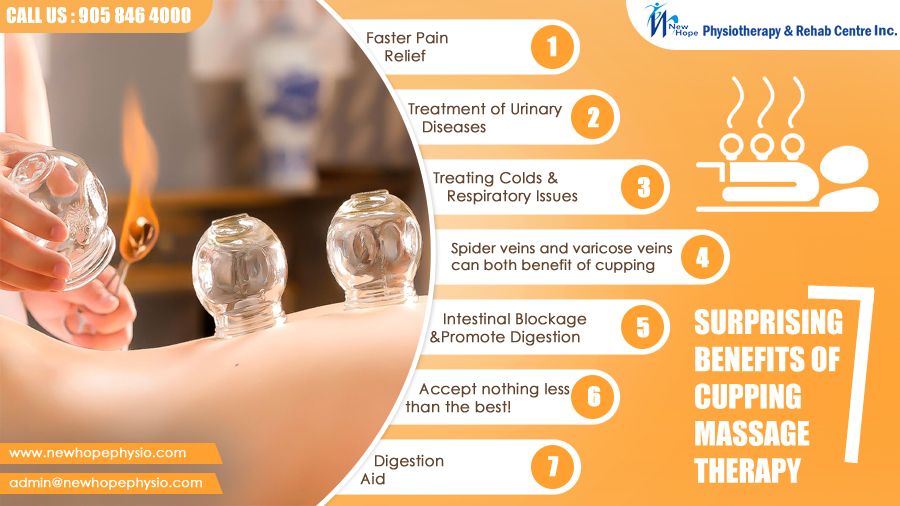
Here’s a list of all the benefits of Cupping Therapy:-
1. Faster Pain Relief
Pains related to arthritis, lower back pain, etc., can be relieved by cupping. Other types of pain that cupping can effectively treat. They include headaches, migraines, toothaches, muscle aches, sciatica, etc.
2. Treatment of Urinary Diseases
Urinary diseases can treated with cupping massage therapy. They resemble kidney stones, a buildup of urine, and an abscess. Applying the cups to the lumbar area helps treat urinary retention.
Also Read :What Should You Not Do After Cupping?
3. Treating Colds And Respiratory Issues
Respiratory ailments have treated with cupping regularly throughout history. It has been a helpful treatment to nourish the lungs as well. It is because of cupping’s capacity to increase circulation. Cupping therapy is effective in treating asthma. It can help clear up congestion brought on by the flu or a cold.
4. Eliminate Intestinal Blockage and Promote Digestion
The parasympathetic nervous system aided by cupping. The digestive tract receives more blood flow as a result. Additionally, gentle abdominal cupping stimulates the interior of your digestive system.
5. Spider veins and varicose veins can both benefit from cupping.
Varicose veins typically appear on the legs and feet as bulging, bluish veins just under the skin. They develop when the vein’s internal valves aren’t functioning properly.
Because the valves are ineffective at returning blood from the muscle to the heart, blood builds up, and the veins twist and enlarge. Cupping is beneficial by reintroducing new blood flow and oxygen to troublesome areas.
Also Read : What Is Cupping Therapy?
6. Digestion Aid
It is because reducing stress associated with a healthier digestive system. People with irritable bowel syndrome (IBS) may experience significant relief from cupping therapy.
Additionally, it may help those who experience persistent stomach pain. It also helps with severe gastritis, water retention, and loss of appetite.
Also Read: Dry Cupping vs Wet Cupping: Key Differences & Treatments
7. Accept nothing less than the best!
To add cupping therapy to your next massage, go to New Hope Physiotherapy! We work with incredible massage therapists who are passionate about health and wellness and are based in Canada.
Our clinic for Cupping Therapy Brampton is aware of the best practices to keep you secure while incorporating cupping therapy to enhance your health.
Our clinic for Cupping Therapy Orangeville has therapists who are qualified and certified, who comprehend how the body functions and moves, and who are constantly prepared to give you the best!
We use our knowledge to customize your massage so that it will help you achieve your wellness and health objectives. We’ll talk soon.
Also Read : 5 Quick Home Remedies for Leg Cramp Relief and Prevention
Medical Disclaimer:
Cupping massage therapy may help some people with muscle tension, soreness, and relaxation, but results can vary. It may not be suitable for everyone and can cause temporary bruising, skin irritation, or soreness. Always speak with a qualified healthcare professional before trying cupping, especially if you have a medical condition, take medications, or are pregnant. This information is for general education and is not a substitute for professional medical advice, diagnosis, or treatment.
Frequently Asked Questions:
1. Is cupping massage therapy painful?
Most people find cupping to be comfortable. You might feel a gentle pulling or pressure, but it should not be painful. Slight bruising may occur, but it usually fades within a few days.
2. How long does a cupping session take?
A typical cupping session lasts between 15 and 30 minutes, depending on the area being treated and your individual needs.
3. Who should avoid cupping massage therapy?
Cupping may not be suitable for people with certain medical conditions, such as blood disorders, skin infections, or those who are pregnant. It is important to consult a healthcare professional before trying cupping therapy.
4. What is cupping massage therapy?
Cupping massage therapy uses special cups placed on the skin to create gentle suction. It may help relax tight muscles and support overall comfort and mobility.
Also Read: Top 5 Exercises for Strengthening Your Pelvic Floor
5. Can cupping massage help reduce muscle tension?
Yes. Cupping may help relax tight muscles and reduce feelings of stiffness, especially in areas such as the back, shoulders, and neck.
6. Does cupping massage help with pain?
Cupping may help some people manage muscle and soft-tissue discomfort. Results can vary depending on the cause and severity of the pain.
7. Can cupping improve blood circulation?
The suction created by the cups increases blood flow to the treated area. This may support the body’s natural recovery process.
8. Can cupping help with flexibility?
By helping relax tight muscles and soft tissues, cupping may make movement feel easier and support better flexibility.
9. Can cupping massage reduce stress?
Yes. Like other forms of massage, cupping can promote relaxation and may help reduce everyday muscle tension and stress.
Also Read: World Physiotherapy Day 2026: Helping People Move Without Pain
10. Can cupping help with recovery after exercise?
Cupping may help relieve muscle tightness after physical activity. It can be used as part of a broader recovery plan along with stretching, exercise, and proper rest.
11. Why does cupping sometimes leave round marks?
Cupping can temporarily leave red, purple, or dark circular marks on the skin. These marks are usually temporary and often fade within several days.
12. Is cupping massage safe for everyone?
Cupping is not suitable for everyone. People with certain medical conditions, skin problems, bleeding disorders, or those taking blood-thinning medication should speak with a qualified healthcare professional before treatment.
13. How often should I have cupping massage therapy?
The ideal frequency depends on your goals, symptoms, and overall health. A qualified therapist can recommend a treatment schedule based on your individual needs.
Sonee Desai, Registered Massage Therapist & Certified Cupping Therapist
Sonee Desai has extensive experience helping people with pain, movement, and recovery. She began her career as a Physiotherapist in India and has been practicing as a Registered Massage Therapist for nearly five years.
Sonee takes a careful and personalized approach to every treatment. She focuses on understanding each client’s needs, reducing pain, improving movement, supporting recovery, and helping clients feel their best over the long term.
She also has experience in prenatal and postnatal massage care and is certified in cupping therapy. Sonee offers treatments tailored to each client’s comfort, goals, and wellness needs.
Also Read: 5 Common Types of Back Pain You Should Know
Leave a Comment