
Welcome to New Hope Physiotherapy
- Brampton 905-846-4000
- Malton 905-364-3900
- Orangeville 519-217-9300
- admin@newhopephysio.com
Frozen Shoulder vs. Rotator Cuff Tear: Key Differences and Symptoms
 30 Jul 2025
- newhope
- 0 Comments
- 7722
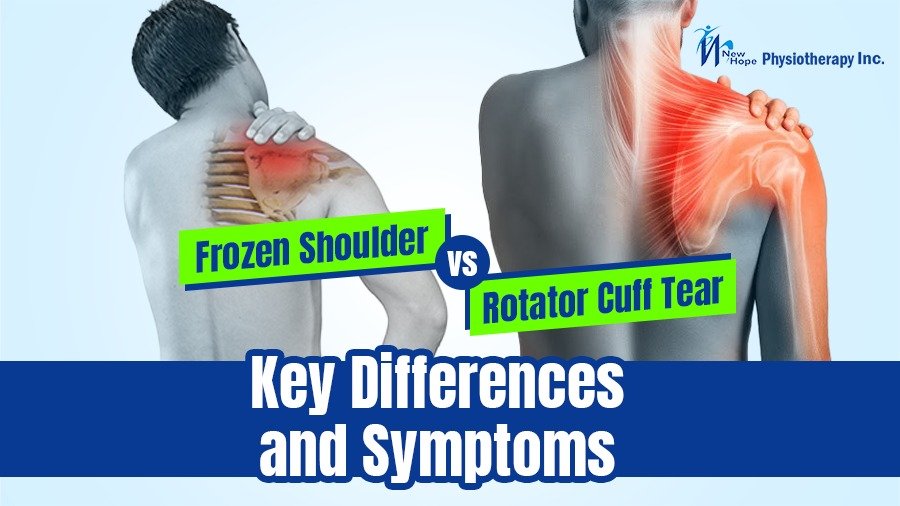
Frozen Shoulder vs. Rotator Cuff Tear: Key Differences and Symptoms
Pain affecting the shoulder is a common complaint, and yet not all problems with the shoulder are equivalent. People often confuse Frozen Shoulder with Rotator Cuff Tear because the two conditions seem similar. These two are painful and also restrict movement, but the two are different in terms of cause, symptoms, as well as the treatment. These differences are critical to understand to get the appropriate diagnosis and proper recovery.
Also Read: Shoulder Pain Solutions: 7 Essential Exercises for Quick Relief
Also Read: Dry Cupping vs Wet Cupping: Key Differences & Treatments
What Is Unique About Frozen Shoulder?
Adhesive capsulitis is the medical term for frozen shoulder, which is a pathology when the joint is covered with a joint capsule thickened and contracted around the joint, and thus limiting the latter in its movements. The precise causes of the exact frozen shoulder do not remain obvious, although it tends to arise after episodes of shoulder immobilization (following surgery, injury or illness). It is more likely to appear in people with diabetes or thyroid diseases.
Also Read: What Are the 7 Principles of Massage Therapy?
Stiffness that accompanies dull and aching pain is one of the distinguishing features of the frozen shoulder. The pain first aggravates during the night and when a person is in motion. With time, pain can recede, though compared to this the stiffness builds up to an extreme where the arm is substantially restricted in movement. By learning to understand what frozen shoulder is, it is easy to distinguish it from other muscle injuries such as rotator cuff disorders.
Also Read: 10 Gentle Workouts to Help Lower Back Pain at Home
Rotator Cuff Tear – What Is It?
Conversely, in a rotator cuff tear a tear occurs in one or more of the tendons forming a part of a group of tendons and muscles, known as rotator cuff, which are concerned with stabilization of the shoulder joint. It may occur either suddenly, as a result of a so-called traumatic injury or gradually, as a result of an overuse injury or age.
Painful overhead activity, that is, sharp rotator tear symptoms, may accompany cuff rotator tear and together with arm weakness and cracking feeling in shoulder are typical symptoms. Whereas frozen shoulders usually come with pain on movement more than stiffness, rotator cuff tears tend to be less stiff and more pain on movement.
Also Read: 5 Common Types of Back Pain You Should Know
The Optical Way of Treatment and Diagnosis
The diagnosis of such conditions is usually based on physical assessment of the person, patient history and imaging studies, such as MRI or ultrasound. The treatment will vary depending on the severest and progression of each of the conditions.
One of the most important parts of treatment of frozen shoulders is physical therapy. Reiterative exercises like frozen shoulders aimed at making one move can be achieved through pendulum swings and even climbing the wall and the body will regain mobility. The prescription of anti-inflammatory drugs and corticosteroid injections can also be used. There is the possibility of considering manipulation in extreme circumstances even during anesthesia or surgery.
Also Read: Cupping Therapy: How Often Should You Schedule Sessions for Optimal Results?
Conversely, small tears of the rotator cuff can be repaired through rest, ice, anti-inflammatories and physical therapy. Nevertheless, repairs are usually in the form of surgery on bigger or full tears.
Frozen shoulder heals slowly in 1–3 years, so patience, regular exercise, and early treatment are key to recovery.
Also Read: What Should You Not Do After Cupping?
Frozen Shoulder and Rotator Cuff Physiotherapy in Brampton
Shoulder pain can make everyday activities like reaching, dressing, lifting, or sleeping difficult. Two common causes of shoulder pain are frozen shoulder and rotator cuff injuries. Physiotherapy can help reduce pain, improve shoulder movement, and build strength.
Frozen Shoulder Physiotherapy in Brampton
Frozen shoulder causes stiffness and pain in the shoulder. You may find it difficult to raise your arm, reach behind your back, or perform normal daily activities.
Frozen shoulder physiotherapy in Brampton may include gentle stretching, hands-on therapy, exercises, and a personalized rehabilitation program. Treatment focuses on improving movement while gradually reducing pain and stiffness.
Rotator Cuff Physiotherapy in Brampton
The rotator cuff is a group of muscles and tendons that helps move and stabilize your shoulder. Overuse, injury, or strain can cause rotator cuff pain.
Shoulder physiotherapy Brampton can help improve shoulder strength, flexibility, and movement. Your physiotherapist may recommend exercises and manual therapy based on your symptoms and condition.
How Physiotherapy Can Help
Choosing physiotherapy in Brampton can help you:
- Reduce shoulder pain
- Improve flexibility and movement
- Strengthen shoulder muscles
- Return to daily activities
- Improve shoulder function
- Prevent future injuries
A physiotherapist in Brampton can assess your shoulder and create a treatment plan based on your specific needs.
Also Read: World Physiotherapy Day 2026: Helping People Move Without Pain
When Should You See a Physiotherapist?
Consider seeing a physiotherapist if your shoulder pain lasts for several days, affects your sleep or daily activities, or makes it difficult to move your arm. Early treatment may help improve movement and support a smoother recovery.
If you are experiencing frozen shoulder or rotator cuff pain, professional physiotherapy can help you move better and get back to your normal activities.
Looking for shoulder physiotherapy in Brampton? Contact New Hope Physiotherapy to book an assessment and learn how a personalized treatment plan may help your shoulder.
Medical Disclaimer:
This content is for general information only and is not a substitute for professional medical advice, diagnosis, or treatment. Frozen shoulder and rotator cuff tears can have similar symptoms, so a proper assessment by a qualified healthcare professional is recommended for an accurate diagnosis and appropriate treatment.
Also Read: Top 5 Exercises for Strengthening Your Pelvic Floor
FAQs
1. Is it possible to have a frozen shoulder and tear of rotator cuff?
This will be feasible. Freezing shoulders may develop due to reduced use of shoulders caused by rotator cuff injury.
2. What is the duration of the recovery time of the frozen shoulder?
Depending on the severity and compliance to frozen shoulder exercises and treatment regimes, these may take a few months to three years to heal.
3. Does frozen shoulder have a prevention?
It is essential to retain mobility in the shoulders after the operations or other injuries. Regular stretching and addressing early stiffness can prevent frozen shoulder.
Also Read: Effective Ways Acupuncture Can Help in Weight Loss
4. What is the difference between a frozen shoulder and a rotator cuff tear?
Frozen shoulder causes stiffness and limited shoulder movement. A rotator cuff tear happens when the shoulder tendons are damaged or torn, causing pain and weakness.
5. What are the common symptoms of a frozen shoulder?
Frozen shoulder usually causes pain, stiffness, and difficulty moving the shoulder. Everyday activities like reaching overhead or behind your back can become hard.
6. What are the symptoms of a rotator cuff tear?
A rotator cuff tear often causes shoulder pain, weakness, trouble lifting the arm, and discomfort when sleeping on the affected side.
Also Read: 10 Safe Ways to Treat Neck Pain during Pregnancy
7. How can I tell if I have a frozen shoulder or a rotator cuff tear?
With a frozen shoulder, both active and passive shoulder movements are limited. With a rotator cuff tear, movement may be possible but painful and weak. A healthcare professional can provide a proper diagnosis.
8. When should I see a physiotherapist for shoulder pain?
You should see a physiotherapist if shoulder pain, stiffness, or weakness lasts more than a few days or affects your daily activities. Early treatment can help improve recovery.
9. What causes a frozen shoulder?
Frozen shoulder can develop after an injury, surgery, or long periods of not moving the shoulder. It is also more common in people with diabetes.
10. What causes a rotator cuff tear?
A rotator cuff tear can happen from:
- A fall or sudden injury
- Repetitive overhead movements
- Heavy lifting
- Age-related wear and tear
11. Can frozen shoulder or a rotator cuff tear heal without surgery?
Yes. Many people recover with physiotherapy, exercise, pain management, and activity changes. Surgery is only recommended in some cases, especially for large or severe rotator cuff tears.
12. How does physiotherapy help?
Physiotherapy helps reduce pain, improve shoulder movement, strengthen muscles, and restore normal function. Your treatment plan is based on your specific condition.
13. How long does recovery take?
Recovery depends on the condition. Frozen shoulder may take several months to improve, while a rotator cuff tear can take a few weeks to several months, depending on the severity and treatment.
14. What is the best sleeping position for rotator cuff pain?
Sleeping on your back is often a good option because it puts less pressure on the painful shoulder. You can place a pillow under your arm to support the shoulder. If you prefer sleeping on your side, sleep on the non-painful side and hug a pillow to keep your sore shoulder supported.
15. What gets mistaken for frozen shoulder?
Several shoulder problems can feel similar to frozen shoulder, including rotator cuff injuries, shoulder arthritis, bursitis, and tendonitis. A healthcare professional can check your shoulder movement and symptoms to identify the actual cause and recommend the right treatment.
Conclusion
Awareness of these conditions and the timely intervention on the same can help one to alleviate the situation to a considerable degree by lifting their shoulders as well as minimizing in the long run complications.
Also Read: 5 Quick Home Remedies for Leg Cramp Relief and Prevention
Gurpreet Kaur Kandhole, Physiotherapist
Gurpreet Kaur Kandhole is an experienced and caring physiotherapist with a Master’s degree in Musculoskeletal Conditions. She has been practicing physiotherapy since 2010 and has been a registered physiotherapist in Ontario since 2018.
Gurpreet helps patients manage both short-term and long-term pain using evidence-based treatment. Her areas of care include manual therapy, acupuncture, personalized exercise programs, sports injuries, neurological conditions, musculoskeletal conditions, and care for older adults.
She believes every patient is different and creates treatment plans based on their individual needs and goals. Her goal is to help patients reduce pain, improve movement, regain strength, and return to their daily activities with confidence.
Gurpreet is committed to continuing her education and keeping up with the latest developments in physiotherapy. She takes a patient-centered approach and focuses on providing safe, effective, and compassionate care.
Also Read: Knee Pain After Sitting Too Long: Causes and Tips
Leave a Comment