
Welcome to New Hope Physiotherapy
- Brampton 905-846-4000
- Malton 905-364-3900
- Orangeville 519-217-9300
- admin@newhopephysio.com
Sciatica vs Hamstring Pain: What You Need to Know
 13 Jun 2025
- newhope
- 0 Comments
- 5851
Sciatica vs Hamstring Pain: What You Need to Know
Sharp, shooting leg pain often suggests sciatica—but what if it isn’t? It’s natural to wonder when symptoms don’t align. Sciatica and hamstring pain often appear similar, confusing many; identifying the true cause is essential for proper treatment and lasting relief.
Also Read: Symptoms that show signs of Sciatica
Distinguishing Between Sciatica and Hamstring Pain

Also Read: Frozen Shoulder vs. Rotator Cuff Tear: Key Differences and Symptoms
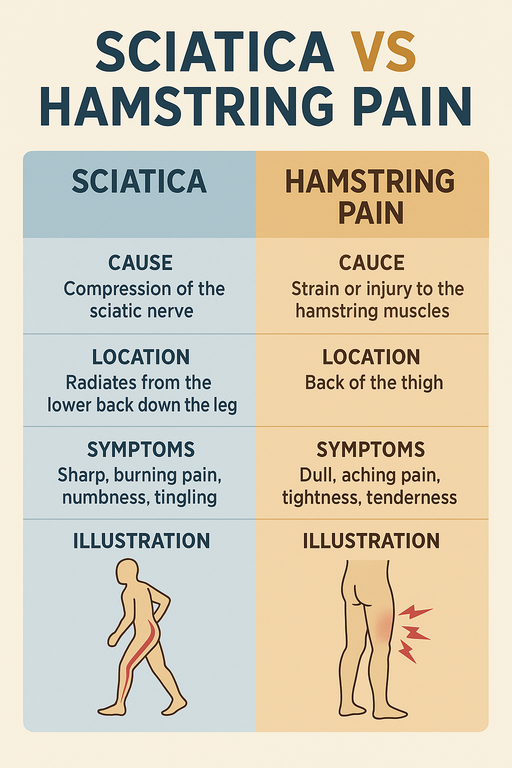
The cause of sciatica pain is irritation or compression of the sciatic nerve that extends lower back, down the hips and legs on either side. It can frequently produce a burning or electric shock-like discomfort that radiates down the leg and on occasions may be accompanied by numbness or tingling. The pain is normally on one side of the body.
Also Read: World Physiotherapy Day 2026: Helping People Move Without Pain
Conversely, a strain or injury to the hamstring muscles, located at the back of your thigh, causes hamstring pain. Unlike sciatic pain, this pain feels more localized and worsens with direct pressure or movements like bending or stretching the leg.
Common Causes
The pain in the sciatic nerve can be caused by a herniated disc, spinal stenosis, or sitting. Conversely, the pain in the hamstring is usually a result of overuse, inflexibility, and abrupt force when exercising.
Also Read: 10 Gentle Workouts to Help Lower Back Pain at Home
Also Read: What Are the 7 Principles of Massage Therapy?
Diagnosis and Therapy
A physical test can help assess your condition. Imagery scans provide detailed insights. Discussing your pain helps confirm sciatica or muscle strain. Proper diagnosis guarantees correct treatment of sciatica pain or rehabilitation treatment of the hamstring.
In individuals who want quick remedy to sciatica pain, rest, application of heat or cold, and anti-inflammatory drugs can alleviate the pain. Mild sciatica stretches can help take the nerve root pressure off. You may also look into specialized care such as Sciatica Treatment Brampton where the professionals can develop plans depending on the severity and the causes.
Also Read: 5 Quick Home Remedies for Leg Cramp Relief and Prevention
Meanwhile, treat hamstring pain with RICE, then follow with gradual strengthening and stretching for effective and complete recovery over time. Being incorrectly diagnosed with either of the other might slow down the healing process or lead to the deterioration of your state.
Exercises and Preventive Care
Posture correction, core stabilization exercises, and sciatica pain stretches are some of the most common things that are taught to help relieve sciatica pain. The flare-ups can be greatly alleviated by regular exercising and not sitting in the same position over a long period of time.
Stretching after workouts and warming up before helps prevent hamstring strains. If unsure about sciatica, consult a doctor for evaluation.
Also Read: Shoulder Pain Solutions: 7 Essential Exercises for Quick Relief
Also Read: Unravelling the Mystery: Dry Needling vs. Acupuncture
Medical Disclaimer
This content about sciatica and hamstring pain is for general information only and is not a substitute for professional medical advice, diagnosis, or treatment. Symptoms can vary from person to person. If your pain is severe, persistent, or getting worse, consult a qualified healthcare professional for proper assessment and treatment.
FAQs
Q1. What is the Difference between sciatica and hamstring pain?
A1: The pain produced in sciatica normally runs through the lower back, down the buttock and along the leg, usually with numbness. Hamstring pain typically occurs during or after activity and affects the back of the thigh.
Also Read: 5 Common Types of Back Pain You Should Know
Q2. What gives the most sciatica pain relief?
A2: Among the options are physiotherapy, chiropractic adjustments, and specific exercises to sciatic nerve pain relief. Our therapies like Sciatica Treatment Brampton should be able to provide a customised solution.
Q3. Do you have any special sciatica pain stretches I can give a go at home?
A3: Gentle yoga poses such as the pigeon pose, knee-to-chest stretch, and seated spinal twist are good methods of sciatica pain relief, yes. New exercises should always be Consultant-ed.
Also Read: Lower Back Pain vs. Sciatica: What’s the Difference and How to Treat It?
Q4. How do I know if it’s my hamstring or sciatica?
A4: Hamstring pain is usually felt at the back of the thigh and gets worse when stretching or exercising. Sciatica often causes pain that starts in the lower back or buttock and travels down the leg. You may also feel tingling, numbness, or weakness with sciatica.
Q5. What’s the worst thing you can do for sciatica?
A5: Staying in bed for a long time and avoiding all movement can make sciatica worse. Heavy lifting, poor posture, and sudden twisting movements may also increase pain.
Q6. What fixes sciatica quickly?
A6: Gentle stretching, walking, applying heat or ice, and taking over-the-counter pain medicine may help relieve symptoms. Physiotherapy can also help reduce pain and improve movement.
Q7. When should I see a doctor for sciatica?
A7: You should see a doctor if the pain is severe, lasts more than a few weeks, or causes weakness, numbness, or difficulty controlling your bladder or bowel.
Q8. Can physiotherapy help with sciatica?
A8: Yes. Physiotherapy can help reduce pain, improve flexibility, strengthen muscles, and prevent future flare-ups. A treatment plan is designed based on your specific condition.
Also Read: 10 Safe Ways to Treat Neck Pain during Pregnancy
Q9. How do I get rid of sciatic pain in my hamstring?
A9: Sciatic pain may cause pain that travels from the lower back or buttock into the hamstring. Gentle stretching, proper exercises, good posture, and physiotherapy may help. Avoid activities that make the pain worse and speak with a healthcare professional if symptoms continue.
Q10. Is walking good for hamstring pain?
A10: Gentle walking can be helpful for some people because it keeps the leg moving without putting too much stress on the hamstring. Start slowly and stop if walking increases your pain or swelling.
Q11. What should I not do with a pulled hamstring?
A11: Avoid running, jumping, heavy lifting, deep stretching, and other activities that cause pain. Do not return to sports too quickly, as this may delay healing or cause another injury.
Q12. How long does a hamstring strain usually take to heal?
A12: A mild hamstring strain may improve within a few weeks. More serious injuries can take several weeks or months to heal. Recovery time depends on the severity of the injury and how well you follow your treatment and rehabilitation plan.
Also Read: Top 5 Exercises for Strengthening Your Pelvic Floor
Gurpreet Kaur Kandhole, Physiotherapist
Gurpreet Kaur Kandhole is an experienced and caring physiotherapist with a Master’s degree in Musculoskeletal Conditions. She has been practicing physiotherapy since 2010 and has been a registered physiotherapist in Ontario since 2018.
Gurpreet helps patients manage both short-term and long-term pain using evidence-based treatment. Her areas of care include manual therapy, acupuncture, personalized exercise programs, sports injuries, neurological conditions, musculoskeletal conditions, and care for older adults.
She believes every patient is different and creates treatment plans based on their individual needs and goals. Her goal is to help patients reduce pain, improve movement, regain strength, and return to their daily activities with confidence.
Gurpreet is committed to continuing her education and keeping up with the latest developments in physiotherapy. She takes a patient-centered approach and focuses on providing safe, effective, and compassionate care.
Also Read: Knee Pain After Sitting Too Long: Causes and Tips


Leave a Comment