
Welcome to New Hope Physiotherapy
- Brampton 905-846-4000
- Malton 905-364-3900
- Orangeville 519-217-9300
- admin@newhopephysio.com
Why Does Cupping Therapy Leave Marks on the Skin?
23 Nov 2026
Why Does Cupping Therapy Leave Marks on the Skin?
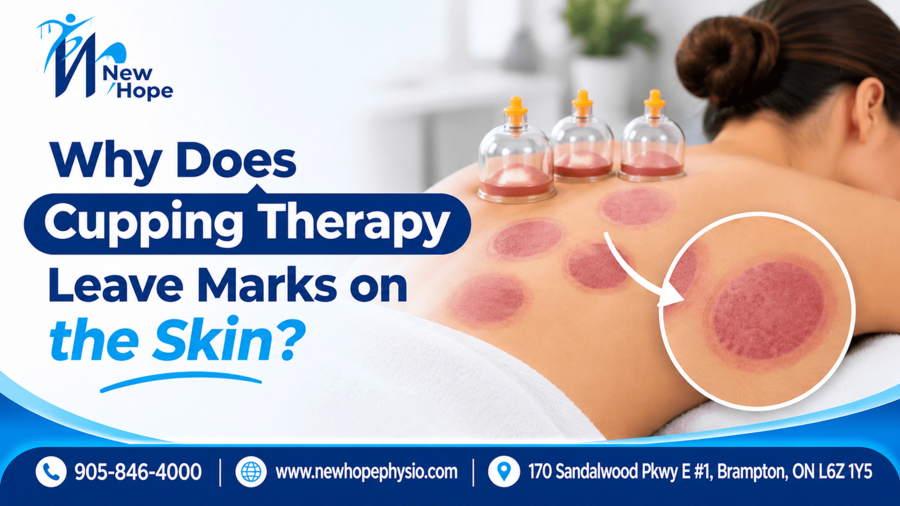
Have you ever noticed round, red, or purple marks on someone’s back after cupping therapy? These marks may look like bruises, but they are a common effect of cupping treatment.
Many people try cupping therapy to help manage muscle pain, tightness, and stiffness. However, they often worry about the marks left on their skin.
You may wonder why these marks appear, how long they last, and whether darker marks mean something is wrong.
In this blog, we explain why cupping leaves marks, what the different colours may mean, and how to care for your skin after treatment.
Want to try cupping therapy? Book your appointment with New Hope Physiotherapy today! 📞 Call 905-846-4000.
Also Read: Dry Cupping vs Wet Cupping: Key Differences & Treatments
What Is Cupping Therapy?
Cupping therapy is a traditional treatment that uses special cups to create suction on the skin. The cups gently pull the skin upward and affect the tissues underneath.
This treatment is sometimes used alongside physiotherapy, massage therapy, and other treatments for muscle discomfort.
During cupping suction therapy, a trained practitioner places cups on different areas of the body, such as:
- Back and shoulders
- Neck and upper back
- Arms and legs
- Thighs and calves
- Areas affected by muscle tightness
The suction increases blood flow near the skin’s surface. It may also provide temporary relief from certain types of pain.
However, scientific evidence about the benefits of cupping remains limited.
History of Cupping Therapy
The history of cupping therapy goes back thousands of years. It has been used in traditional healing practices in China, the Middle East, and other parts of the world.
In the past, practitioners used materials such as bamboo, clay, and glass cups.
Today, modern cupping therapy treatments often use plastic, silicone, or glass cups.
Some healthcare providers use cupping as a complementary treatment alongside other rehabilitation methods.
Also Read: Cupping Therapy vs. Massage: Which one is better for Pain Relief?
Why Does Cupping Therapy Leave Marks on the Skin?
The main reason cupping leaves marks is the suction created by the cups.
When a cup is placed on the skin, it creates a vacuum that gently pulls the skin upward.
This pressure can cause tiny blood vessels under the skin to break. A small amount of blood may then collect in the surrounding tissue.
As a result, round marks may appear after treatment.
These marks can be:
- Light pink
- Bright red
- Dark red
- Purple
- Deep purple
The colour depends on your skin, the suction strength, and how long the cups remain in place.
Most marks are temporary and fade naturally.
Why Does Cupping Leave Purple Marks?
Purple marks are common after cupping therapy treatment.
They appear when suction causes blood to leak from tiny blood vessels into the nearby skin tissue.
Several factors can affect the colour of these marks.
- Suction strength: Stronger suction can create darker marks.
- Treatment time: Leaving cups in one place longer may increase the chance of visible marks.
- Skin sensitivity: Some people develop marks more easily than others.
- Individual differences: Skin tone, blood vessel sensitivity, and certain medications may affect how marks appear.
Purple marks do not automatically mean that something is wrong.
What Do Darker Cupping Marks Mean?
One common question is: What does darker cupping marks mean?
Dark red or purple marks usually show a stronger reaction to suction.
Some traditional practices connect darker marks with poor circulation or toxins in the body. However, there is no reliable scientific evidence that the colour of a cupping mark can identify toxins or diagnose a health problem.
A darker mark does not mean the treatment was more effective.
Your practitioner should focus on your comfort, symptoms, and treatment goals rather than trying to create darker marks.
Also Read: Can Cupping Therapy Help You Avoid Pain Medication?
Does Cupping Always Leave Marks?
No. Cupping therapy does not always leave visible marks.
Some people develop noticeable circles after treatment, while others experience only mild redness.
The type of cupping also makes a difference.
For example, moving cupping involves gently sliding the cups across the skin. This technique may leave fewer circular marks than keeping cups in one place.
A trained practitioner can adjust the suction based on your skin and comfort level.
How Long Do Cupping Marks Take to Go Away?
Most cupping marks fade within a few days to two weeks.
Lighter marks may disappear sooner, while darker marks can take longer.
Typical appearance as cupping marks fade
| Cupping Mark Colour | Description |
| Red or Pink | Early appearance after cupping therapy. |
| Purple | May develop after suction. |
| Fading | Marks gradually fade, and the skin returns to its normal colour. |
Illustrative colour examples only. Actual skin colour changes and healing times vary. Not every mark follows the same sequence.
According to the Cleveland Clinic, cupping marks generally fade within one or two weeks.
If your marks are not improving after two weeks, or you develop unusual symptoms, speak with a healthcare professional.
How to Get Rid of Cupping Marks Fast
There is no guaranteed way to make cupping marks disappear immediately.
However, proper skin care can help prevent irritation while your body heals.
Follow these simple tips:
- Keep your skin clean: Gently wash the treated area.
- Avoid scratching: Do not rub or scrub the marks.
- Use gentle skin products: Avoid strong chemicals or irritating creams.
- Wear loose clothing: Reduce pressure on sensitive areas.
- Stay hydrated: Drink enough water for your normal daily needs.
- Allow time to heal: Avoid repeated cupping on skin that is still marked or sore.
Do not try harsh home remedies to remove cupping marks quickly. They may irritate your skin and delay healing.
Before and After Cupping Therapy: What to Expect
Knowing what happens before and after cupping therapy can help you feel more comfortable.
Before Your Treatment
Your practitioner should review your health history and explain the treatment.
Tell them if you have sensitive skin, a bleeding disorder, take blood-thinning medication, or have an existing skin condition.
The practitioner can then assess whether cupping is appropriate for you.
During Your Treatment
You may feel a gentle pulling or tight sensation as the cups create suction.
The treatment should not cause severe pain.
Always tell your practitioner if the suction feels uncomfortable.
After Your Treatment
You may notice mild redness, circular marks, or temporary skin sensitivity.
Avoid irritating the treated area and follow the aftercare advice provided by your practitioner.
Cupping Therapy Benefits for Muscle Pain and Stiffness
People often seek cupping therapy benefits for muscle-related discomfort.
Some patients report temporary improvements in:
- Muscle tightness
- Back discomfort
- Neck and shoulder stiffness
- General muscle soreness
- Relaxation
Cupping may help some people manage pain, but research has not clearly established its effectiveness for many conditions. It should not replace medical care or recommended rehabilitation exercises.
When Are Cupping Marks a Cause for Concern?
Although temporary marks are common, some reactions need medical attention.
Watch for:
- Severe or increasing pain
- Large blisters or burns
- Unusual swelling
- Spreading redness or warmth
- Pus or other signs of infection
- Marks that continue to worsen
These may indicate skin injury or another complication.
If you experience any of these symptoms, contact a healthcare professional.
Cupping Therapy in Brampton, Mississauga, and Orangeville
If you are searching for cupping therapy near me, choosing a qualified and experienced healthcare provider is important.
At New Hope Physiotherapy, patients in Brampton, Mississauga (Malton), and Orangeville can explore cupping therapy as part of a personalized approach to managing muscle discomfort.
Whether you are looking for cupping therapy Brampton, cupping therapy Mississauga, or Cupping Therapy Orangeville, a proper assessment can help determine which treatment options are suitable for you.
Your healthcare provider can explain the potential benefits, risks, and expected skin reactions before starting treatment.
Final Thoughts
Cupping marks are a common result of suction applied to the skin. They may look red, purple, or dark, but most fade naturally within one or two weeks.
Darker marks do not necessarily mean you have poor circulation or that the treatment worked better.
The most important things are proper treatment, safe suction levels, and good skin care.
If you are considering Cupping Therapy Ontario, speak with a qualified healthcare professional to learn whether it is appropriate for your needs.
Book Your Cupping Therapy Appointment at New Hope Physiotherapy
Are you experiencing muscle tightness, back pain, or shoulder stiffness?
New Hope Physiotherapy offers personalized treatment services in Brampton, Mississauga, and Orangeville.
Our team can assess your condition and help you explore suitable treatment options, including cupping therapy where appropriate.
Contact New Hope Physiotherapy today to book an appointment and learn more about your treatment options.
Disclaimer: This blog provides general health information and is not a substitute for professional medical advice. Cupping therapy may not be suitable for everyone.
FAQs:
1. How long does it take for cupping marks to go away?
Cupping marks usually fade within 3 to 10 days. Some darker marks may take up to two weeks to disappear. The healing time depends on your skin, the strength of the suction, and how long the cups were applied.
2. How can I get rid of cupping marks quickly?
There is no proven way to remove cupping marks instantly. You can help your skin recover by keeping the area clean, avoiding further pressure, and allowing the marks to fade naturally. Do not scrub or massage the marks aggressively.
3. Is bruising normal after cupping therapy?
Yes. Round red, purple, or dark marks are common after cupping therapy. They happen because suction affects small blood vessels under the skin. However, severe pain, large blisters, increasing swelling, or spreading redness are not normal and should be checked by a healthcare professional.
4. Can I take a shower after cupping therapy?
Yes. A short, lukewarm shower is generally fine after cupping if your skin is intact. Avoid very hot showers, saunas, and harsh scrubbing if the treated area feels sensitive. If you had wet cupping or have broken skin, follow your healthcare provider’s wound-care instructions.
5. How often can I get cupping therapy?
The frequency depends on your condition, skin sensitivity, and treatment goals. Some people receive cupping every few weeks, while others need longer breaks. Allow your skin to recover before treating the same area again. A qualified healthcare professional can recommend a suitable schedule.
6. What should I avoid after cupping therapy?
After cupping therapy, follow these simple aftercare tips:
- Drink water to stay hydrated.
- Keep the treated area clean.
- Avoid scratching or rubbing cupping marks.
- Avoid very hot baths if your skin is sensitive.
- Wear comfortable, loose clothing.
- Avoid another cupping session on the same area until the marks have healed.
7. How long do the benefits of cupping therapy last?
Some people experience temporary relief from muscle tension or discomfort after cupping therapy. The effects may last a few hours or several days, but results vary from person to person. There is limited scientific evidence about how long the benefits last.
8. Why are some cupping marks darker than others?
The colour of cupping marks can vary from light red to dark purple. Darker marks may appear because of stronger suction, longer treatment time, or individual skin differences. Dark marks do not necessarily mean the treatment worked better or that toxins were removed.
9. Is it normal to have dark purple marks after a cupping massage?
Dark purple circular marks can be a normal reaction to cupping massage. They should gradually fade and usually do not require treatment. However, if you experience severe pain, blisters, unusual swelling, or signs of infection, contact a healthcare professional.
10. Can I exercise after cupping therapy?
You can usually return to light activities after cupping if you feel comfortable. If your muscles or skin feel sore, consider avoiding intense exercise until the discomfort improves. Ask your physiotherapist for advice based on your treatment and recovery needs.
Curious about cupping therapy? Visit New Hope Physiotherapy to learn more about its benefits and get expert care. Call 905-846-4000 or visit www.newhopephysio.com to book your appointment today!
Medical Disclaimer:
This content is for general information only and is not a substitute for professional medical advice. Cupping marks are usually temporary, but results may vary. Consult a qualified healthcare professional if you experience pain, swelling, or unusual skin reactions.
Sonee Desai, Registered Massage Therapist & Certified Cupping Therapist
Sonee Desai has extensive experience helping people with pain, movement, and recovery. She began her career as a Physiotherapist in India and has been practicing as a Registered Massage Therapist for nearly five years.
Sonee takes a careful and personalized approach to every treatment. She focuses on understanding each client’s needs, reducing pain, improving movement, supporting recovery, and helping clients feel their best over the long term.
She also has experience in prenatal and postnatal massage care and is certified in cupping therapy. Sonee offers treatments tailored to each client’s comfort, goals, and wellness needs.

Leave a Comment