

Welcome to New Hope Physiotherapy
- Brampton 905-846-4000
- Malton 905-364-3900
- Orangeville 519-217-9300
- admin@newhopephysio.com
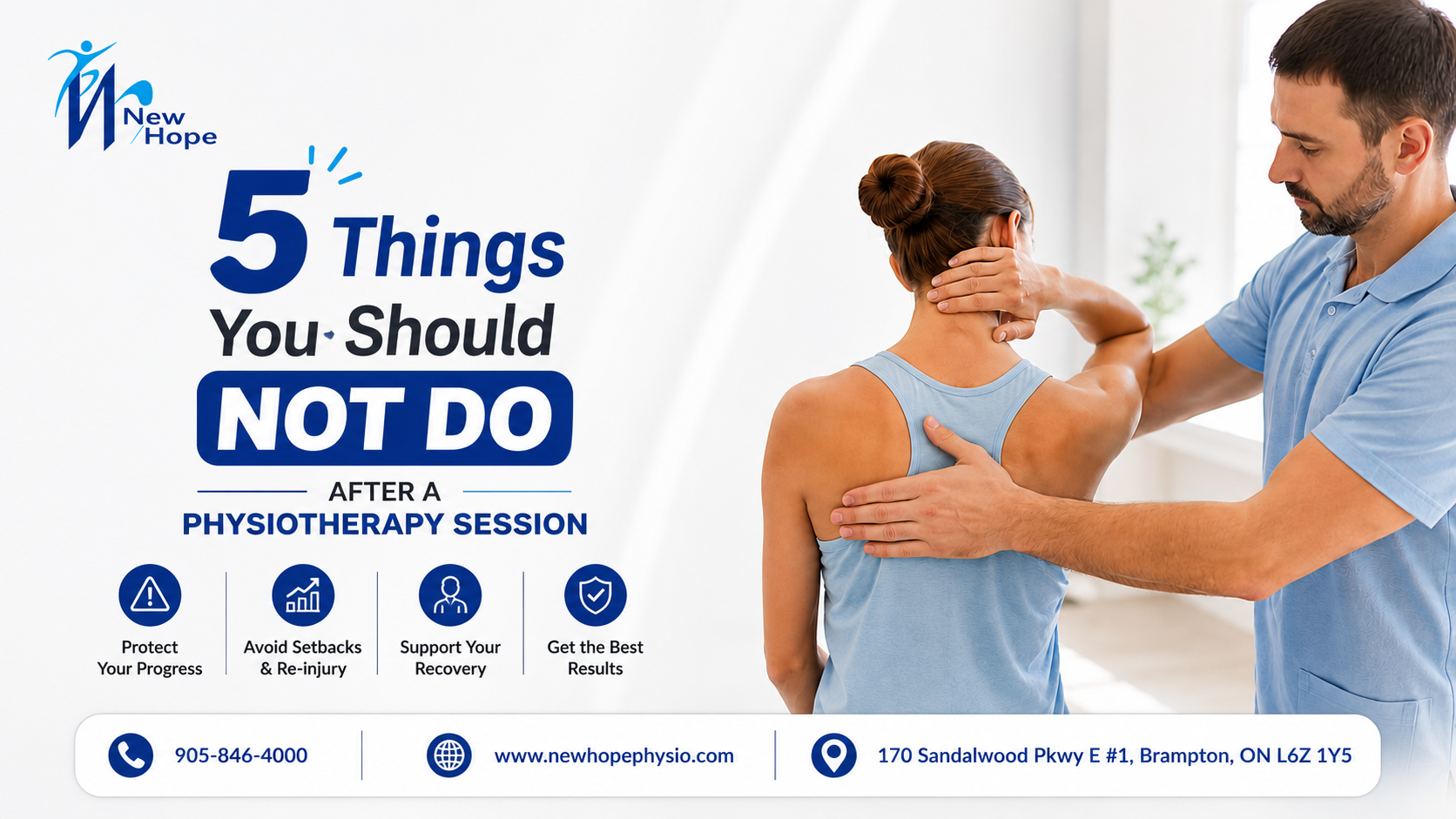
5 Things You Should Not Do After a Physiotherapy Session
 18 May 2026
- newhope
- 0 Comments
- 602
5 Things You Should Not Do After a Physiotherapy Session
People usually think physiotherapy ends once they walk out of the clinic. But honestly that’s not really true. What you do after the appointment matters too, maybe more than people realize. You can have a really good session at a physiotherapy clinic in Brampton and then accidentally undo some of the progress later the same day without meaning to.
A lot of patients feel better right after treatment. Looser maybe. Less stiff. Sometimes even kind of energized. Then a few hours later the soreness kicks in and they start wondering if something went wrong. Usually it didn’t. That part can be normal actually.
Still, there are a few things you probably should not do after physiotherapy. Some are obvious, some not really. Depends on the person too I guess.
Also Read: 10 Gentle Workouts to Help Lower Back Pain at Home
1. Don’t Jump Into Heavy Exercise Right Away
This one happens constantly.
People leave physiotherapy in Brampton Ontario feeling better and suddenly decide it’s a great day to clean the garage, lift weights, or go hard at the gym because “the pain is gone now.” But your body still needs time after treatment.
If your physiotherapist worked on tight muscles, joints, or posture issues, those areas may still be sensitive even if you feel okay at first. Sometimes the soreness doesn’t show up until later that evening. That delayed soreness catches people off guard a lot actually.
Light walking is usually fine. Gentle movement too. But intense workouts immediately after treatment can sometimes irritate things again. Especially with back pain or shoulder injuries.
Not saying you need to lie in bed all day. Just maybe don’t deadlift 300 pounds two hours later.
Also Read: 5 Quick Home Remedies for Leg Cramp Relief and Prevention
2. Don’t Forget to Drink Water
This sounds too simple maybe but honestly people forget this all the time.
After physiotherapy, especially manual therapy or massage work, your muscles can feel tired and dehydrated. Water helps your body recover better. It can also reduce soreness a bit. Or headaches. Some people get headaches after treatment and it’s literally just because they didn’t drink enough water afterward.
A your physiotherapist will usually mention hydration but patients get busy and forget by the time they get home.
Coffee probably doesn’t count here either. Unfortunately.
And honestly if you already don’t drink enough water during the day, physiotherapy can make that more noticeable after treatment.
Also Read: 5 Common Types of Back Pain You Should Know
3. Don’t Sit for the Rest of the Day
This one is kind of ironic because people think resting means staying completely still. But after physiotherapy, sitting too long can actually tighten your muscles back up again.
Especially lower back pain patients. Or neck pain. You know when you finally feel loose after treatment and then sit hunched over your laptop for four straight hours? Yeah. That.
If you work at a desk, try standing up every so often. Walk around a bit. Doesn’t need to be some intense recovery plan. Even light movement helps your body stay loose after the session.
A lot of people searching physiotherapy near me are already dealing with stiffness from sitting too much anyway. So going right back into that routine immediately after treatment is probably not helping much.
Also Read: Shoulder Pain Solutions: 7 Essential Exercises for Quick Relief
4. Don’t Ignore the Home Exercises
Honestly this is probably the biggest mistake overall.
A physiotherapist in Brampton gives home exercises because treatment alone usually isn’t enough long term. But people get busy. They forget. Or they do the exercises once and then stop because the pain improved slightly.
Then two weeks later the pain comes back and they wonder why.
The exercises are usually meant to strengthen weak muscles or improve movement patterns over time. The actual appointment helps, obviously, but recovery also happens between sessions. That’s the important part people sometimes skip.
And no, they usually don’t take that long either. Sometimes it’s literally 10 minutes.
Not the most exciting part of physiotherapy though, to be fair.
5. Don’t Ignore Weird Pain or Symptoms
Mild soreness after physiotherapy is normal. Especially if it was your first session or if the treatment was deeper than usual. Feeling a bit tired afterward can happen too.
But sharp pain, dizziness, swelling, numbness, stuff like that… probably shouldn’t be ignored.
Some people think they need to push through every kind of pain because recovery is supposed to hurt. That’s not always true though. There’s normal soreness and then there’s “something feels wrong” soreness. Hard to explain but most people know the difference when it happens.
If something feels off after visiting a physiotherapy clinic in Brampton, it’s okay to call and ask questions. Good clinics actually want feedback because it helps adjust the treatment plan if needed.
Sometimes even small changes make a huge difference.
Also Read: What Should You Not Do After Cupping?
Why People Feel So Tired After Physiotherapy
This gets asked a lot actually. People are surprised by how exhausted they feel after a session.
Part of it is physical. Your muscles were worked on, stretched, activated maybe. Blood flow changes. Tight areas relax. Weak muscles start working harder than they usually do.
But there’s also just the mental side of it sometimes. Pain itself is exhausting honestly. And when your body finally starts relaxing after weeks or months of tension, you suddenly feel how tired you actually were the whole time. Kind of strange but it happens.
Usually rest, hydration, and decent sleep help pretty quickly.
Finding the Right Physiotherapy Clinic
There are lots of options for physiotherapy Brampton patients can choose from now. Some clinics focus more on sports rehab, some on chronic pain, some on general recovery. It depends what you need.
Good clinics usually take time to explain things properly instead of rushing through appointments. That matters more than fancy equipment sometimes honestly.
Whether you’re looking for Physiotherapy services, injury rehab, or just help with everyday stiffness and pain, consistency matters a lot. Recovery usually isn’t instant. It’s kind of gradual and uneven sometimes.
One week feels great. Another week maybe not as much. That’s normal too probably.
Also Read: How do I Get Instant Relief from Shoulder Pain?
FAQs
1. How long should I rest after physiotherapy?
Usually a few hours of lighter activity is enough. Most people can continue normal daily activities but should avoid intense workouts right away.
2. What not to do after physiotherapy?
Try not to overexercise, sit too long, skip hydration, or ignore the exercises your physiotherapist gave you.
3. What is the best thing to do after physical therapy?
Drink water, move gently, and give your body some time to recover naturally after treatment.
4. Do I need to rest after physiotherapy?
Yes, some rest helps. But complete inactivity usually isn’t necessary unless your physiotherapist specifically tells you to rest fully.
5. Why am I so tired after physiotherapy?
Your muscles and nervous system are adjusting to treatment, which can make you feel physically tired afterward.
Also Read : 5 Common Types of Back Pain You Should Know
6. Is soreness normal after physiotherapy?
Mild soreness is common, especially after manual therapy or exercises targeting weak muscles.
7. Can I go to work after physiotherapy?
Most people can return to work after treatment, depending on the type of job and treatment they received.
8. Should I use ice or heat after physiotherapy?
It depends on the injury or condition. Your physiotherapist will usually recommend what works best.
9. How often should I do physiotherapy exercises?
Usually daily or a few times a week depending on your recovery plan.
10. How do I choose the right physiotherapist in Brampton?
Look for a licensed physiotherapist with good reviews, personalized treatment plans, and clear communication.

Leave a Comment