
Welcome to New Hope Physiotherapy
- Brampton 905-846-4000
- Malton 905-364-3900
- Orangeville 519-217-9300
- admin@newhopephysio.com
Can Physiotherapy Help Your Hamstring Pain?
 23 Jun 2026
Can Physiotherapy Help Your Hamstring Pain?
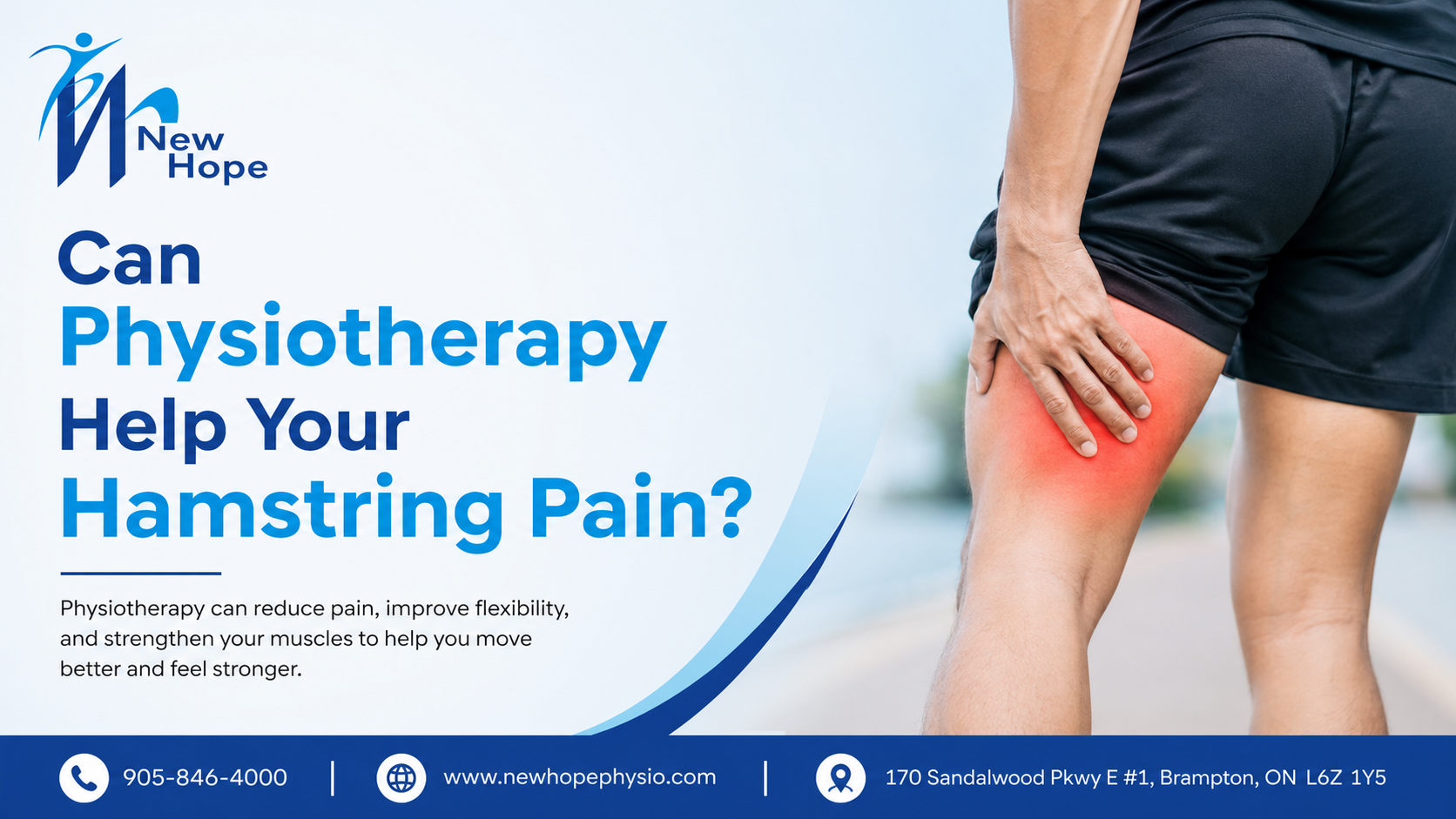
Have you ever felt a sharp pull in the back of your thigh while running, walking, or even bending down? If yes, you may be dealing with Hamstring Pain.
Hamstring problems are common. They affect athletes, gym-goers, office workers, and even people who do not exercise regularly. The good news is that Physiotherapy can often help reduce pain, improve movement, and lower the chance of future injuries.
Let’s take a closer look at how physiotherapy may help.
Also Read: 10 Gentle Workouts to Help Lower Back Pain at Home
What Are the Hamstring Muscles?
The hamstring muscles are a group of three muscles located at the back of your thigh. These muscles help you:
- Bend your knee
- Extend your hip
- Walk, run, jump, and climb stairs
- Maintain balance during movement
When these muscles become strained, tight, or injured, everyday activities can become uncomfortable.
What Causes Hamstring Pain?
There are many reasons why people develop hamstring muscle pain.
Some common causes include:
- Sudden sprinting or running
- Poor warm-up before exercise
- Muscle weakness
- Tight muscles
- Sports injuries
- Overuse from repetitive movements
- Sitting for long periods
In some cases, a Hamstring injury can happen during a simple activity like slipping or lifting something heavy.
Signs of a Hamstring Injury
You may have a hamstring problem if you notice:
- Pain in the back of the thigh
- Tightness when walking
- Swelling or bruising
- Difficulty bending the knee
- Pain during sports or exercise
- Reduced flexibility
Some people feel a sudden popping sensation at the time of injury.
Also Read: 5 Quick Home Remedies for Leg Cramp Relief and Prevention
How Physiotherapy Can Help
When people begin to experience hamstrings pain, many will look up the phrase “Physiotherapy Near Me.”
Physiotherapists can determine the reason behind your pain and develop an appropriate treatment plan.
Physiotherapy may include:
1. Pain Management
During the early stage of recovery, treatment may focus on reducing pain and irritation.
Methods can include:
- Manual therapy
- Soft tissue treatment
- Guided movement exercises
- Education on activity modification
2. Improving Flexibility
Tight hamstrings often need gradual stretching.
Common hamstring stretches include:
- Standing hamstring stretch
- Seated toe touch
- Towel stretch
- Wall-assisted stretch
These stretching exercises for hamstring flexibility can help improve movement over time.
3. Building Strength
Weak muscles are more likely to get injured again.
A physiotherapist may recommend:
- Basic hamstring strengthening exercises
- Bridge exercises
- Resistance band exercises
- Controlled strengthening programs
As recovery progresses, more advanced exercises may be added.
Also Read: 5 Common Types of Back Pain You Should Know
Best Hamstring Exercises
Not every exercise is right for every injury. That is why professional guidance is important.
Some commonly used hamstring exercises include:
Hamstring Curl
The hamstring curl is a popular strengthening exercise.
Benefits include:
- Improves muscle strength
- Supports knee stability
- Helps restore normal movement
Seated Hamstring Curls
Seated hamstring curls are often used during rehabilitation because they allow controlled movement.
They can:
- Strengthen the hamstrings safely
- Improve muscle endurance
- Support recovery after injury
Bridges
Bridges strengthen the hamstrings and glutes at the same time.
Step-Ups
Step-ups help improve balance and functional strength.
Always perform exercises according to your healthcare provider’s recommendations.
Also Read: 5 Conditions Causing Your Shoulder Pain
One Real Example
A recreational soccer player in his early 30s felt a sudden pull in the back of his thigh during a weekend game.
At first, he thought the pain would disappear on its own. Instead, walking became uncomfortable and returning to sports felt impossible.
After visiting a physiotherapist, he followed a structured recovery program that included:
- Gentle stretching
- Strengthening exercises
- Gradual return-to-running drills
- Education on proper warm-ups
His pain was reduced greatly over several weeks. He was able to play soccer again with increased strength and confidence.
Not all injuries will be the same, but this particular case demonstrates how much of a difference can be made with an individualized treatment program.
Also Read: Shoulder Pain Solutions: 7 Essential Exercises for Quick Relief
Why Early Treatment Matters
Ignoring hamstring pain can sometimes lead to:
- Ongoing discomfort
- Muscle weakness
- Reduced flexibility
- Repeated injuries
- Longer recovery times
Early seeking of assistance can enhance recovery as well as help to avoid future issues.
If you are seeking Physiotherapy Brampton services, working with a qualified physiotherapist will help you to find out the root cause of your problem.
Also Read: 11 Sciatica Stretches for Quick Pain Relief
Tips to Prevent Hamstring Pain
Here are some simple ways to protect your hamstrings:
✅ Warm up before exercise
✅ Stay active throughout the day
✅ Stretch regularly
✅ Strengthen your leg muscles
✅ Increase activity levels gradually
✅ Maintain proper exercise technique
Small habits can often make a big difference.
Final Thoughts
Hamstring Pain can affect sports, work, and daily activities. Whether your discomfort comes from tight muscles or a more serious Hamstring injury, the right treatment can help.
Physiotherapy focuses on improving movement, reducing pain, and strengthening the body so you can return to normal activities safely. Through guided exercises, education, and personalized care, many people find lasting relief and better function.
If hamstring pain is limiting your activities, speaking with a physiotherapist may be a good first step toward recovery.
Also Read: 10 Safe Ways to Treat Neck Pain during Pregnancy
Frequently Asked Questions
1. How long does a mild hamstring strain take to heal?
A mild hamstring strain often improves within 2 to 6 weeks. Recovery time depends on the severity of the injury and how well rehabilitation is followed.
2. Is walking good for hamstring pain?
Gentle walking may help maintain mobility if it does not increase pain. Avoid pushing through significant discomfort.
3. What not to do with a strained hamstring?
Avoid sprinting, jumping, heavy lifting, or aggressive stretching during the early stages of recovery.
4. What can be mistaken for tight hamstrings?
Lower back problems, sciatic nerve irritation, and hip conditions can sometimes feel similar to tight hamstrings.
Also Read: Frozen Shoulder vs. Rotator Cuff Tear: Key Differences and Symptoms
5. Do hamstrings get tighter as you age?
They can. Reduced activity levels, prolonged sitting, and natural changes in flexibility may contribute to tighter muscles over time.
6. How long does it take to loosen really tight hamstrings?
It varies. With consistent stretching and strengthening, noticeable improvements often occur within several weeks.
7. Does heat help tight hamstrings?
Heat may help relax tight muscles and improve comfort. However, recent injuries may require different treatment approaches.
8. What not to do with a hamstring injury?
Avoid returning to sports too quickly and do not ignore persistent pain.
9. Should I workout if my hamstrings are tight?
Light exercise may be appropriate, but activities should not worsen symptoms. A physiotherapist can guide safe exercise choices.
10. What do doctors do for a hamstring injury?
Doctors may assess the injury, recommend rest, prescribe medication when necessary, order imaging tests, and refer patients to physiotherapy for rehabilitation.
Also Read: What Should You Not Do After Cupping?
Medical Disclaimer:
This information is for general education only and is not a substitute for professional medical advice. If you have hamstring pain, consult a qualified physiotherapist or healthcare professional for proper assessment and treatment.
Gauravdeep Randhawa, Registered Physiotherapist
Gauravdeep Randhawa is a caring and experienced physiotherapist with over 17 years of experience helping patients recover and improve their quality of life.
She started her own practice in Canada in 2009 and has treated many patients with muscle, joint, sports, neurological, and pelvic health conditions. She has also owned and operated multidisciplinary clinics.
Gauravdeep is a Certified Manual Therapist and has completed training in Contemporary Medical Acupuncture and Pelvic Floor Therapy. She uses hands-on treatment, personalized exercise programs, and evidence-based care to support each patient’s recovery.
Her goal is to help people reduce pain, restore movement, improve function, and achieve long-term wellness in a comfortable and supportive environment.
Also Read: Frozen Shoulder vs. Rotator Cuff Tear: Key Differences and Symptoms

Leave a Comment