
Welcome to New Hope Physiotherapy
- Brampton 905-846-4000
- Malton 905-364-3900
- Orangeville 519-217-9300
- admin@newhopephysio.com
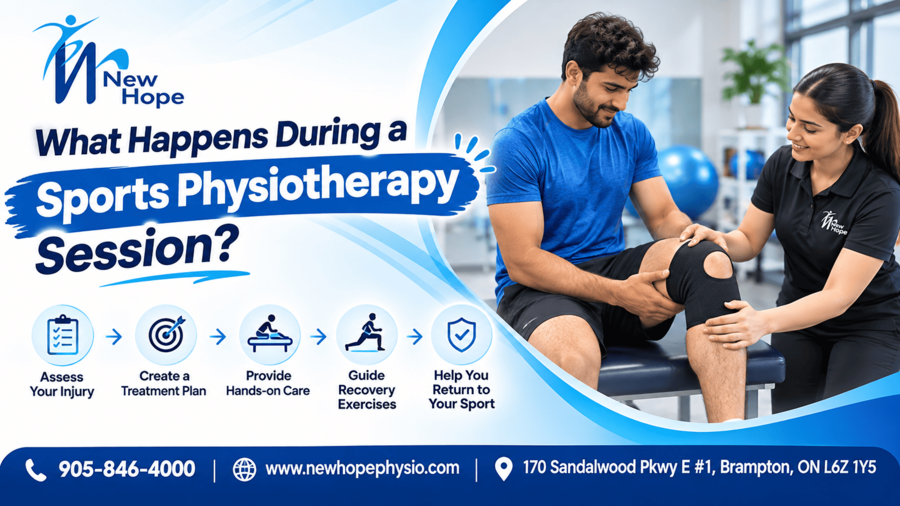
What Happens During a Sports Physiotherapy Session?
3 Nov 2026
What Happens During a Sports Physiotherapy Session?
Sports injuries can happen to anyone. You do not have to be a professional athlete to get injured. Running, playing soccer, lifting weights, or even exercising at home can cause muscle pain, joint injuries, or stiffness.
If you have a sports injury, Sports Physiotherapy may help you manage pain, improve movement, and return to your favourite activities safely.
Many people search for Sports physiotherapy near me when they experience pain or discomfort after physical activity. But what actually happens during a physiotherapy session?
In this blog, we explain what to expect during Sports Injury Physiotherapy, how treatment works, and how it can support your recovery.
Also Read: Sports Physiotherapy vs Physiotherapy: Which One Do You Need?
What Is Sports Physiotherapy?
Sports Physiotherapy focuses on treating injuries related to sports, exercise, and physical activity.
A Sports Physiotherapist checks your injury, identifies movement problems, and creates a treatment plan based on your needs.
Physiotherapy for Sports Injuries may help with:
- Muscle strains and ligament sprains
- Knee and ankle injuries
- Shoulder and back pain
- Tennis elbow
- Running injuries
- Sports-related joint pain
- Muscle weakness and stiffness
The goal of Sports Rehabilitation is to improve strength, flexibility, movement, and confidence.
What Happens During Your First Sports Physiotherapy Session?
Your first appointment usually includes an assessment and a discussion about your injury.
1. Discussion About Your Injury
Your physiotherapist will ask questions to understand your symptoms.
These may include:
- When did your injury happen?
- Where do you feel pain?
- Does movement make the pain worse?
- What sports or exercises do you enjoy?
- Have you had similar injuries before?
Your answers help your physiotherapist understand your condition and recovery goals.
Also Read: 5 Quick Home Remedies for Leg Cramp Relief and Prevention
2. Physical Assessment
Next, your physiotherapist will check how your body moves.
They may examine your:
- Joint movement and flexibility
- Muscle strength
- Balance and posture
- Walking or running movements
- Pain during specific activities
This assessment helps identify areas that may need treatment.
3. Personalized Treatment Plan
After the assessment, your physiotherapist will explain the findings and suggest a treatment plan.
Your Sports Injury Treatment may include:
- Gentle stretching exercises
- Strengthening exercises
- Hands-on therapy
- Balance and coordination training
- Movement correction
- Advice on managing pain at home
Every injury is different. Your treatment will depend on your symptoms, physical condition, and recovery progress.
Also Read: What Should You Not Do After Cupping?
What Happens During Follow-Up Sessions?
Follow-up appointments focus on improving your movement, strength, and physical ability.
Your physiotherapist may adjust your exercises as you recover.
Pain Management
Treatment may include hands-on techniques, gentle movements, and exercises to help reduce discomfort.
Strength and Flexibility Exercises
Weak or tight muscles can affect movement. Targeted exercises help improve strength and flexibility.
Sports-Specific Training
As your injury improves, your physiotherapist may introduce movements related to your sport.
For example, a soccer player may practise balance and direction changes. A runner may work on lower-body strength and running technique.
These exercises support Sports Injury Rehabilitation and help prepare your body for physical activity.
How Long Does Sports Injury Recovery Take?
Sports Injury Recovery depends on the type and severity of your injury.
Minor injuries may improve within a few weeks. More serious injuries may require several months of rehabilitation.
Following your exercise plan, attending appointments, and avoiding activities that worsen your injury can support your recovery.
Your physiotherapist will monitor your progress and guide your return to exercise.
Also Read: 10 Gentle Workouts to Help Lower Back Pain at Home
When Should You Visit a Sports Physiotherapist?
Consider booking an assessment if you experience:
- Pain during sports or exercise
- Swelling around a joint
- Ongoing muscle tightness
- Difficulty walking or running
- Reduced strength or flexibility
- Repeated sports injuries
If you are searching for a sports injury clinic near me or sports injury rehabilitation near me, choose a clinic that provides personalized assessments and treatment plans.
Severe pain, major swelling, visible deformity, or an inability to bear weight may require urgent medical assessment.
Sports Physiotherapy in Brampton and Mississauga
If you need Sports physiotherapy Brampton or Sports physiotherapy Mississauga, New Hope Physiotherapy offers assessment and rehabilitation services for sports-related injuries.
Whether you are looking for Physiotherapy Brampton Near me, Physiotherapy Near me, or a sports injury clinic Brampton, our team can help you work toward your recovery goals.
Our approach focuses on improving movement, building strength, and helping you return to your activities safely.
Also Read: 10 Safe Ways to Treat Neck Pain during Pregnancy
10 Frequently Asked Questions About Sports Physiotherapy
1. What should I expect during my first sports physiotherapy appointment?
Your physiotherapist will discuss your injury, assess your movement, and recommend a treatment plan based on your needs.
2. Is sports physiotherapy painful?
Some exercises may cause mild discomfort. However, treatment should not cause severe pain. Tell your physiotherapist if anything hurts.
3. How long does a sports physiotherapy session take?
Sessions commonly last around 30 to 60 minutes, depending on the clinic, appointment type, and treatment required.
4. Do I need a doctor’s referral for sports physiotherapy?
In Ontario, you generally do not need a doctor’s referral to see a physiotherapist. However, some insurance plans may require one for reimbursement.
5. Can sports physiotherapy help with knee injuries?
Yes. Physiotherapy may improve knee strength, movement, and stability after certain sports-related injuries.
6. What should I wear to my physiotherapy appointment?
Wear comfortable clothing that allows easy movement and access to the injured area.
Also Read: Frozen Shoulder vs. Rotator Cuff Tear: Key Differences and Symptoms
7. How many physiotherapy sessions will I need?
The number of sessions depends on your injury, symptoms, goals, and progress.
8. Can physiotherapy help prevent future sports injuries?
Physiotherapy can help identify weakness, improve movement, and teach safer exercise techniques that may reduce injury risk.
9. Is sports physiotherapy only for athletes?
No. Sports physiotherapy can help anyone who develops an injury during exercise, recreational sports, or physical activity.
10. When can I return to sports after an injury?
Your return depends on your recovery, strength, movement, and ability to perform sports-related activities safely. Your physiotherapist can help guide this process.
Start Your Sports Injury Recovery with New Hope Physiotherapy
Do not let a sports injury keep you away from the activities you enjoy.
At New Hope Physiotherapy, we provide Physical Therapy for Sports Injuries to help you manage pain, restore movement, and work toward a safe return to exercise.
Book your sports physiotherapy appointment today!
Phone: 905-846-4000
Website: www.newhopephysio.com
Address: 170 Sandalwood Pkwy E, Unit 1, Brampton, ON L6Z 1Y5
Medical Disclaimer: This blog is for general information only and does not replace professional medical advice, diagnosis, or treatment. Consult a qualified healthcare professional for assessment and guidance regarding your injury.
Gauravdeep Randhawa, Registered Physiotherapist
Gauravdeep Randhawa is a caring and experienced physiotherapist with over 17 years of experience helping patients recover and improve their quality of life.
She started her own practice in Canada in 2009 and has treated many patients with muscle, joint, sports, neurological, and pelvic health conditions. She has also owned and operated multidisciplinary clinics.
Gauravdeep is a Certified Manual Therapist and has completed training in Contemporary Medical Acupuncture and Pelvic Floor Therapy. She uses hands-on treatment, personalized exercise programs, and evidence-based care to support each patient’s recovery.
Her goal is to help people reduce pain, restore movement, improve function, and achieve long-term wellness in a comfortable and supportive environment.
Also Read: Knee Pain in Kids: What Parents Should Know


Leave a Comment