

Welcome to New Hope Physiotherapy
- Brampton 905-846-4000
- Malton 905-364-3900
- Orangeville 519-217-9300
- admin@newhopephysio.com
11 Powerful Solutions for Sciatica Pain Relief You Need to Try
 30 Jul 2022
- newhope
- 0 Comments
- 3097
11 Powerful Solutions for Sciatica Pain Relief You Need to Try
Sciatica is one of the most common pain conditions for leg pain. This condition is triggered when any nerve is pinched or compressed in the lower back.
When this nerve is pinched, the lower half is affected. It can cause severe sciatica pain, swelling, and even numbness. When a disc cracks in the lower back, it may enter the spinal canal.
Also Read : Sciatica vs Hamstring Pain: What You Need to Know
If it is large enough, the sciatica nerve gets pinched or compressed. Many people think that sciatica pain is intolerable. This is why many physical therapists and chiropractors work and give therapies to offer Solutions for Sciatica Pain.
Patients often opt for a specific type of sciatica treatment. These treatments are based on rehabilitation goals, lifestyle, physician recommendation, and pain severity.
Ready to feel better and move with confidence? Book your appointment at New Hope Physiotherapy in Brampton today. Call 905-846-4000 to get started!
Also Read : Benefits Of Acupuncture Treatment & Acupuncture Clinics In Brampton
Effective treatments for sciatica pain
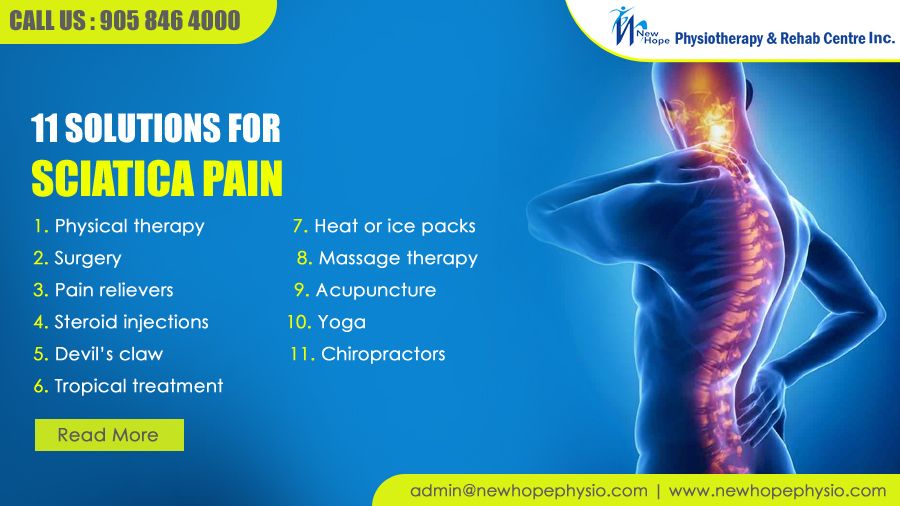
Here are the most effective and common 11 ways by which you can treat your sciatica pain.
1. Chiropractors
Chiropractic adjustments often include spinal adjustments. It can also help to relieve pain that is related to sciatica. It brings the health of patients back to normal physical mobility. Chiropractors also treat other body parts that might have caused sciatica pain. It makes sure that patients are relieved from pain in the long run and are healed.
2. Yoga
Yoga has various benefits, including relieving pain and mobility restoration. You can do specific yoga poses instructed by your instructor that can relieve sciatic pain.
Also Read : Advantages Of Acupuncture Therapy
3. Acupuncture
It depends on the line of energy. In this case, a pressure needle is applied to reduce inflammation in affected areas. It can relieve pain by clearing blockages.
4. Massage therapy
A standard procedure used in massage called trigger point therapy. Pressure is applied in inflammation areas in the lower back. It helps in increasing the flow of blood, which increases the healing time.
5. Heat or ice packs
The sciatic nerve pinched deep in the body. Heat or ice packs can help to reduce swelling as well as inflammation. It increases the flow of blood in the affected area.
Also Read : Types Of Pain Acupuncture Can Help Relieve
6. Tropical treatment
The most common topical treatments include wort oil and anti-inflammatory oil. You can apply these oils topically a few times a day. This way, the oil gets into the affected muscles properly, which reduces pain.
7. Devil’s claw
It is an anti-inflammatory herbal medication. It helps to prevent further sciatica pain.
Also Read: 10 Gentle Workouts to Help Lower Back Pain at Home
8. Steroid injections
Professionals suggest epidural steroid injections in case of severe sciatica pain when other treatments have failed to show results. It effectively reduces pain and inflammation.
Also Read: 5 Common Types of Back Pain You Should Know
9. Pain relievers
They prescribed by doctors to treat muscle spasms that caused due to pinched nerves.
Also Read : What Is Acupuncture?
10. Surgery
It is the only solution last when other treatments have failed.
11. Physical therapy
Walking & exercising every day for 20 minutes can help to reduce sciatica pain. They are effective in reducing inflammation, pain, and swelling.
Also Read: Shoulder Pain Solutions: 7 Essential Exercises for Quick Relief
FAQs:
1. What is the main cause of sciatica pain?
Sciatica pain usually happens when the sciatic nerve is irritated or pressed by a slipped disc, bone spur, or muscle tension. It often causes pain that travels from your lower back to your legs.
2. Can sciatica pain go away without treatment?
In some mild cases, sciatica pain may improve with rest, gentle stretching, and simple home care. However, if the pain lasts more than a few weeks or becomes severe, it’s important to visit a physiotherapist or doctor for proper treatment.
3. What are some effective ways to relieve sciatica pain?
You can find relief through physiotherapy, regular stretching, hot and cold therapy, massage, proper posture, and strengthening exercises. In serious cases, medical treatments such as injections or surgery might be needed after consulting a healthcare professional.
Also Read: 5 Quick Home Remedies for Leg Cramp Relief and Prevention
4. What’s the fastest way to fix sciatica?
The fastest way is to start gentle movement, do simple stretches, and avoid long sitting. Ice or heat can help reduce pain. A physiotherapist can guide you with the right exercises for quick relief.
5. When should I see a physio for sciatica?
You should see a physio if your pain lasts more than a few days, gets worse, or travels down your leg. Early treatment helps you recover faster and prevents the problem from getting worse.
Also Read: Frozen Shoulder vs. Rotator Cuff Tear: Key Differences and Symptoms
6. Can sciatica go away on its own?
Yes, mild sciatica can improve with rest and care. But if pain keeps coming back or affects daily life, it’s better to get professional treatment for lasting relief.
7. What helps relieve sciatica pain the most?
Gentle exercises, physiotherapy, stretching, and proper posture may help reduce sciatica pain. A physiotherapist can identify the cause of your pain and recommend suitable exercises to improve movement and comfort.
8. Can sciatica be cured completely?
Yes, many people recover from sciatica with the right treatment and care. Recovery depends on the underlying cause and severity of the condition. Physiotherapy can help reduce pain, improve flexibility, and support long-term recovery.
9. Does sciatica pain ever get better?
Yes, sciatica often improves with time and proper treatment. Gentle movement, guided exercises, and physiotherapy may help manage symptoms. If your pain continues or gets worse, consult a healthcare professional.
10. Can sciatica improve without surgery?
Yes, many people with sciatica improve without surgery. Physiotherapy, activity changes, pain management, and specific exercises may help. Surgery is usually considered when symptoms are severe or do not improve with other treatments.
11. What should I do if I have ongoing sciatica pain for almost a year?
If you have sciatica pain for almost a year, it is important to get a proper assessment. A healthcare professional can identify the possible cause and suggest suitable treatment, such as physiotherapy, strengthening exercises, and posture advice.
12. What is the best exercise for sciatica pain?
Gentle walking, pelvic tilts, and suitable nerve-gliding exercises may help some people with sciatica. However, the best exercise depends on your symptoms. Avoid exercises that increase your leg pain and consult a physiotherapist for guidance.
13. Can acupuncture help relieve sciatica pain?
Acupuncture may help some people manage sciatica-related pain. It involves using thin needles at specific points in the body. Results can vary depending on the person and the cause of the pain. Ask a qualified healthcare professional if acupuncture is suitable for you.
14. How can I sit comfortably with sciatica pain?
Use a supportive chair, keep your feet flat on the floor, and avoid sitting for long periods. Take regular standing or walking breaks. A small cushion may also improve comfort. Change positions regularly rather than staying in one position for too long.
15. Is it better to sit, stand, or walk with sciatica?
There is no single position that works for everyone. Some people feel better walking, while others need short periods of rest. Try gentle movement and change positions regularly. Avoid prolonged sitting or standing if it increases your symptoms.
Need Help Managing Sciatica Pain?
Don’t let sciatica pain affect your daily life. At New Hope Physiotherapy, our experienced physiotherapy team provides personalized treatment to help reduce pain, improve mobility, and support your recovery.
Call: 905-846-4000
Website: www.newhopephysio.com
Location: 170 Sandalwood Pkwy E #1, Brampton, ON L6Z 1Y5
Conclusion
Here are the top 11 practical Solutions for Sciatica Pain. These home treatments help to prevent further symptoms and chances of getting surgeries.
Medical Disclaimer:
This information is for general education only and is not a substitute for professional medical advice, diagnosis, or treatment. If you have severe or ongoing sciatica pain, please consult a qualified healthcare professional before trying any treatment or exercise.
Prabhjot Kaur, Registered Physiotherapist
Prabhjot Kaur is a Registered Physiotherapist with over 10 years of clinical experience. She has been practicing since 2015 and holds a Master’s degree in Physiotherapy with a specialization in Neurology. She provides personalized care for people with neurological and musculoskeletal conditions. Her areas of focus include orthopedic and neurological rehabilitation, pain management, therapeutic exercises, balance and mobility training, and injury recovery. Prabhjot believes in a patient-centered approach and works closely with each individual to reduce pain, improve movement, restore function, and help them return to their daily activities with greater confidence and independence. She is registered with the College of Physiotherapists of Ontario.

Leave a Comment