
Welcome to New Hope Physiotherapy
- Brampton 905-846-4000
- Malton 905-364-3900
- Orangeville 519-217-9300
- admin@newhopephysio.com
Varicose Veins vs. Spider Veins: Key Differences Explained
 2 Sep 2025
- newhope
- 0 Comments
- 1396
Varicose Veins vs. Spider Veins: Key Differences Explained
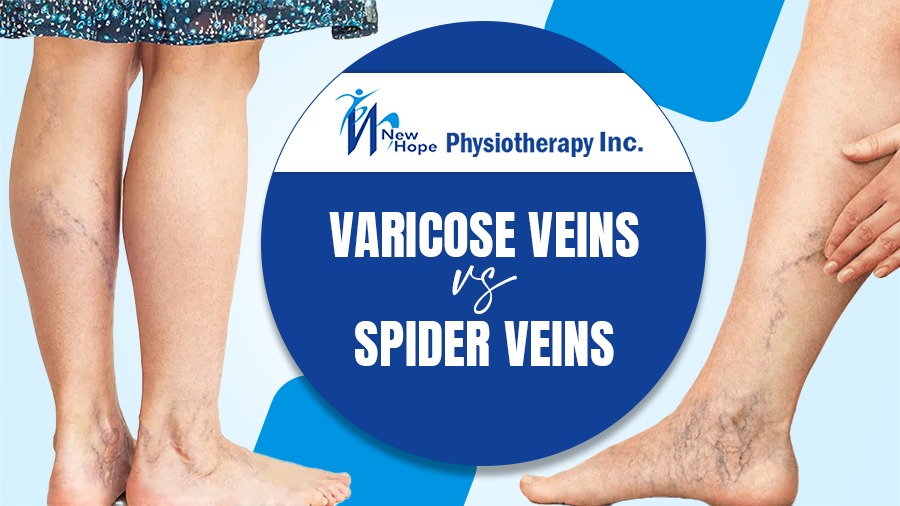
There are even more problems with veins than some would imagine and millions of people have them. We also know about the two most widespread (varicose veins and spider veins). They look similar but at the same time extremely different on the surface, in terms of how they look, signs and symptoms of general health. Being aware of those differences may help you understand when it is necessary to visit a doctor or consider a treatment.
Also Read: What Should You Not Do After Cupping?
What Are Varicose Veins?
These huge veins are known as the varicose veins which also have a tortuous appearance and are prone to appear in the legs and also in the feet. When the valves of veins no longer do their duty properly, and the blood stagnates, there is more tendency to their formation. The pressure builds up in the veins due to this backward movement that leads to distending of the veins. Symptoms of the common varicose veins are aching, heaviness, swelling, or burning of the legs.
Varicose vein causes are associated with long-term position, heredity, pregnancy, and obesity. The issues of the varicose vein diseases in other situations include ulcer or blood clots. That is why you are expected to know when you need to be concerned about varicose veins; when you feel so much pain, when you see some changes on the skin surface or when you have swelling.
Also Read: 5 Quick Home Remedies for Leg Cramp Relief and Prevention
What Are Spider Veins?
Spider veins, on the other hand, are very small, thin, lines that seem to be close to the skin surface. They tend to be red, blue or purple and in the shape of a web, most often on a face or spider veins on the legs. A spider vein is not normally painful but many people may be cosmetically concerned.
Treatment of spider veins is normally easier than treating varicose veins. Modifications that can be made include sclerotherapy, laser therapy and lifestyle modifications. Although they usually do not suggest a significant problem, in some cases, spider veins may be associated with a problem with circulation.
Also Read: 5 Common Types of Back Pain You Should Know
Treatment Options
The decision of the methodology will require the degree of the condition. Treatment of varicose veins can involve compression stockings, minimally invasive surgery or surgical surgery. Endovenous laser therapy or radiofrequency ablation are some of the therapy varicose veins that patients research.
On the other hand, spider veins can be treated with non-invasive methods and changes in diet and regular exercises. In cases involving a varicose vein or a spider vein, a visit to a vein specialist is the sure way to get the best care plan.
Also Read: 7 Surprising Benefits of Cupping Massage Therapy
FAQs
1. Why do I have varicose veins and spider veins?
The two conditions are the result of weakened or damaged vein valves. Lifestyle and genetics are a factor, but other factors include pregnancy, standing on the feet a long time and age also can be contributing factors.
2. When are varicose veins something to see a doctor about?
Persistent pain, swelling, discoloration of the skin, or skin ulcers are reasons as to why you should see a doctor. The knowledge of when to be concerned with varicose veins will prevent complications.
3. Do spider veins and varicose veins have the same treatment?
Not always. Treatment of spider veins is generally less invasive as compared to that of varicose veins which may involve complex procedures depending on the severity.
Also Read: 10 Gentle Workouts to Help Lower Back Pain at Home
4. What is the difference between varicose veins and spider veins?
Varicose veins are large, swollen, and twisted veins that often bulge above the skin. Spider veins are smaller, thin red, blue, or purple veins that look like a web or tree branches. Spider veins are usually not painful, while varicose veins can cause discomfort.
5. What causes varicose veins and spider veins?
Both can happen when the valves inside your veins become weak. This allows blood to collect in the veins. Other common causes include aging, pregnancy, family history, standing for long hours, and being overweight.
6. What are the symptoms of varicose veins?
Common symptoms include:
- Swollen, bulging veins
- Aching or heavy legs
- Leg pain after standing
- Swelling in the ankles
- Itching or muscle cramps
7. Are spider veins dangerous?
Spider veins are usually harmless and are often a cosmetic concern. However, if they are causing pain, swelling, or other symptoms, it is a good idea to see a healthcare professional for an evaluation.
Also Read: 5 Conditions Causing Your Shoulder Pain
8. Can varicose veins be treated without surgery?
Yes. Many people improve with non-surgical treatments such as compression stockings, regular exercise, maintaining a healthy weight, elevating the legs, and avoiding long periods of standing or sitting. Some medical treatments may also be recommended if needed.
9. Who is more likely to develop varicose or spider veins?
You may have a higher risk if you:
- Have a family history of vein problems
- Are pregnant
- Are over the age of 40
- Stand or sit for long hours
- Are overweight or inactive
10. When should I see a doctor about varicose or spider veins?
You should see a doctor if you have severe pain, swelling, skin changes, bleeding, open sores, or if your symptoms are getting worse. Early treatment can help prevent complications and improve your comfort.
Also Read: Frozen Shoulder vs. Rotator Cuff Tear: Key Differences and Symptoms
Gauravdeep Randhawa, Registered Physiotherapist
Gauravdeep Randhawa is a caring and experienced physiotherapist with over 17 years of experience helping patients recover and improve their quality of life.
She started her own practice in Canada in 2009 and has treated many patients with muscle, joint, sports, neurological, and pelvic health conditions. She has also owned and operated multidisciplinary clinics.
Gauravdeep is a Certified Manual Therapist and has completed training in Contemporary Medical Acupuncture and Pelvic Floor Therapy. She uses hands-on treatment, personalized exercise programs, and evidence-based care to support each patient’s recovery.
Her goal is to help people reduce pain, restore movement, improve function, and achieve long-term wellness in a comfortable and supportive environment.
Also Read: World Arthritis Day 2026: Common Arthritis Mistakes to Avoid
Leave a Comment