
Welcome to New Hope Physiotherapy
- Brampton 905-846-4000
- Malton 905-364-3900
- Orangeville 519-217-9300
- admin@newhopephysio.com
Leg Cramps During the Night: Causes, Relief, and Care
29 Sep 2026
Leg Cramps During the Night: Causes, Relief, and Care
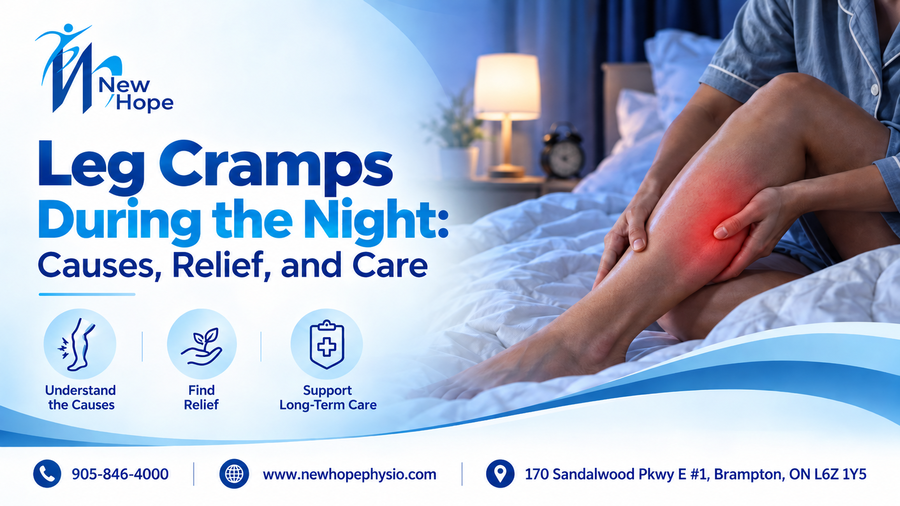
Waking up with a sudden painful cramp in your leg can be very uncomfortable. Leg cramps during the night often happen without warning. The calf may become tight, hard, and painful for a few seconds or several minutes.
These cramps are sometimes called a charley horse. They usually affect the calf muscles, but they may also occur in the feet or thighs.
Nighttime cramps are common. In many cases, they are harmless. However, frequent or severe cramps may need medical attention.
Also Read: Top 5 Reasons Your Shoulder Pain at Night
What Causes Leg Cramps at Night?
Many people ask, what causes leg cramps at night? There is not always one clear reason.
Common causes may include:
- Not drinking enough water
- Overusing the leg muscles
- Sitting or standing for a long time
- Tight calf muscles
- Poor blood circulation
- Pregnancy
- Certain medicines
- Nerve problems
- Mineral or electrolyte imbalance
- Muscle fatigue
- Increasing age
Sometimes the exact causes of muscle cramps in legs are difficult to identify.
A sudden muscle spasm happens when the muscle tightens without you controlling it. This may cause strong pain and make it difficult to move the leg.
Also Read: 10 Gentle Workouts to Help Lower Back Pain at Home
Leg Cramps and the Calf Muscles
The calf is one of the most common areas affected by nighttime cramps.
Leg calf muscle cramps may make the calf feel:
- Tight
- Hard
- Tender
- Painful
- Difficult to stretch
After the cramp stops, the muscle may remain sore for several hours.
Also Read: What Should You Not Do After Cupping?
How to Stop Leg Cramps Immediately
If you are wondering how to stop leg cramps immediately, gentle stretching is usually one of the first things to try.
When a cramp starts:
- Straighten your leg.
- Pull your toes toward your body.
- Gently massage the tight muscle.
- Stand up slowly if it is safe.
- Walk around for a short time.
- Apply a warm towel or heating pad.
- Drink some water.
Do not force the muscle into a painful stretch.
A gentle calf stretch may help relax the muscle.
Simple Calf Stretch
- Stand facing a wall.
- Place your hands on the wall.
- Move the painful leg behind you.
- Keep the heel on the floor.
- Slowly lean forward.
- Hold for about 20 to 30 seconds.
Stop if the stretch causes sharp pain.
Also Read: 5 Common Types of Back Pain You Should Know
Leg Cramps at Night Treatment
Leg cramps at night treatment depends on the cause.
For occasional cramps, simple home care may help.
You can try:
- Drinking enough water during the day
- Stretching your calves before bed
- Staying physically active
- Wearing supportive footwear
- Avoiding long periods of sitting
- Using gentle heat
- Massaging tired muscles
- Changing your sleeping position
If muscle cramps in legs happen often, speak with a healthcare professional. They may review your medications, circulation, nerve health, and overall medical history.
Also Read: World Arthritis Day 2026: Common Arthritis Mistakes to Avoid
What Can I Drink Before Bed to Prevent Leg Cramps?
People often ask, what can I drink before bed to prevent leg cramps?
Water is usually a simple choice.
Drinking water all day long is more essential than drinking a huge quantity just before bed time.
Electrolytes can also be obtained from food. Electrolyte containing drinks are good for post exercise or excessive sweating period, but they are not essential for everybody.
Avoid taking large amounts of supplements without professional advice.
Foods That May Support Muscle Health
A balanced diet provides nutrients that muscles need.
Foods that contain potassium, magnesium, calcium, and other nutrients include:
- Bananas
- Yogurt
- Milk
- Leafy green vegetables
- Beans
- Nuts
- Seeds
- Avocados
- Potatoes
- Oranges
Such foods can promote general muscle well-being. But the intake of any particular food does not always help end a cramp right away.
Also Read: 9 Easy Tricks to Relieve Lower Back Pain
Leg Muscle Cramps During Pregnancy
Leg muscle cramps during pregnancy are common, especially later in pregnancy.
They may be linked with:
- Changes in circulation
- Extra pressure on the legs
- Muscle fatigue
- Changes in activity
- Fluid changes
Gentle stretching and staying hydrated may help.
Pregnant individuals should speak with their doctor or midwife before taking magnesium, potassium, or other supplements.
Leg Cramps in Older Adults
Nighttime leg cramps become more common with age.
Older adults may experience cramps because of:
- Reduced activity
- Tight muscles
- Circulation changes
- Certain medications
- Nerve conditions
- Dehydration
- Long periods of sitting
Regular walking and gentle stretching may help maintain flexibility.
Also Read: Shoulder Pain Solutions: 7 Essential Exercises for Quick Relief
When to Worry About Leg Cramps at Night
Many cramps are harmless. However, it is important to know when to worry about leg cramps at night.
Speak with a healthcare professional if:
- Cramps happen very often
- Pain is severe
- The leg becomes swollen
- You notice redness or unusual warmth
- You have numbness or weakness
- The cramps affect your sleep regularly
- The pain does not improve
- You recently started a new medication
- You have circulation or nerve problems
Seek urgent medical care for sudden leg swelling, severe unexplained pain, chest pain, or trouble breathing.
Tips to Help Prevent Leg Cramps at Nite
If you frequently experience leg cramps at nite, small daily habits may help.
Try to:
- Drink enough fluids.
- Stretch your calves daily.
- Warm up before exercise.
- Avoid suddenly increasing exercise.
- Take breaks from long periods of sitting.
- Wear supportive shoes.
- Keep your bedding loose around your feet.
- Stay active during the day.
A regular routine may reduce muscle tightness over time.
Also Read: 10 Safe Ways to Treat Neck Pain during Pregnancy
FAQs About Nighttime Leg Cramps
1. How to stop painful nighttime leg cramps?
Straighten your leg and gently pull your toes toward your body. Massage the muscle and slowly walk around if possible. Gentle heat may also help the muscle relax.
2. What to drink before bed to stop leg cramps?
Water is usually a good option. Staying hydrated throughout the whole day may be more helpful than drinking a large amount just before sleeping.
3. What is your body lacking when you have leg cramps at night?
Cramps are sometimes linked with low levels of certain minerals or electrolytes, but many nighttime cramps happen without a vitamin or mineral deficiency. A healthcare professional can determine whether testing is needed.
4. What to eat to stop leg cramps immediately?
There is no specific food proven to stop an active cramp immediately. Stretching and gentle movement usually work faster. A balanced diet containing fruits, vegetables, dairy products, nuts, and seeds can support healthy muscles.
5. What vitamin stops leg cramps at night?
No single vitamin is guaranteed to stop nighttime leg cramps. Some people may have low magnesium, calcium, vitamin D, or other nutrients, but supplements should only be used when appropriate.
Also Read: Knee Pain After Sitting Too Long: Causes and Tips
6. Do bananas help with leg cramps?
Bananas contain potassium, which supports normal muscle function. However, eating a banana does not usually stop a sudden cramp right away. Bananas can still be part of a healthy balanced diet.
7. How to avoid leg cramps immediately?
Before bed, gently stretch your calf muscles. Drink enough water during the day. Avoid overworking your muscles, and try not to stay in one position for very long.
8. What causes muscle cramps in the legs in elderly people?
Possible causes include muscle fatigue, dehydration, reduced activity, certain medicines, circulation changes, and nerve problems. Frequent cramps should be discussed with a healthcare professional.
9. Can a pillow help relieve cramps while sleeping?
A pillow may help make your sleeping position more comfortable. Placing a pillow under or between the legs may reduce muscle strain for some people. However, it may not prevent cramps in everyone.
10. Is chocolate good for cramps?
Chocolate is not a proven treatment for leg cramps. Dark chocolate contains some magnesium, but it should not be relied on to treat frequent muscle cramps. A balanced diet and proper hydration are more important.
Final Thoughts
Leg cramps during the night can be painful, but most episodes do not last long. Stretching, hydration, gentle movement, and regular activity may help reduce how often they happen.
If your muscle cramps are frequent, severe, or associated with swelling, weakness, numbness, or other unusual symptoms, speak with a healthcare professional. Finding the cause is important before starting supplements or other treatments.
Prabhjot Kaur, Registered Physiotherapist
Prabhjot Kaur is a Registered Physiotherapist with over 10 years of clinical experience. She has been practicing since 2015 and holds a Master’s degree in Physiotherapy with a specialization in Neurology. She provides personalized care for people with neurological and musculoskeletal conditions. Her areas of focus include orthopedic and neurological rehabilitation, pain management, therapeutic exercises, balance and mobility training, and injury recovery. Prabhjot believes in a patient-centered approach and works closely with each individual to reduce pain, improve movement, restore function, and help them return to their daily activities with greater confidence and independence. She is registered with the College of Physiotherapists of Ontario.
Medical Disclaimer:
This information is for general educational purposes only. It is not a substitute for medical advice, diagnosis, or treatment. Always speak with a qualified healthcare professional if you have ongoing or severe leg cramps.
Also Read: Frozen Shoulder vs. Rotator Cuff Tear: Key Differences and Symptoms
Leave a Comment