
Welcome to New Hope Physiotherapy
- Brampton 905-846-4000
- Malton 905-364-3900
- Orangeville 519-217-9300
- admin@newhopephysio.com
How to Immediately Relieve Muscle Cramps?
 16 Jun 2026
How to Immediately Relieve Muscle Cramps?
What Are Muscle Cramps?
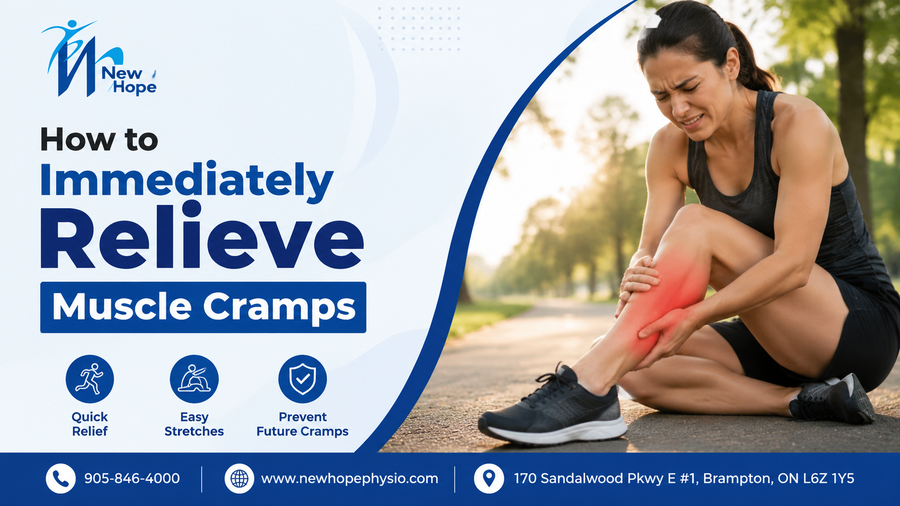
Muscle cramps refer to a spontaneous involuntary contraction of the muscle. This is accompanied by severe pain that lasts for some few seconds or more. Most people get their muscles cramped in legs at night, during physical activities, or even after sitting for a long time.
One of the most common forms of muscle cramps includes those affecting calves in legs. This muscle gets tightly contracted to an extent that you cannot move the leg.
I once woke up to excruciating pain in the calf. The pain was very severe such that it almost seemed as if the muscle had become locked up in place. However, stretching the leg made me feel better after some few minutes.
Also Read: Why Pregnant Moms Get Leg Cramps at Night—And What to Do About It
How to Stop Muscle Cramps Fast
If you are experiencing a cramp right now, try these simple steps:
1. Stretch the Muscle
Gentle stretching is often the fastest way to relax a cramping muscle.
For calf cramps:
- Straighten your leg.
- Pull your toes toward your body.
- Hold the stretch for 20 to 30 seconds.
Do not bounce while stretching.
2. Massage the Area
Use your hands to gently rub and massage the cramped muscle.
This helps increase blood flow and may reduce the pain faster.
3. Apply Heat
A warm towel, heating pad, or warm shower can help relax tight muscles.
Heat is especially helpful if the muscle still feels tight after the cramp stops.
4. Walk Around
Standing up and walking slowly may help the muscle relax.
Many people find that a few minutes of light movement helps prevent the cramp from returning.
5. Drink Water
Dehydration is one of the common causes of muscle cramps.
If you have been exercising, sweating, or spending time in hot weather, drink water and replace lost fluids.
Also Read: 10 Gentle Workouts to Help Lower Back Pain at Home
Common Causes of Muscle Cramps
Understanding the causes of muscle cramps in legs can help prevent future episodes.
Some common causes include:
- Dehydration
- Muscle fatigue
- Poor circulation
- Sitting or standing in one position for too long
- Low levels of potassium, magnesium, or calcium
- Overexertion during exercise
- Certain medications
- Nerve compression
Sometimes there is no obvious reason for the cramp.
Muscle Cramps in Calves of Legs
The calf muscles work hard every day. They help us walk, run, jump, and climb stairs.
Because they are used so often, leg calf muscle cramps are very common.
Calf cramps may occur:
- During sports
- While sleeping
- After long periods of standing
- During hot weather
When a calf cramp occurs, stretching and gentle massage are usually the quickest solutions.
Also Read: 5 Common Types of Back Pain You Should Know
Leg Muscle Cramps During Pregnancy
Many women experience leg muscle cramps during pregnancy, especially during the second and third trimesters.
Doctors believe this may be related to:
- Increased body weight
- Changes in circulation
- Pressure on nerves
- Mineral imbalances
Pregnant women often notice cramps at night while sleeping.
Helpful tips include:
- Staying hydrated
- Stretching before bed
- Taking short walks during the day
- Following healthcare provider recommendations regarding nutrition
If cramps become severe or frequent, medical advice should be sought.
Also Read: 10 Safe Ways to Treat Neck Pain during Pregnancy
Muscle Spasm vs. Muscle Cramp
Many people use the terms interchangeably.
A muscle spasm is an involuntary muscle contraction. It can be painless or painful.
A muscle cramp is a type of muscle spasm that usually causes pain and tightening.
Both can affect the legs, back, neck, or other areas of the body.
Muscle Cramps Treatment
The best muscle cramps treatment depends on the cause.
Treatment options may include:
- Stretching exercises
- Massage therapy
- Heat therapy
- Hydration
- Improving nutrition
- Regular physical activity
- Physiotherapy
For people who experience frequent muscle cramps on legs, a healthcare professional can help identify the underlying cause.
Also Read: Frozen Shoulder vs. Rotator Cuff Tear: Key Differences and Symptoms
Preventing Future Leg Cramps
Also Read: What’s the Fastest Way to Relieve Back Pain?
Prevention is often easier than treatment.
Try these simple habits:
Stay Hydrated
Drink water throughout the day, especially during exercise and hot weather.
Stretch Regularly
Stretch your calf muscles before and after physical activity.
Avoid Overworking Muscles
Increase exercise intensity gradually.
Wear Proper Footwear
Supportive shoes may help reduce strain on the legs.
Eat a Balanced Diet
Foods rich in potassium, magnesium, and calcium support healthy muscle function.
When Should You See a Healthcare Professional?
Occasional leg cramps are usually harmless.
However, you should seek medical attention if:
- Cramps occur frequently
- The pain is severe
- The muscle remains swollen
- You experience weakness
- The cramps interfere with daily activities
Persistent muscle spasms may indicate an underlying medical condition that requires further evaluation.
Also Read: Shoulder Pain Solutions: 7 Essential Exercises for Quick Relief
Medical Disclaimer
This information about relieving muscle cramps is for general education only and is not a substitute for professional medical advice. If cramps are severe, frequent, long-lasting, or occur with swelling, weakness, or other concerning symptoms, consult a healthcare professional.
FAQs:
1. How can I stop a muscle cramp immediately?
Gently stretch and massage the affected muscle. This can help relax the muscle and reduce the pain.
2. Should I walk when I have a muscle cramp?
Yes, light walking may help improve blood flow and ease the cramp.
3. Does drinking water help muscle cramps?
Yes, dehydration can cause cramps. Drinking water may help prevent and relieve them.
4. Is heat or ice better for muscle cramps?
A warm compress can assist you to relax your muscles. Applying an ice pack after may be necessary if the muscle still hurts.
5. Why do muscle cramps happen suddenly?
Muscle cramps can be caused by dehydration, overuse, poor circulation, or a lack of certain minerals.
Also Read: What Should You Not Do After Cupping?
6. Can stretching help relieve muscle cramps?
Yes, gentle stretching is one of the quickest ways to reduce muscle pain.
7. What should I do if I get a leg cramp at night?
Stretch your leg, massage the muscle, and stand or walk around slowly if possible.
8. Can low potassium cause muscle spasms?
Yes, low levels of potassium, magnesium, or calcium may contribute to muscle spasms.
9. When should I see a healthcare professional for muscle spasms?
See a healthcare professional if cramps happen often, are severe, or do not improve with home care.
10. Can regular exercise help prevent muscle spasms?
Yes, regular stretching, exercise, and staying hydrated can help reduce the risk of muscle cramps.
Final Thoughts
Even though muscle spasms are painful, they are resolved easily within minutes due to stretching, massaging, movement, and hydration with water. Be it muscle cramps in legs, night time leg muscle cramps, or muscle cramps in legs during pregnancy, taking some necessary precautions can help you out in this matter.
The next time your muscles decide to cramp up, just stay calm, stretch out the muscles, and wait for several minutes to see the results. It’s not usually necessary to take any other actions.
Also Read: Cupping Therapy: How Often Should You Schedule Sessions for Optimal Results?
Prabhjot Kaur, Registered Physiotherapist
Prabhjot Kaur is a Registered Physiotherapist with over 10 years of clinical experience. She has been practicing since 2015 and holds a Master’s degree in Physiotherapy with a specialization in Neurology. She provides personalized care for people with neurological and musculoskeletal conditions. Her areas of focus include orthopedic and neurological rehabilitation, pain management, therapeutic exercises, balance and mobility training, and injury recovery. Prabhjot believes in a patient-centered approach and works closely with each individual to reduce pain, improve movement, restore function, and help them return to their daily activities with greater confidence and independence. She is registered with the College of Physiotherapists of Ontario.

Leave a Comment