
Welcome to New Hope Physiotherapy
- Brampton 905-846-4000
- Malton 905-364-3900
- Orangeville 519-217-9300
- admin@newhopephysio.com
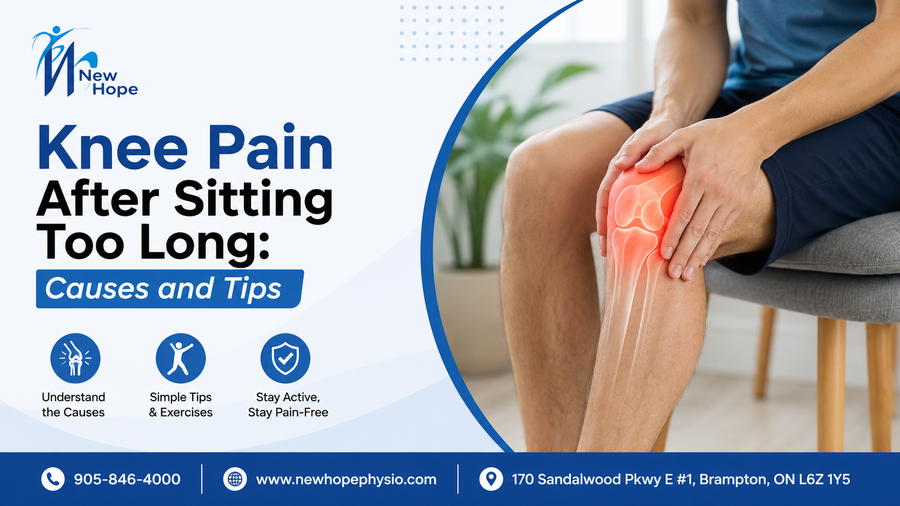
Knee Pain After Sitting Too Long: Causes and Tips
22 Jul 2026
Knee Pain After Sitting Too Long: Causes and Tips
Do your knees feel stiff or painful after sitting at your desk, driving, or watching TV for a long time? You’re not alone. Many people notice knee pain after sitting with their legs bent for an extended period. The discomfort usually gets better after walking for a few minutes, but it can be frustrating and sometimes signal an underlying problem.
The good news is that most cases of knee pain can improve with the right care, simple exercises, and healthy habits.
Also Read: 5 Common Types of Back Pain You Should Know
Why Does Knee Pain Happen After Sitting?
When you sit for a long time, your knees stay bent in the same position. This can make the muscles and joints feel stiff. Blood flow also slows down, making it harder for the joint to move smoothly when you stand.
You may notice:
- Stiffness when standing up
- Pain in the front or around the kneecap
- A clicking or popping feeling
- Difficulty walking for the first few steps
- Mild swelling in some cases
These symptoms often improve once you start moving.
Common Knee Pain Causes
Several conditions can lead to knee pain after sitting.
1. Patellofemoral Pain Syndrome
This is one of the most common reasons. It causes pain around or behind the kneecap, especially after sitting, climbing stairs, or squatting.
2. Arthritis
Osteoarthritis slowly wears down the cartilage inside the knee. The joint becomes stiff after resting and feels better with gentle movement.
3. Tight Muscles
Tight quadriceps, hamstrings, calves, or hip muscles can place extra pressure on the knee joint.
Also Read: What Should You Not Do After Cupping?
4. Weak Leg Muscles
Weak muscles around the hips and thighs cannot support the knee properly, increasing stress on the joint.
5. Previous Injury
Old sports injuries, ligament sprains, or meniscus tears may cause pain after sitting for long periods.
Risk Factors
You may be more likely to develop knee pain if you:
- Sit for many hours each day
- Work at a desk
- Drive long distances
- Have excess body weight
- Have weak leg muscles
- Have arthritis
- Have had a previous knee injury
How to Relieve Knee Pain from Sitting All Day
Simple lifestyle changes can make a big difference.
Get Up Regularly
Avoid sitting for more than 30 to 60 minutes without moving.
Walk around for a few minutes every hour.
Stretch Your Legs
Gentle stretching helps reduce stiffness and improves flexibility.
Strengthen Your Muscles
Building strength in your hips and thighs gives better support to your knees.
Use Heat Before Activity
A warm compress can help loosen stiff muscles before walking or exercising.
Ice After Activity
If your knee becomes swollen or sore, apply an ice pack for 15 to 20 minutes.
Also Read: 10 Gentle Workouts to Help Lower Back Pain at Home
Maintain a Healthy Weight
Less body weight means less pressure on your knees.
Simple Knee Pain Exercises
Always exercise within your comfort level.
Straight Leg Raises
- Lie on your back.
- Keep one leg straight.
- Lift it slowly.
- Hold for 5 seconds.
- Repeat 10 times.
Seated Knee Extensions
- Sit in a chair.
- Slowly straighten one knee.
- Hold briefly.
- Lower slowly.
- Repeat 10 to 15 times.
Hamstring Stretch
- Sit with one leg straight.
- Lean forward gently.
- Hold for 20 to 30 seconds.
Calf Stretch
- Stand facing a wall.
- Keep one leg behind you.
- Lean forward gently.
- Hold for 30 seconds.
Mini Squats
- Hold onto a chair.
- Bend your knees slightly.
- Return to standing.
- Repeat 10 times.
When Should You See a Physiotherapist?
You should seek professional care if:
- Pain lasts more than a few weeks
- Walking becomes difficult
- Your knee gives way
- Swelling continues
- Pain keeps returning
- Daily activities become harder
A physiotherapist can identify the cause of your pain and create a personalized knee pain treatment plan.
Treatment may include:
- Manual therapy
- Strengthening exercises
- Stretching programs
- Balance training
- Posture correction
- Activity advice
- Home exercise plans
If you’re looking for knee pain treatment in Brampton or knee pain treatment in Mississauga, early treatment may help prevent the problem from becoming worse.
Also Read: Frozen Shoulder vs. Rotator Cuff Tear: Key Differences and Symptoms
Tips to Prevent Knee Pain
Protect your knees by following these habits:
- Take regular breaks from sitting.
- Keep moving throughout the day.
- Stretch before and after exercise.
- Strengthen your legs.
- Wear supportive footwear.
- Maintain good posture while sitting.
- Stay physically active.
- Avoid sitting with your knees bent for long periods.
Small daily changes often lead to lasting improvement.
Final Thoughts
Knee pain after sitting too long is common, but it should not become part of your daily routine. Whether the cause is muscle tightness, arthritis, weak muscles, or poor posture, there are many ways to reduce pain and improve movement.
Regular exercise, proper stretching, and early physiotherapy can help relieve symptoms and keep your knees healthy. If your pain continues or gets worse, seek professional assessment to find the right treatment for your needs.
Also Read: 5 Quick Home Remedies for Leg Cramp Relief and Prevention
Also Read: 5 Conditions Causing Your Shoulder Pain
Frequently Asked Questions
1. How can I stop my knees hurting from sitting too long?
Stand up every 30 to 60 minutes, stretch your legs, walk around, and strengthen your thigh and hip muscles. Good posture also helps reduce knee strain.
2. How do I know if knee pain is serious?
See a healthcare professional if your knee pain is severe, lasts for several weeks, causes swelling, makes walking difficult, or follows an injury.
3. What is the best position to sit when your knee hurts?
Keep both feet flat on the floor with your knees bent at about 90 degrees. Avoid crossing your legs or keeping your knees bent for long periods.
4. Why do my knees hurt when I sit with them bent for too long?
Keeping the knees bent for a long time can increase pressure on the kneecap and surrounding tissues, leading to stiffness and pain when you stand.
5. What should I avoid during knee pain?
Avoid long periods of sitting, high-impact activities, sudden twisting movements, and exercising through severe pain.
Also Read: Top 10 Home Remedies for Reducing Neck Pain and Headaches
6. Can walking help knee pain?
Yes. Gentle walking improves blood flow, reduces stiffness, and helps keep the knee joint moving.
7. What are the best knee pain exercises?
Straight leg raises, seated knee extensions, hamstring stretches, calf stretches, and mini squats are commonly recommended for many people.
8. Is knee pain after sitting a sign of arthritis?
It can be, especially in older adults. However, muscle tightness, weak muscles, or kneecap problems are also common causes.
9. Can physiotherapy help knee pain?
Yes. Physiotherapy can reduce pain, improve strength and flexibility, restore movement, and lower the risk of future knee problems.
10. When should I seek knee pain treatment?
You should seek treatment if your pain lasts longer than a few weeks, keeps returning, affects daily activities, or becomes worse over time.


Leave a Comment