
Welcome to New Hope Physiotherapy
- Brampton 905-846-4000
- Malton 905-364-3900
- Orangeville 519-217-9300
- admin@newhopephysio.com
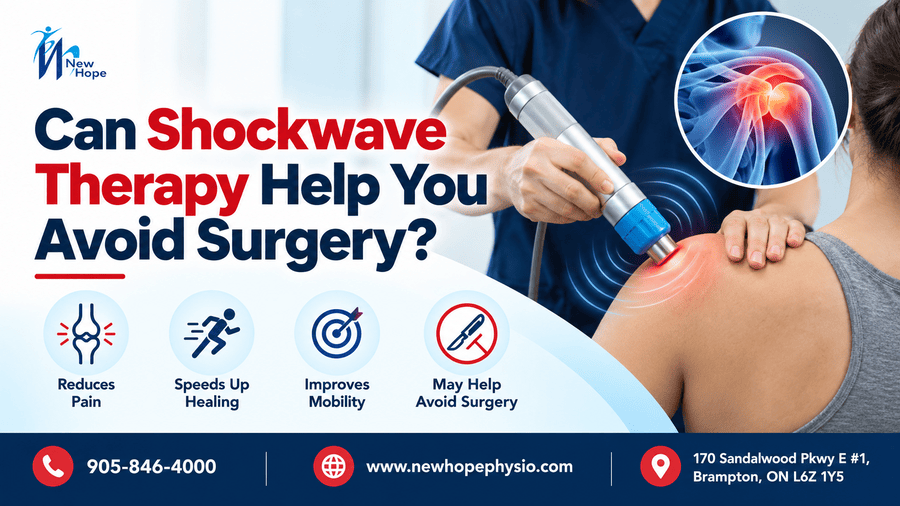
Can Shockwave Therapy Help You Avoid Surgery?
9 Oct 2026
Can Shockwave Therapy Help You Avoid Surgery?
Are you dealing with ongoing foot, heel, shoulder, or knee pain? Have you tried different treatments without getting enough relief? You may be wondering whether surgery is your only option.
The good news is that Shockwave Therapy may help some people manage pain and improve movement without surgery.
This treatment uses sound waves to target painful areas. It may help your body’s natural healing process. However, results depend on your condition, and shockwave Treatment cannot replace every type of surgery.
Let’s explore how it works, its benefits, and whether it could be right for you.
Also Read: Non-Surgical Treatments for Chronic Back Pain: 8 Effective Methods
What Is Shockwave Therapy?
Shockwave Therapy is a non-surgical treatment used for certain muscle, tendon, and heel problems.
A trained healthcare professional uses a shockwave therapy machine to send sound waves into the affected area.
These waves may help reduce pain and support tissue healing over time.
The treatment does not involve:
- Surgery or cuts
- Needles
- General anesthesia
- A hospital stay
Many patients can return to their normal daily activities soon after treatment.
How Does Shockwave Therapy Work?
If you are wondering how does shockwave therapy work, the process is simple.
The therapist first checks the painful area. They then apply gel to your skin and place the shockwave device against it.
The machine sends controlled pressure waves into the tissues.
These waves may:
- Improve blood flow in the treated area
- Support the body’s healing response
- Reduce pain over time
- Help improve movement
- Support recovery alongside exercises
Each treatment usually takes only a few minutes per area.
Also Read: World Arthritis Day 2026: Common Arthritis Mistakes to Avoid
Can Shockwave Therapy Help You Avoid Surgery?
In some cases, yes.
Shockwave Therapy may be an option when pain continues despite rest, exercises, or regular physiotherapy.
It is commonly considered for certain long-lasting tendon and heel problems.
For example, someone with plantar fasciitis may consider shockwave Treatment before deciding on surgery.
However, it is important to understand that shockwave therapy does not guarantee that you can avoid surgery.
Some injuries, including serious tendon tears or conditions that require surgical repair, may still need an operation.
A physiotherapist or doctor can help you understand your options.
What Conditions Can Shockwave Therapy Treat?
Shockwave Treatment is commonly used for:
- Plantar fasciitis: Pain under the heel
- Achilles tendinopathy: Pain in the tendon behind the ankle
- Tennis elbow: Pain around the outside of the elbow
- Calcific shoulder tendinopathy: Shoulder pain linked to calcium deposits in a tendon
- Patellar tendinopathy: Pain around the tendon below the kneecap
- Greater trochanteric pain syndrome: Pain around the outside of the hip
Evidence varies between conditions. A proper assessment is important before starting treatment.
What Are the Benefits of Shockwave Therapy?
Some possible shockwave Treatment benefits include:
- Non-surgical pain management
- Short treatment sessions
- No surgical cuts or stitches
- Little recovery time for most patients
- Possible improvement in daily movement
- An additional treatment option when exercises alone are not enough
Shockwave Treatment often works best as part of a larger recovery plan that includes stretching, strengthening, and activity changes.
Is Shockwave Therapy Effective?
Many patients ask, is shockwave therapy effective?
Research suggests it may help some people with long-term plantar fasciitis and certain tendon problems.
However, not everyone gets the same results. Some people notice less pain after a few sessions. Others may need more time or may not benefit.
The shockwave therapy success rate depends on the injury, treatment method, and how improvement is measured. There is no single success rate that applies to everyone.
Also Read: 5 Common Types of Back Pain You Should Know
Does Shockwave Therapy Hurt?
You may feel tapping, pressure, or mild discomfort during treatment.
The feeling can be stronger over sensitive areas.
Your therapist can adjust the treatment intensity to make it more comfortable.
Common shockwave Treatment side effects include temporary:
- Redness
- Soreness
- Mild swelling
- Bruising
Serious problems appear uncommon when treatment is used appropriately, but they are possible.
How Much Is Shockwave Therapy?
The cost of Shockwave Therapy in Ontario depends on the clinic, session length, and treatment plan.
Some clinics charge per session. Others offer treatment packages.
If you are searching for shockwave therapy near me, ask about the price, number of sessions, and whether an assessment is included.
Some extended health insurance plans may cover treatment provided by a physiotherapist, depending on policy terms.
Shockwave Therapy for Nerve Pain
Shockwave therapy for nerve pain is an area of ongoing research.
Although shockwave Treatment may help certain musculoskeletal conditions, it is not a standard treatment for every type of nerve pain.
If you experience burning, numbness, tingling, or weakness, seek a proper diagnosis before starting treatment.
Shockwave Therapy in Brampton and Nearby Areas
Are you searching for Shockwave Therapy Brampton, Shockwave Therapy Mississauga, or Shockwave Therapy Orangeville?
When choosing a clinic, look for qualified professionals who assess your condition before recommending treatment.
Patients exploring Shockwave Therapy Ontario should also ask whether the clinic provides a complete rehabilitation plan.
Contact us at New Hope Physiotherapy in Brampton for your symptoms and to know about the possible treatments.
15 Frequently Asked Questions
1. When should you not use shockwave therapy?
Shockwave therapy may not be suitable during pregnancy, over an infected area or tumour, or for people with certain bleeding disorders. Blood thinners, pacemakers, recent steroid injections, and some other conditions also require careful screening.
2. Is shockwave therapy considered surgery?
No. Shockwave Treatment is a non-surgical procedure. It does not involve incisions, stitches, or general anesthesia.
3. What is the success rate of shockwave therapy?
Success rates vary depending on the condition and how success is measured. Some studies report meaningful pain relief, but no single percentage applies to every patient.
4. What can go wrong with shockwave therapy?
You may experience soreness, redness, swelling, or bruising. Occasionally, pain may increase temporarily. Incorrect patient selection or treatment over unsuitable areas can create additional risks.
5. How many times can you have shockwave therapy?
Many treatment plans involve three to five sessions. Your therapist will decide whether further sessions are appropriate based on your recovery.
Also Read: What Should You Not Do After Cupping?
6. How long do shockwave treatments last?
A typical session may take around 5 to 15 minutes for the treated area. Your full appointment may be longer.
7. What not to do after shockwave therapy?
Avoid heavy exercise or activities that strongly stress the treated area for approximately 48 hours, unless your healthcare professional advises otherwise. Follow your clinic’s aftercare instructions.
8. How long do shockwave therapy results last?
Results vary. Some people experience lasting improvement, while others may have recurring symptoms. Following your exercise program may help maintain progress.
9. How long should you rest after shockwave therapy?
Most people can continue light daily activities. Your therapist may recommend avoiding strenuous activity for around 48 hours.
10. Is shockwave therapy covered by insurance?
Some extended health insurance plans in Ontario may cover shockwave treatment under physiotherapy benefits. Coverage depends on your policy and provider.
11. Do I need a referral to get shockwave therapy?
You can generally book a physiotherapy assessment in Ontario without a doctor’s referral. However, your insurance company may require one for reimbursement.
12. How many sessions will I need?
Many patients receive three to five sessions, usually spaced about one week apart. Your condition and response will determine the actual number.
13. What conditions can shockwave therapy treat?
It may help with plantar fasciitis, Achilles tendinopathy, tennis elbow, certain shoulder tendon problems, and other selected tendon conditions.
14. Is shockwave therapy better than physiotherapy?
Shockwave Treatment is not necessarily better than regular physiotherapy. It is often used alongside strengthening, stretching, and other rehabilitation exercises.
15. Can shockwave therapy permanently remove pain?
It may provide long-term relief for some patients, but permanent pain relief cannot be guaranteed. Results depend on the cause of pain and your overall recovery plan.
Conclusion: Is Shockwave Therapy Right for You?
Living with ongoing pain can affect your work, sleep, and daily life.
Shockwave Treatment may offer a non-surgical option for certain long-lasting heel and tendon conditions. It may help you reduce pain, move more comfortably, and return to activities you enjoy.
However, not every condition responds to treatment, and surgery may still be necessary in some cases.
If you are considering Shockwave Therapy in Brampton, speak with a qualified physiotherapist to find out whether it is suitable for your needs.
Contact New Hope Physiotherapy
📞 Phone: 905-846-4000
🌐 Website: www.newhopephysio.com
📍 Address: 170 Sandalwood Pkwy E, Unit 1, Brampton, ON L6Z 1Y5
Book a physiotherapy assessment today and take the next step toward better movement and pain management.
Disclaimer: This article is for general information only. It does not replace medical advice, diagnosis, or treatment from a qualified healthcare professional.
Dr. Jay Mistry – Chiropractor
Dr. Jay Mistry completed his Honours Bachelor of Science degree at Wilfrid Laurier University. He then earned his Doctor of Chiropractic degree from Texas Chiropractic College.
He is licensed and registered with the College of Chiropractors of Ontario. He is also a member of the Canadian Chiropractic Association and the Ontario Chiropractic Association.
Dr. Jay Mistry is passionate about helping patients feel and move better. He uses evidence-based chiropractic care and creates treatment plans based on each patient’s needs. His goal is to help patients recover, improve their movement, and support their long-term health.
Dr. Mistry continues to update his skills through professional education. He is also certified in Functional Integration Acupuncture.
Also Read: Top 5 Exercises for Strengthening Your Pelvic Floor
He uses a variety of treatments, including:
• Chiropractic adjustments
• Manual therapy
• Functional Integration Acupuncture
• Cupping therapy
• Shockwave therapy
• Therapeutic exercises
Dr. Mistry treats many muscle, joint, and movement-related conditions, such as:
• Neck pain
• Low back pain
• Posture-related muscle imbalances
• Headaches caused by neck issues
• Jaw pain and TMJ problems
• Sports injuries
Outside the clinic, Dr. Mistry is a big Toronto Raptors fan. He enjoys playing basketball and tennis, staying active, travelling, and exploring new places.
Leave a Comment