

Welcome to New Hope Physiotherapy
- Brampton 905-846-4000
- Malton 905-364-3900
- Orangeville 519-217-9300
- admin@newhopephysio.com
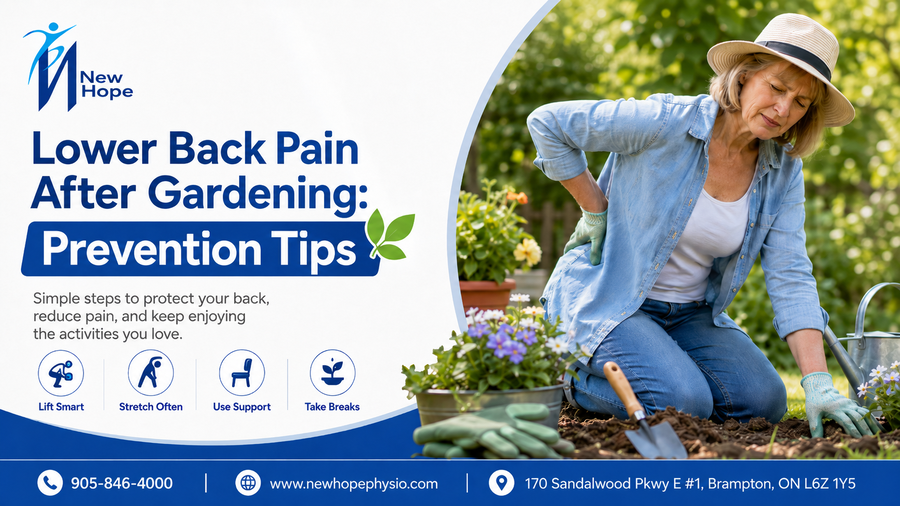
Lower Back Pain After Gardening: Prevention Tips
 4 Sep 2026
Lower Back Pain After Gardening: Prevention Tips
Gardening is a great way to stay active and enjoy the outdoors. But bending, lifting, digging, and pulling weeds can place extra stress on your back. This may lead to lower back pain after gardening, stiffness, or muscle soreness.
The good news is that many mild cases of back pain can improve with rest, gentle movement, stretching, and proper body mechanics. Learning how to garden safely may also help prevent the pain from coming back.
Also Read: What Should You Not Do After Cupping?
Why Does Lower Back Pain Happen After Gardening?
There are several possible lower back pain causes linked to gardening. Common causes include:
- Bending forward for a long time
- Twisting while lifting soil or plants
- Pulling heavy weeds
- Digging with poor posture
- Lifting heavy bags of soil or fertilizer
- Working for too long without breaks
- Using tools that are too short
- Weak or tight back, hip, or core muscles
You may also notice lower back pain after pulling weeds because weeding often involves staying bent over for long periods.
Similarly, lower back pain after digging can happen because digging requires repeated bending, pushing, twisting, and lifting.
Also Read: World Arthritis Day 2026: Common Arthritis Mistakes to Avoid
How to Prevent Back Pain When Gardening
A few simple changes can make gardening easier on your back.
Warm Up First
Before gardening, spend 5 to 10 minutes warming up.
Try:
- Walking around your yard
- Gentle shoulder rolls
- Slow hip movements
- Light back stretches
- Gentle leg stretches
A short warm-up prepares your muscles for activity.
Avoid Bending From Your Waist
Try not to stay bent forward for too long.
Instead:
- Bend your knees
- Keep your back in a comfortable position
- Kneel on a gardening pad
- Use a small gardening stool
- Change positions often
Use Long-Handled Tools
Long-handled gardening tools can reduce the amount of bending needed while digging, raking, or pulling weeds.
Choose tools that feel comfortable and allow you to stay more upright.
Also Read: World Physiotherapy Day 2026: Helping People Move Without Pain
Lift Carefully
When lifting soil, plants, or gardening equipment:
- Keep the object close to your body
- Bend at your knees and hips
- Avoid twisting while lifting
- Lift smaller loads when possible
- Ask for help with heavy items
Stretches for Lower Back Pain
Gentle stretches for lower back pain may help reduce stiffness after gardening.
Some simple options include:
- Knee-to-chest stretch
- Gentle hamstring stretch
- Hip flexor stretch
- Child’s pose
- Gentle lower back rotation
Stretch slowly. You should feel a mild stretch, not sharp pain.
Stop if a movement makes your symptoms worse.
Exercises for Lower Back Pain
Regular exercises for lower back pain may help improve strength, movement, and stability.
Common lower back pain exercises may include:
- Pelvic tilts
- Bridges
- Bird-dog exercises
- Gentle core exercises
- Walking
- Hip-strengthening exercises
The right exercises depend on the cause of your pain. A physiotherapist can assess your condition and recommend suitable exercises.
Also Read: 5 Quick Home Remedies for Leg Cramp Relief and Prevention
How to Relieve Lower Back Pain After Gardening
If you are wondering how to relieve lower back pain, start with simple steps.
You may try:
- Taking a short break from heavy gardening
- Staying gently active
- Changing positions regularly
- Using heat or cold if it feels comfortable
- Doing gentle stretches
- Avoiding heavy lifting until symptoms improve
For those who are seeking Lower Back Pain Relief, it should be noted that they shouldn’t remain bedridden unless recommended by a health practitioner. In many cases, light exercise will do more good than lying still.
Upper Back Pain After Gardening
Some people develop upper back pain after gardening as well.
This may happen from:
- Reaching forward
- Rounded shoulders
- Raking for long periods
- Carrying heavy watering cans
- Using tools that are too short
- Repeated twisting
Try changing tasks every 15 to 30 minutes and taking regular breaks.
Also Read: 10 Safe Ways to Treat Neck Pain during Pregnancy
Treating Lower Back Pain After Gardening
Treating lower back pain after gardening depends on the cause and severity of your symptoms.
Mild muscle soreness can sometimes be relieved with light activity and time. However, if the discomfort persists, reoccurs, disrupts your activities or restricts your movement, you should probably consult a health care provider.
A physiotherapist may assess:
- Your posture
- Back movement
- Muscle strength
- Hip flexibility
- Core control
- Gardening or lifting movements
If you are looking for a Back Pain Clinic Brampton residents can access, a physiotherapy assessment may help identify factors contributing to your pain and provide a personalized treatment plan.
When Should You Seek Medical Attention?
Seek urgent medical attention if your back pain is associated with:
- New loss of bladder or bowel control
- Numbness around the groin or inner thighs
- Major weakness in one or both legs
- Severe pain after a serious fall or accident
- Fever with significant back pain
You should also speak with a healthcare professional if your pain is severe, keeps getting worse, or does not improve.
Also Read: Shoulder Pain Solutions: 7 Essential Exercises for Quick Relief
FAQs About Lower Back Pain After Gardening
1. What are some good workouts and stretches to stop gardening lower back pain?
Gentle walking, pelvic tilts, bridges, knee-to-chest stretches, and hamstring stretches may help some people. The best exercises depend on the cause of your pain. Stop exercises that cause sharp or increasing Ache.
2. Any tips for avoiding a sore back from pulling weeds?
Avoid bending at your waist for long periods. Kneel on a padded mat, sit on a gardening stool, or use long-handled tools. Change positions regularly and take short breaks.
3. How to relieve lower back pain after gardening?
Rest from heavy activity for a short time, stay gently active, try comfortable heat or cold, and use gentle stretching. Avoid activities that clearly increase your Ache.
4. How to prevent back pain when gardening?
Warm up before starting, use proper lifting techniques, avoid repeated twisting, use long-handled tools, and take frequent breaks.
5. Why does my upper back hurt after gardening?
Upper back pain after gardening may be caused by prolonged bending, reaching, lifting, or using tools with poor posture. Muscle fatigue can also contribute.
Also Read: Frozen Shoulder vs. Rotator Cuff Tear: Key Differences and Symptoms
6. What can I do for quick relief from lower back pain after gardening?
For how to relieve back pain fast at home, try changing to a comfortable position, taking a gentle walk, using heat or cold if helpful, and performing light stretches. Avoid forcing painful movements.
7. Why does my body hurt so much after gardening?
Gardening can work muscles that you may not use regularly. Repeated bending, lifting, digging, and pulling can cause temporary muscle soreness, especially after a long gardening session.
8. What should I not do with lower back pain?
Avoid heavy lifting, repeated twisting, painful exercises, and staying in one position for too long. Do not push through severe or worsening Ache.
9. How can I treat lower back pain after gardening?
Treatment may include activity changes, stretching, strengthening exercises, posture changes, and physiotherapy. There is no single answer for how to cure lower back pain, because treatment depends on the underlying cause.
10. When should I see a physiotherapist for back pain after gardening?
Consider seeing a physiotherapist if the Ache lasts more than a few days, keeps returning, limits your normal activities, or makes gardening difficult. A physiotherapist can assess your movement and provide appropriate exercises and treatment.
Disclaimer: This information is for general educational purposes only and is not a substitute for medical advice, diagnosis, or treatment. Speak with a qualified healthcare professional about persistent or severe back pain.
Also Read: Neck Pain Solutions: Quick 5-Minute Exercises for Daily Relief
Gauravdeep Randhawa, Registered Physiotherapist
Gauravdeep Randhawa is a caring and experienced physiotherapist with over 17 years of experience helping patients recover and improve their quality of life.
She started her own practice in Canada in 2009 and has treated many patients with muscle, joint, sports, neurological, and pelvic health conditions. She has also owned and operated multidisciplinary clinics.
Gauravdeep is a Certified Manual Therapist and has completed training in Contemporary Medical Acupuncture and Pelvic Floor Therapy. She uses hands-on treatment, personalized exercise programs, and evidence-based care to support each patient’s recovery.
Her goal is to help people reduce Ache, restore movement, improve function, and achieve long-term wellness in a comfortable and supportive environment.
Also Read: What Should You Not Do After Cupping?


Leave a Comment