

Welcome to New Hope Physiotherapy
- Brampton 905-846-4000
- Malton 905-364-3900
- Orangeville 519-217-9300
- admin@newhopephysio.com
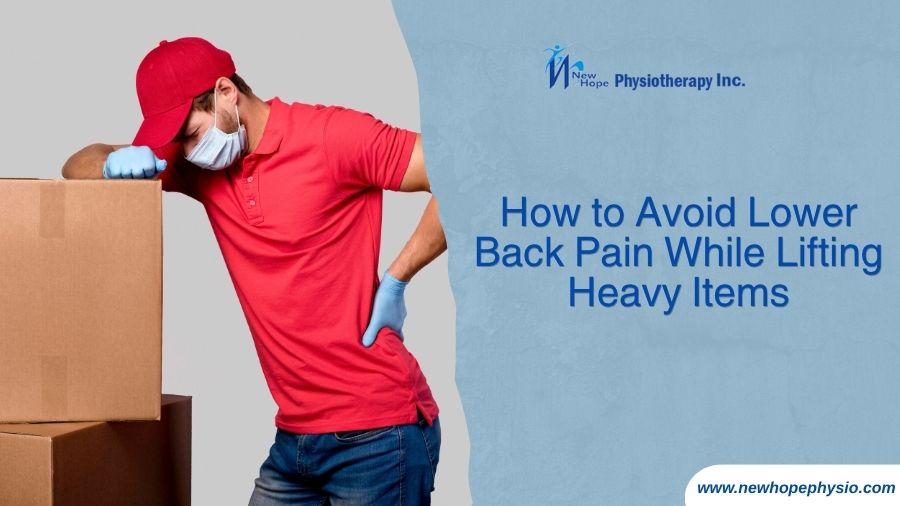
How to Avoid Lower Back Pain While Lifting Heavy Items
 2 Apr 2026
- newhope
- 0 Comments
- 1139
How to Avoid Lower Back Pain While Lifting Heavy Items
The human spine body is a complex system made up of vertebrae, discs and muscles that help support the body. But, it is vulnerable to strain when we move upwards and raise. When you bend your waist in order to lift something it creates an effect of levering that adds to the burden, placing pressure on discs in the back of the lumbar spine. By following the correct techniques, you can aid in preventing lower back pain and help maintain long-term health of the spine.
Also Read: What Not to Do After a Chiropractor?
The practice of safe lifting techniques plays a crucial part in lower the backache and can reduce the possibility of serious injury. If the pain is still present it is recommended to seek back pain treatment by a professional can aid in the recovery process and avoid future problems.
Also Read: Effective Physiotherapy Exercises for Lower Back Pain Relief
The Foundation of Safe Lifting
- The first step to avoid back Pain should be to prepare your body prior to lifting.
- Most injuries happen when your body isn’t in a position that is stable. Before lifting, assess the object.
- If you feel it is impossible to lift don’t be reluctant to seek assistance or employ assistance equipment.
- When lifting weights, a proper posture is vital.
- Make sure your feet are wide enough to create an equal base. Put one foot slightly in front of your other foot to help ensure stability.
- When your weight is decreased then you should lean your hips and knees, rather than your back.
- This reduces strain on your spine as well as utilizing the muscles that are stronger in your legs.
Maintaining Proper Alignment During the Lift
When lifting, hold the object near your body. The farther away it is from your body’s center of gravity, the more the load to your lower back. Maintain a straight spine and follow your naturally curvature of your spine. Avoid rounded shoulders or bent forward since this increases the chance of injuries. Twisting when lifting is a frequent reason for lower back pain. If you must change direction, it is best to be able to move your feet, not changing your body. By keeping your shoulders in line with your hips can ensure the same weight distribution and reduces strain on your spine.
Also Read: 9 Easy Tricks to Relieve Lower Back Pain
The Role of Strength and Flexibility
Prevention of back Pain is also dependent on a regular exercise routine. Incorporating lower back pain exercises within your daily routine can help strengthen and stabilize. Exercises like bird-dogs, planks, and bridges help strengthen your core which assists your spine while lifting.
Flexibility is also vital. Inflexible hamstrings and hips could put more the strain in your lower back. Involving engaging in stretching exercises to help lower back discomfort like the cat-cow stretch, or a children’s posture can improve flexibility and alleviate discomfort. These exercises help improve moving as well as longer-term lower back pain relief.
Recognizing When to Seek Professional Help
Even with the best methods, discomfort is possible. If you feel a intense pain, numbness or pain that doesn’t improve after rest, you need to seek medical attention. The Back Pain Clinic Brampton will evaluate your situation and determine whether the issue is due to disc issues, muscle strains or joint problems.
Expert Therapy for Back Pain in Brampton could consist of massage therapy, physiotherapy as well as chiropractic care. These treatments can help improve mobility and reduce tension in muscles, and aid in maintaining spinal alignment.
Also Read: The Impact of Bags on Student Posture and Practical Solutions
Conclusion
Back support is one of the primary support system for your body and it needs plenty of attention especially when lifting objects that weigh a lot. To avoid injuries, make sure you are using the right lifting techniques and avoid placing objects close to you. It is also essential to make sure that your back is in good shape by performing specific exercises to alleviate lower back pain. Also regular stretching to relieve back pain will reduce the risk of strain. These techniques can provide long-term lower the backache and prevent the occurrence of long-term problems. If you are in need, seeking immediate back pain treatment will ensure a faster recovery and overall well-being of the spine.
Also Read: Sprains vs. Strains: Understanding the Key Differences
FAQS:
1. What can how can a Back Pain Clinic Brampton help in recovery?
Ans: A clinic that is specialized like New Hope Physio provides a specific recovery program. This typically involves manual therapy to reduce the inflammation, postural corrections in order to prevent injury recurrence, and also specific exercises to relieve lower back discomfort to strengthen the muscles which help support.
2. Does improper lifting lead to a permanent back pain?
Ans: If left untreated the repetitive lifting may result in chronic problems like sciatica or disc herniation. Getting treatment prompt treatment for back pain and implementing proper lifting techniques are vital to stop strains that are temporary from developing into structural issues that last for a long time.
Also Read: How to Protect Your Shoulders During Everyday Activities
3. Are there any efficient stretches for lower back pain to do after lifting?
Ans: The knee-to-chest stretch as well as the Cat-Cow position are great to relieve tension. These exercises help to relax the spine, and help improve flexibilities in the lumbar area, which tends to get tighter during intense lifting.
4. What can how can a Back Pain Clinic Brampton help in recovery?
Ans: A specialist clinic such as New Hope Physio provides a specific recovery plan. This typically includes the use of manual therapy to decrease the inflammation, postural adjustments to avoid injury recurrence, and specific lower back exercises for pain to build the supporting muscles.
5. How do I lift heavy objects without hurting my lower back?
Bend your knees, keep your back straight, hold the object close to your body, and lift with your legs instead of your back. Avoid twisting while lifting.
6. Why does my lower back hurt when I lift something too heavy?
Heavy lifting can strain your muscles, ligaments, or spine. Poor lifting technique can also increase the risk of injury.
7. Should I stop lifting if I have lower back pain?
Yes. Avoid heavy lifting until your pain improves. Rest for a short time, stay gently active, and speak with a healthcare professional if the pain continues.
8. What is the fastest way to relieve lower back pain?
Rest for a short period, apply ice during the first 24–48 hours if the injury is new, then use heat if it feels better. Gentle stretching and physiotherapy can also help reduce pain.
Also Read: What Should You Not Do After Cupping?
9. How long does a strained lower back take to heal?
A mild strain may heal within 1 to 2 weeks. A more serious strain can take 4 to 6 weeks or longer, depending on the injury and treatment.
10. Is it better to use ice or heat for lower back pain?
Use ice during the first 24 to 48 hours after an injury to reduce swelling. After that, heat may help relax tight muscles and improve comfort.
11. When should I see a physiotherapist for lower back pain?
See a physiotherapist if your pain lasts more than a few days, keeps coming back, limits your daily activities, or starts after lifting something heavy.
12. Can exercise help prevent lower back pain?
Yes. Regular exercise that strengthens your core, back, and leg muscles can improve support for your spine and lower the risk of injury.
13. What are the warning signs that lower back pain is serious?
Seek medical attention if you have severe pain, numbness, weakness in your legs, loss of bladder or bowel control, or pain after a major fall or accident.
14. Can physiotherapy help with lower back pain?
Yes. Physiotherapy can reduce pain, improve movement, strengthen your muscles, and teach safe lifting techniques to help prevent future injuries.
Also Read: 5 Quick Home Remedies for Leg Cramp Relief and Prevention

Leave a Comment