

Welcome to New Hope Physiotherapy
- Brampton 905-846-4000
- Malton 905-364-3900
- Orangeville 519-217-9300
- admin@newhopephysio.com
The Impact of Bags on Student Posture and Practical Solutions
 12 Apr 2024
- newhope
- 0 Comments
- 1830
The Impact of Bags on Student Posture and Practical Solutions
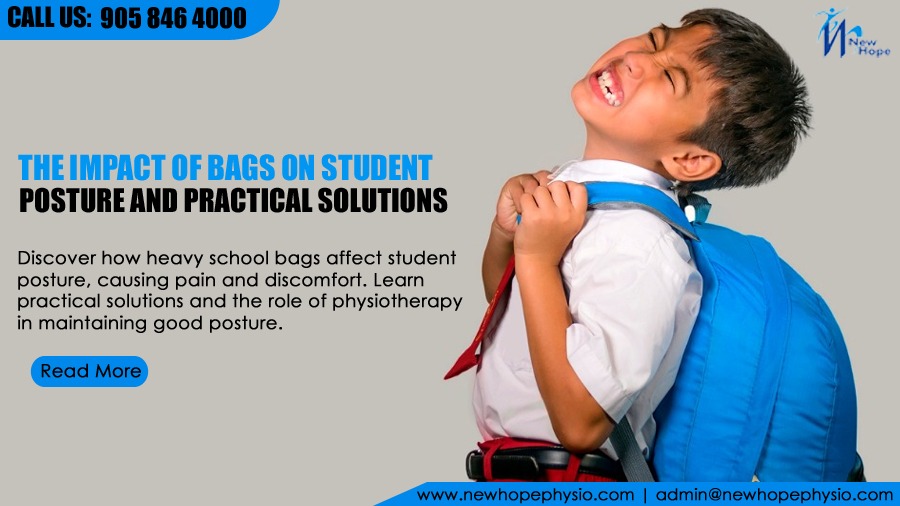
Everywhere around the hustle and flow of educational facilities, irrespective of their country or location, it is very common to find students strolling in front of you with enormous bags at their backs because of the textbooks and other relevant school supplies. These notebooks are undoubtedly essential to an educational process but may unknowingly lead to a slouch or discomfort among students. Physiotherapy plays an important role in improving bad posture and helping students to remain healthy. In this article, the focus is the bag burden on student posture and the solution there, too.
Also Read: 10 Gentle Workouts to Help Lower Back Pain at Home
Negative Impact of Heavy Bags on Spine
Constantly bearing the weight of heavy objects on your back and shoulders can result in adverse effects on your spine, including:
Be it neck, back, and shoulder pain, some physical activities can cause injuries.
Slouching posture
Breathing difficulties
Numbness in neck, back, and the shoulder part.
The high school and college students especially are likely to develop back problems due to the long periods of carrying heavy textbooks and items personally around what in turn may lead to the aforementioned long-term effects.
Also Read: How To Get Rid of Back Pain Fast
The Relationship between Bags and Posture
The size and weight of a student’s bag, many of which they have to carry, is a major factor in the posture problems they face. Prolonged exposure to constant stress on your shoulders from a heavy, uneven package will cause undue stress on muscles, poor posture and potential spinal misalignments. The continuous pulling impact on the spine and surrounding muscles may produce discomfort, fatigue as well as in the long run, will be a cause of serious health issues if not corrected.
Besides that, the design of the bag itself can turn into a posture problem itself. Shoulder bags, often carried by students, can lead to posture problems over time. When one shoulder bears the bag’s entire weight, it can create an uneven posture and cause muscle imbalances. Additionally, backpacks lacking adequate padding and support put added pressure on the shoulders and strain the spine, making it challenging to maintain good posture.
Also Read: World Physiotherapy Day 2026: Helping People Move Without Pain
Physiotherapy Interventions for Posture Correction
1. Postural Assessment: Physiotherapists perform detailed examinations to distinguish extremes of postural deviations along with the multiple-sized muscle groups that are dysfunctional and cause bad posture.
2. Manual Therapy Techniques: Techniques like massaging, mobilizing the joints, and manipulation of soft tissues can be used to alleviate muscle tension, improve joint mobility, and accomplish proper alignment.
3. Ergonomic Education: The physiotherapists apply the ergonomic principles through correct postures and body mechanics, which aim to prevent injuries due to sitting at desks and carrying bags when performing routine tasks.
4. Lifestyle Modifications: Educating and enlightening students on the need to lead a healthy lifestyle that incorporates regular exercise, sufficient sleep and proper diets could integrate physiotherapy treatment methods and overall musculoskeletal health.
Also Read: 10 Exercises to Help Relieve Knee Pain
FAQs:
1. How can a heavy school bag affect a student’s posture?
A heavy school bag can make students lean forward or to one side. Over time, this can lead to poor posture, muscle strain, and back or shoulder pain.
2. What is the safest weight for a school bag?
A school bag should usually weigh no more than 10–15% of a student’s body weight. Keeping the bag light helps reduce stress on the back and shoulders.
3. What are the signs that a school bag is too heavy?
Common signs include shoulder pain, back pain, neck pain, red marks from straps, leaning forward while walking, or feeling tired after carrying the bag.
4. Is wearing one backpack strap bad for posture?
Yes. Carrying a backpack on one shoulder puts extra pressure on one side of the body. Using both shoulder straps helps keep weight balanced.
5. How should students wear a backpack correctly?
Students should wear both shoulder straps, adjust them so the backpack sits close to the back, and keep the heaviest items closest to the spine.
Also Read: Shoulder Pain Solutions: 7 Essential Exercises for Quick Relief
6. Can poor posture from heavy bags cause long-term problems?
If poor posture continues for a long time, it may increase the risk of ongoing back, neck, and shoulder pain. Good habits can help prevent these problems.
7. What type of school bag is best for students?
A backpack with two wide, padded shoulder straps, a padded back, and several compartments is a good choice. It helps spread the weight evenly.
8. How can students make their school bags lighter?
Carry only the books and supplies needed for the day, remove unnecessary items, and organize the bag so weight is evenly distributed.
9. Can exercise help improve posture?
Yes. Simple stretching and strengthening exercises for the back, shoulders, and core can improve posture and reduce discomfort from carrying a school bag.
10. When should a student see a physiotherapist?
If back, neck, or shoulder pain continues, or if poor posture does not improve with better bag habits, a physiotherapist can assess the problem and recommend the right treatment and exercises.
Conclusion
The effects of bags on the posture of a student being an important part that cannot be ignored at all. From picking up the appropriate bag to taking breaks every once in a while, wearing the right bag properly, strengthening core muscles, maintaining the correct posture and a myriad of other practical solutions, overcoming these problems altogether is achievable. As teachers and parents, it is our responsibility to let the students know how they can balance their daily activities in a healthy manner and to promote good posture and provide them with the information to maintain good posture which will be beneficial for many years.
Also Read: What Should You Not Do After Cupping?
Gurpreet Kaur Kandhole, Physiotherapist
Gurpreet Kaur Kandhole is an experienced and caring physiotherapist with a Master’s degree in Musculoskeletal Conditions. She has been practicing physiotherapy since 2010 and has been a registered physiotherapist in Ontario since 2018.
Gurpreet helps patients manage both short-term and long-term pain using evidence-based treatment. Her areas of care include manual therapy, acupuncture, personalized exercise programs, sports injuries, neurological conditions, musculoskeletal conditions, and care for older adults.
She believes every patient is different and creates treatment plans based on their individual needs and goals. Her goal is to help patients reduce pain, improve movement, regain strength, and return to their daily activities with confidence.
Gurpreet is committed to continuing her education and keeping up with the latest developments in physiotherapy. She takes a patient-centered approach and focuses on providing safe, effective, and compassionate care.
Also Read: Top 5 Exercises for Strengthening Your Pelvic Floor

Leave a Comment