

Welcome to New Hope Physiotherapy
- Brampton 905-846-4000
- Malton 905-364-3900
- Orangeville 519-217-9300
- admin@newhopephysio.com
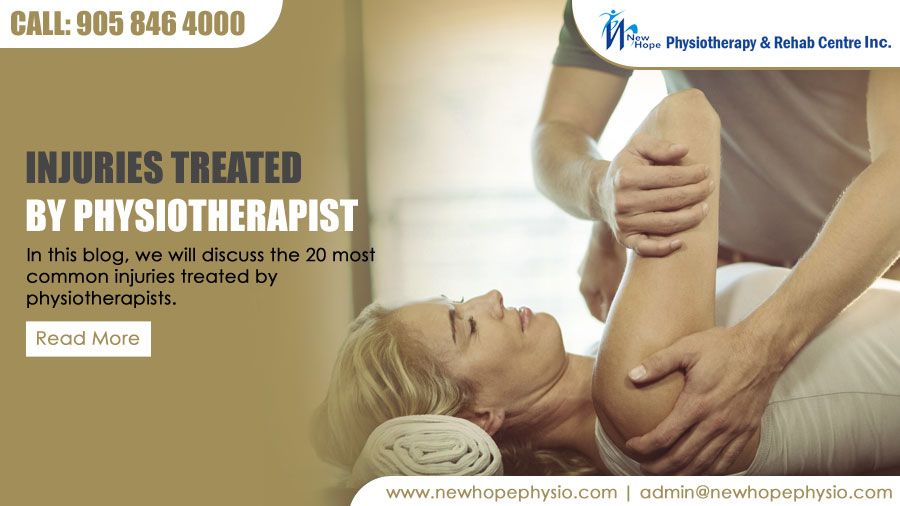
20 Common Injuries Treated by a Physiotherapist in Brampton
 14 May 2023
- newhope
- 0 Comments
- 952
20 Common Injuries Treated by a Physiotherapist in Brampton
If you’re dealing with pain, stiffness, or limited movement — you’re probably wondering whether physiotherapy can help. The short answer? In most cases, yes.
Physiotherapists in Brampton are trained to treat a surprisingly wide range of injuries and conditions. Whether your problem started yesterday or has been bothering you for years, there’s a good chance physiotherapy can make a real difference.
Here are 20 of the most common injuries and conditions treated at physiotherapy clinics in Brampton.
Also Read: 10 Gentle Workouts to Help Lower Back Pain at Home
Upper Body Injuries
1. 🤕 Neck Pain
Neck pain is incredibly common — especially for people who spend long hours at a desk or looking at screens.
Common causes:
- Poor posture and forward head position
- Muscle strain and tension
- Whiplash from accidents
- Age-related joint changes
How physiotherapy helps:
- Joint mobilisation to restore movement
- Stretching and strengthening exercises
- Posture correction and ergonomic advice
2. 💪 Shoulder Pain
The shoulder is one of the most mobile joints in the body — which also makes it one of the most injury-prone.
Common shoulder conditions:
- Rotator cuff tears or tendinitis
- Frozen shoulder (adhesive capsulitis)
- Shoulder impingement
- Bursitis
How physiotherapy helps:
- Manual therapy to restore joint mobility
- Targeted strengthening exercises
- Pain management with heat, ice, or electrical stimulation
3. 🎾 Tennis Elbow
Despite the name, most people who get tennis elbow have never played tennis. It’s caused by repetitive strain on the tendons of the outer elbow.
Common in: Office workers, tradespeople, and anyone doing repetitive gripping or lifting
How physiotherapy helps:
- Forearm and wrist strengthening exercises
- Soft tissue massage and manual therapy
- Bracing advice and activity modification
4. ⛳ Golfer’s Elbow
Similar to tennis elbow — but the pain is on the inner side of the elbow rather than the outer side. Also caused by repetitive use and overloading of the forearm tendons.
Also Read: Golfer’s Elbow vs. Tennis Elbow: What’s the Difference?
How physiotherapy helps:
- Targeted strengthening and stretching
- Manual therapy to reduce tension
- Guidance on modifying activities that aggravate symptoms
5. 🖐️ Carpal Tunnel Syndrome
Carpal tunnel syndrome causes numbness, tingling, and weakness in the hand and fingers. It happens when the median nerve gets compressed at the wrist.
Common in: People who type extensively, use vibrating tools, or do repetitive hand movements
How physiotherapy helps:
- Nerve mobilisation techniques
- Wrist and hand exercises
- Ergonomic advice for workstation setup
- Splinting recommendations
Back and Spine Injuries
6. 🔙 Back Pain
Back pain is one of the most common reasons people visit a physiotherapist in Brampton. It can affect anyone — regardless of age or activity level.
Also Read: 5 Common Types of Back Pain You Should Know
Common causes:
- Poor posture and prolonged sitting
- Weak core muscles
- Muscle strains and sprains
- Herniated or bulging discs
- Arthritis
How physiotherapy helps:
- Core strengthening and back exercises
- Manual therapy and spinal mobilisation
- Posture correction and ergonomic advice
- Education on safe movement and lifting
7. 🦵 Sciatica
Sciatica causes pain, tingling, or numbness that travels from the lower back down through the buttock and into the leg. It’s caused by irritation of the sciatic nerve.
How physiotherapy helps:
- Manual therapy to relieve nerve pressure
- Nerve mobilisation (nerve gliding) exercises
- Stretching for tight muscles around the sciatic nerve
- Core strengthening to support the spine
Hip and Pelvis Injuries
8. 🦴 Hip Pain
Hip pain can come from the joint itself or the muscles and tendons surrounding it.
Common hip conditions:
- Osteoarthritis
- Bursitis (inflammation of the fluid-filled sacs in the hip)
- Hip flexor strains
- Labral tears
How physiotherapy helps:
- Exercises to improve hip strength and flexibility
- Manual therapy for joint stiffness
- Gait retraining if walking patterns have changed
Knee Injuries
9. 🦵 Knee Pain
The knee takes enormous load during daily activities. Pain can develop gradually or suddenly — from injury or wear and tear.
Common knee conditions:
- Osteoarthritis
- Runner’s knee (patellofemoral pain)
- IT band syndrome
- General knee inflammation
How physiotherapy helps:
- Strengthening the quadriceps, hamstrings, and glutes
- Manual therapy to improve joint mobility
- Taping and bracing for support
- Activity modification advice
10. ⚽ ACL Injuries
ACL (anterior cruciate ligament) tears are among the most serious knee injuries — common in sports involving jumping, cutting, or sudden direction changes.
How physiotherapy helps:
- Pre-surgical strengthening (prehab)
- Post-surgical rehabilitation
- Gradual return-to-sport programme
- Proprioception and balance retraining
11. 🏈 Meniscus Tears
The meniscus is the cartilage that cushions the knee joint. Tears can occur from twisting movements or gradually through wear and tear.
How physiotherapy helps:
- Strengthening exercises to reduce load on the damaged area
- Range-of-motion work
- Manual therapy for stiffness
- Return-to-activity guidance
12. 🏃 Patellar Tendonitis (Jumper’s Knee)
This condition causes pain just below the kneecap — in the tendon that connects the kneecap to the shinbone. Common in athletes who run and jump frequently.
How physiotherapy helps:
- Progressive tendon loading exercises
- Manual therapy and soft tissue work
- Load management advice
- Return-to-sport planning
Lower Leg and Foot Injuries
13. 👟 Shin Splints
Shin splints cause pain along the front of the lower leg — typically during or after running. Very common in new runners or those who suddenly increase their training load.
How physiotherapy helps:
- Load management and training advice
- Strengthening exercises for lower leg muscles
- Flexibility work for the calf and ankle
- Footwear and running technique assessment
14. 🦶 Plantar Fasciitis
This is one of the most common causes of heel pain. It involves inflammation of the thick band of tissue running along the bottom of the foot.
Common in: Runners, people who stand for long hours, and those with flat feet or high arches
How physiotherapy helps:
- Calf and foot stretching exercises
- Foot strengthening programme
- Shockwave therapy for stubborn cases
- Orthotics and footwear advice
15. 🏃 Achilles Tendonitis
The Achilles tendon connects the calf muscle to the heel bone. Overuse or sudden increases in activity can inflame or damage it.
How physiotherapy helps:
- Graduated tendon loading exercises (the most evidence-based treatment)
- Calf strengthening and stretching
- Activity modification during recovery
- Shockwave therapy if needed
16. 🦶 Ankle Sprains
Ankle sprains are one of the most common injuries — both in sport and in everyday life. They happen when the ligaments in the ankle are stretched or torn.
How physiotherapy helps:
- Reducing swelling with ice, compression, and elevation guidance
- Range-of-motion exercises to restore movement
- Balance and proprioception retraining
- Strengthening to prevent re-injury
Sprains, Strains, and General Injuries
17. 💥 Sprains and Strains
These can happen anywhere in the body — any time a ligament (sprain) or muscle/tendon (strain) is overstretched or torn.
How physiotherapy helps:
- Targeted strengthening and flexibility exercises
- Manual therapy to restore movement
- Modalities like ultrasound or TENS for pain relief
- Return-to-activity guidance
18. 🎾⛳ Tennis and Golf Injuries
Both sports involve highly repetitive movements — which makes overuse injuries very common.
Common injuries include:
- Shoulder and rotator cuff problems
- Lower back pain from rotational forces
- Elbow tendinitis (tennis or golfer’s elbow)
- Wrist and forearm strain
How physiotherapy helps:
- Technique assessment and correction
- Targeted strength and flexibility work
- Manual therapy for affected joints and muscles
- Injury prevention strategies for ongoing play
19. 🚗 Whiplash
Whiplash is a neck injury caused by a sudden, forceful back-and-forth movement of the head — most commonly from car accidents.
Symptoms include:
- Neck pain and stiffness
- Headaches starting at the base of the skull
- Shoulder and upper back pain
- Dizziness or difficulty concentrating
How physiotherapy helps:
- Gentle manual therapy to restore neck movement
- Progressive strengthening exercises
- Posture correction
- Education on managing symptoms at home
20. 🏥 Post-Surgical Rehabilitation
After surgery, physiotherapy is often the most important factor in how well and how quickly you recover.
Common surgeries requiring physiotherapy:
- Knee replacement or ACL reconstruction
- Hip replacement
- Rotator cuff repair
- Spinal surgery
- Fracture repair
How physiotherapy helps:
- Restoring range of motion after immobilisation
- Rebuilding strength in weakened muscles
- Scar tissue management
- Gradual, safe return to normal activities
Quick Reference Guide
| Body Area | Common Conditions Treated |
|---|---|
| Neck | Neck pain, whiplash |
| Shoulder | Rotator cuff, frozen shoulder, bursitis |
| Elbow | Tennis elbow, golfer’s elbow |
| Wrist/Hand | Carpal tunnel syndrome |
| Back | Back pain, sciatica |
| Hip | Osteoarthritis, bursitis, strains |
| Knee | ACL, meniscus, patellar tendonitis, arthritis |
| Lower leg | Shin splints, Achilles tendonitis |
| Foot/Ankle | Plantar fasciitis, ankle sprains |
| General | Sprains, strains, post-surgical rehab |
5 FAQs:
1. How do I know which of these injuries I have?
You don’t need to diagnose yourself before booking — that’s exactly what your physiotherapist is trained to do. During your first appointment, they’ll ask about your symptoms, how and when they started, and what makes them better or worse. They’ll then perform a physical assessment to identify the root cause. In some cases, they may recommend imaging like an X-ray or MRI to confirm the diagnosis. Coming in with an accurate description of your pain — location, type, and triggers — is helpful, but leave the diagnosis to the professional.
Also Read: Frozen Shoulder vs. Rotator Cuff Tear: Key Differences and Symptoms
2. Can physiotherapy treat an injury that happened years ago?
Yes. Old injuries are very commonly treated in physiotherapy clinics. In fact, many chronic pain problems are the result of old injuries that didn’t heal properly or were never fully addressed. Scar tissue, muscle weakness, and compensatory movement patterns can all persist for years and continue causing problems. Physiotherapy can assess what’s still dysfunctional and create a plan to address it — regardless of how long ago the original injury occurred.
3. I’m not sure if my injury is serious enough to warrant physiotherapy. How do I decide?
A good rule of thumb: if pain or limited movement has been affecting your daily life for more than a few days and isn’t clearly improving, it’s worth getting assessed. You don’t need to be in severe pain to benefit from physiotherapy. Many people wait too long — allowing minor injuries to become chronic problems. An assessment is low-risk and gives you clear answers. Even if physiotherapy isn’t the right treatment, your physiotherapist can point you in the right direction.
4. Will I need to take time off work or sport while receiving physiotherapy treatment?
Not necessarily — and often the goal is to help you stay as active as possible while you recover. Your physiotherapist will advise you on what activities are safe to continue and which to modify or avoid temporarily. For most injuries, complete rest is not recommended. Staying active — within appropriate limits — actually speeds up recovery for most conditions. If time off work or sport is genuinely necessary, your physiotherapist can provide documentation to support that recommendation.
5. Is physiotherapy in Brampton covered by insurance?
Most private health insurance plans in Ontario cover physiotherapy services. Coverage levels vary between plans — some cover a set dollar amount per year, others cover a set number of sessions. It’s worth calling your insurance provider before your first appointment to confirm your coverage, check whether a doctor’s referral is required, and find out your co-pay amount. If you don’t have insurance coverage, many Brampton physiotherapy clinics offer competitive self-pay rates and flexible payment options.
Final Thoughts
Whether it’s a sports injury, a work-related strain, chronic pain, or recovery after surgery — physiotherapy in Brampton can help. The 20 conditions covered in this article represent just a portion of what skilled physiotherapists treat every day.
The most important step is simply making the call. Book an assessment, get a clear diagnosis, and start a treatment plan designed specifically for your body and your goals.
Pain is not something you have to just put up with — and physiotherapy is one of the most effective ways to do something about it.
Also Read: 5 Quick Home Remedies for Leg Cramp Relief and Prevention


Leave a Comment