

Welcome to New Hope Physiotherapy
- Brampton 905-846-4000
- Malton 905-364-3900
- Orangeville 519-217-9300
- admin@newhopephysio.com
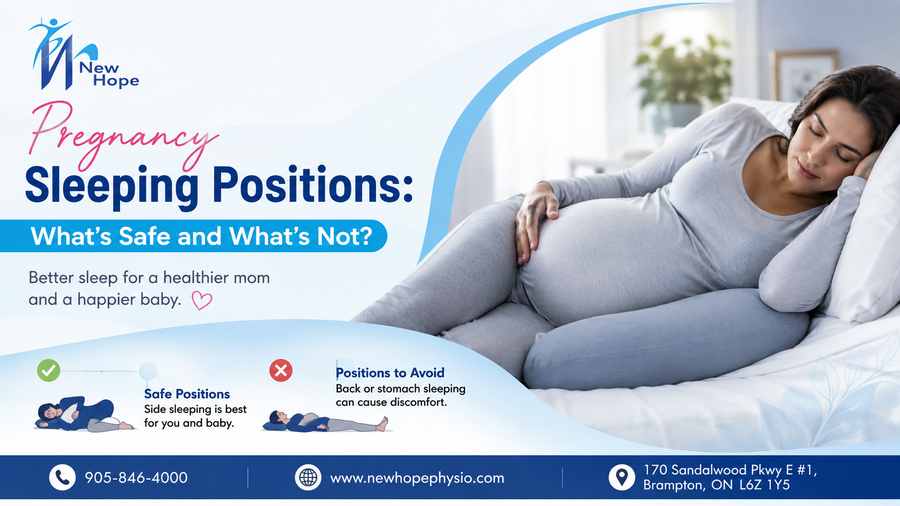
Pregnancy Sleeping Positions: What’s Safe and What’s Not?
 11 Aug 2026
Pregnancy Sleeping Positions: What’s Safe and What’s Not?
Introduction
Sleep and pregnancy have a strange relationship.
You’re tired all day, sometimes really tired, and then bedtime comes and suddenly you can’t get comfortable. You turn to one side. Then the other. Add a pillow. Remove the pillow. Get up to use the bathroom. Come back and start all over again.
And somewhere in all of that you start wondering, am I even sleeping in the right position?
A lot of people have difficulty sleeping during pregnancy, especially as the belly gets bigger. Back pain, hip discomfort, heartburn, leg cramps, baby movements and frequent bathroom trips can all make a normal night of sleep feel… not so normal anymore.
Then there are all the questions about pregnancy sleeping positions. Is the left side really better? What about the right side? Is sleeping on your back during pregnancy dangerous? And what happens if you wake up on your back without meaning to?
There’s a lot of information out there, so it helps to keep things fairly simple.
Also Read: 10 Safe Ways to Treat Neck Pain during Pregnancy
Why Does Sleeping Get So Uncomfortable?
Early in pregnancy, your sleeping habits might not change much at all.
Later on, that can be a completely different story.
Your belly grows, your posture changes and your body is carrying extra weight in places it wasn’t before. Your hips and lower back can start feeling the difference too.
Some common things that can interrupt sleep include:
- Lower back pain
- Hip or pelvic discomfort
- Heartburn
- Leg cramps
- Frequent bathroom trips
- Feeling too warm
- Baby movements
- Trouble getting comfortable
- Worrying about whether you’re sleeping correctly
And sometimes there isn’t really one obvious reason. You just can’t sleep.
That happens too.
I think this is where people sometimes get stuck looking for the one “perfect” position. There probably isn’t one position that will feel amazing every single night.
Also Read: Top 5 Exercises for Strengthening Your Pelvic Floor
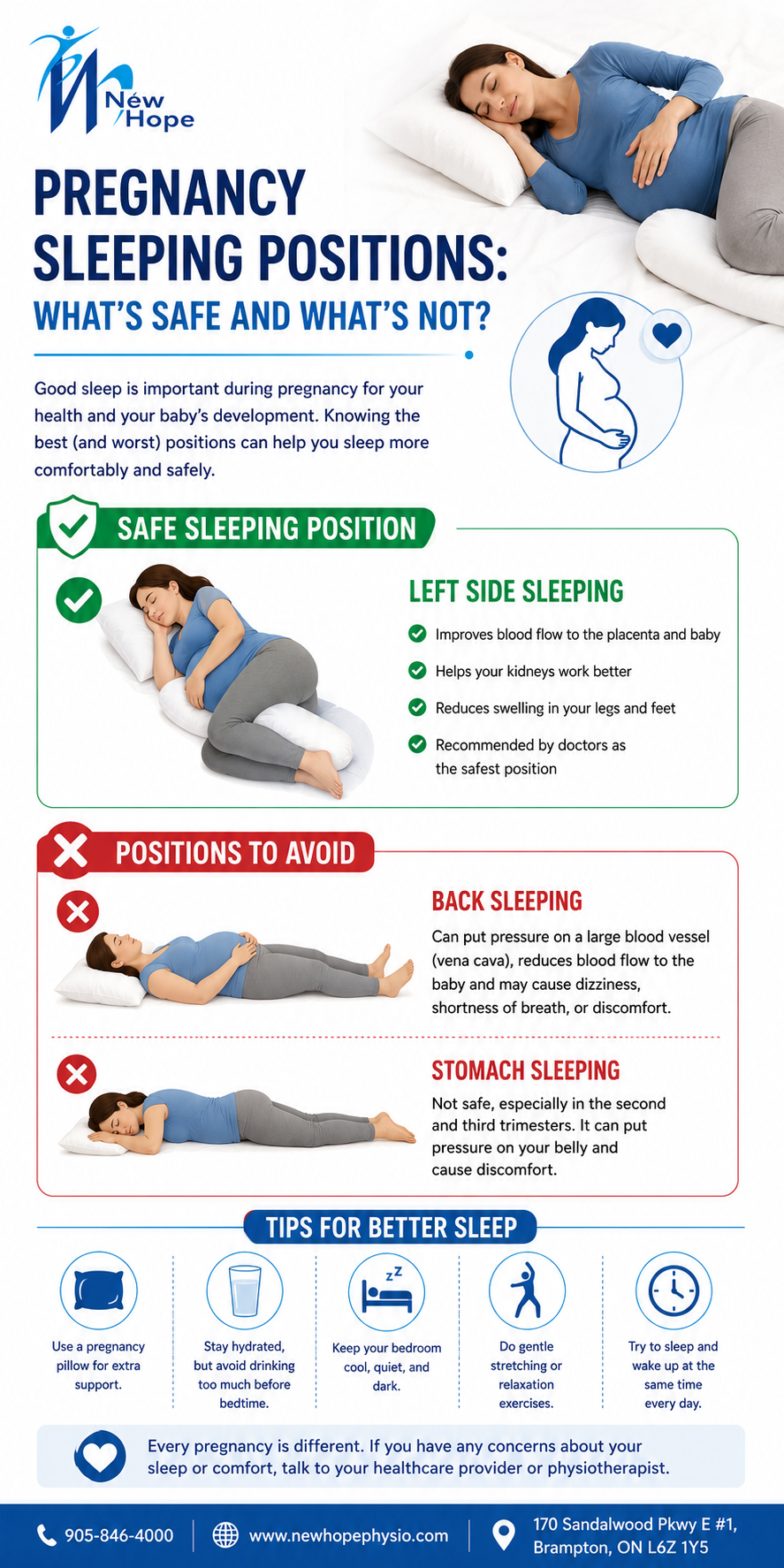
So, What Is the Best Position for Sleeping in Pregnancy?
Later in pregnancy, going to sleep on your side is generally recommended.
You’ve probably heard that you absolutely have to sleep on your left side. The left side can certainly be comfortable, but that doesn’t mean you need to stay frozen there all night.
You can sleep on either side.
And realistically, most people move around while they’re asleep anyway.
Pillows can make a surprisingly big difference. You can try putting one:
- Between your knees
- Under your belly
- Behind your lower back
- Under your upper body if you’re dealing with heartburn
Pregnancy pillows are popular, but regular pillows can work too. Sometimes three ordinary pillows placed properly are better than buying some giant pillow that takes over the entire bed.
The main idea is support.
If your hips feel better with something between your knees, use it. If your belly feels like it needs support, put a small pillow underneath it.
It may take a little experimenting.
Also Read: What Should You Do Before and After Acupuncture?
What About Sleeping on Your Back During Pregnancy?
This is probably the question that makes people worry the most.
Sleeping on back during pregnancy becomes more of a concern as pregnancy progresses because the weight of the growing uterus can put pressure on major blood vessels when you’re lying completely flat.
So, when should you stop sleeping on your back during pregnancy?
Health guidance generally recommends going to sleep on your side from around 28 weeks.
But here’s the part that sometimes gets missed.
If you go to sleep on your side and wake up lying on your back, don’t panic.
Just roll back onto your side.
You aren’t controlling your body every second while you’re asleep, obviously. Waking up in a different position doesn’t mean you’ve done something wrong.
A pillow behind your back may help if you keep rolling completely onto your back. Even a slight tilt can sometimes feel more comfortable.
Also Read: 5 Conditions Causing Your Shoulder Pain
Can You Sleep on Your Stomach?
In early pregnancy, stomach sleeping is generally okay if you’re comfortable.
At 7 or 8 weeks, for example, your belly may not look or feel very different yet. The uterus is still protected within the pelvis.
Later, stomach sleeping usually stops being practical.
Not necessarily because someone tells you, “Okay, today’s the day you can’t sleep like that anymore.” It just becomes uncomfortable as the belly grows.
Your body sort of makes the decision for you.
If you’ve always been a stomach sleeper, switching to your side can feel awkward at first. That’s where pillows can help again.
Also Read: What Should You Not Do After Cupping?
A Few Things That May Make Sleeping Easier
There’s no magic trick here. Unfortunately.
Usually it’s a few small changes together that make nights a little easier.
You can try:
- Going to bed around the same time each night
- Using extra pillows for support
- Keeping your bedroom cool
- Avoiding a very large meal right before bed
- Doing gentle movement during the day
- Changing positions when something starts hurting
- Getting up slowly instead of jumping straight out of bed
Your daytime posture can matter as well.
If you’re sitting at a desk or on the couch for hours, try not to stay in exactly the same position. Get up. Walk around for a couple of minutes. Change how you’re sitting.
You don’t need some perfect pregnancy sitting posture every second of the day. That’s probably unrealistic.
Just try not to spend hours slouched in one position if it’s making your back or hips uncomfortable.
Also Read: 5 Quick Home Remedies for Leg Cramp Relief and Prevention
When Pregnancy Physiotherapy Might Help
Sometimes you keep changing pillows and sleeping positions and nothing really fixes the problem.
At that point, the issue may be more about back pain, pelvic discomfort, muscle tension or changes in how you’re moving during pregnancy.
Pregnancy physiotherapy may help with some of these problems.
A physiotherapist can look at how you’re moving, what positions make symptoms worse and what might make things easier. Depending on your needs, this may involve gentle exercises, movement advice, posture changes or other appropriate treatments.
New Hope Physiotherapy in Brampton offers physiotherapy and pelvic floor physiotherapy services, including individualized assessment and treatment. So if you’ve been searching for physiotherapy for pregnancy near me, physiotherapy Brampton, or just physiotherapy near me, it may be worth asking whether treatment is suitable for the discomfort you’re experiencing.
It’s not really about “fixing” pregnancy, obviously. Your body is going through a lot of normal changes.
Sometimes it’s simply about making those changes easier to manage.
And if something feels unusual, severe or just worries you, speak with your doctor, midwife or pregnancy care provider.
When Should You Get Help?
Some aches and uncomfortable nights can happen during pregnancy.
But you don’t need to ignore pain just because you’re pregnant.
Talk to your healthcare provider if you have pain that is severe, keeps getting worse, feels unusual or is making normal daily activities difficult.
The same goes for sleep. If you’re barely sleeping and it’s affecting your day, mention it.
And honestly, if you’re lying awake worrying about whether a certain sleeping position is safe, ask your healthcare provider. Sometimes getting a simple answer from someone who knows your pregnancy makes a huge difference.
Also Read: Frozen Shoulder vs. Rotator Cuff Tear: Key Differences and Symptoms
FAQs
1. What are unsafe sleeping positions during pregnancy?
Later in pregnancy, it’s generally recommended that you go to sleep on your side rather than flat on your back. From around 28 weeks, side sleeping is usually advised.
2. How to sleep comfortably while pregnant?
Try side sleeping with a pillow between your knees and another under your belly. You can also place a pillow behind your back. It may take a few nights to figure out what actually feels comfortable.
3. Can I sleep on my stomach in the first trimester?
Generally, yes. If stomach sleeping is still comfortable during the first trimester, it is usually fine. As your belly grows, you’ll probably naturally stop because it becomes uncomfortable.
4. What not to do at 7 weeks pregnant?
Follow your healthcare provider’s advice about medicines, food safety, alcohol, smoking and activities. Don’t rely too much on random pregnancy rules online because some of them are myths. If you’re unsure about something specific, ask your doctor or midwife.
Also Read: Shoulder Pain Solutions: 7 Essential Exercises for Quick Relief
5. Which fruit is not good for pregnancy?
There isn’t one common fruit that everyone needs to avoid during pregnancy. Most properly washed fruits can be part of a healthy diet. Food safety matters more than internet lists claiming certain fruits are automatically “bad.”
6. What positions should be avoided in early pregnancy?
There usually isn’t a specific sleeping position everyone needs to avoid during early pregnancy. Sleep in a position that feels comfortable. Recommendations about going to sleep on your side become more important later.
7. Why do most miscarriages happen at 7 weeks?
Early miscarriages can happen for many reasons, and chromosome problems are a common cause. Normal sleeping or sitting positions generally aren’t the cause. If you’re worried about symptoms or your pregnancy, contact your healthcare provider.
8. How not to sit during pregnancy?
Try not to sit slouched or stay in exactly the same position for hours. Keep your feet supported when possible and get up regularly. Basically, move around a little instead of trying to hold one “perfect” posture all day.
9. Is sleeping on the left side better during pregnancy?
The left side can be comfortable, but you don’t necessarily need to sleep only on your left side. Either side can be used. Switching sides during the night is normal too.
10. Can pregnancy physiotherapy help me sleep better?
It may help if back pain, pelvic discomfort or movement problems are making it difficult to get comfortable at night. A physiotherapist can assess what’s bothering you and suggest exercises, positions or other strategies suited to you.
Also Read: Cupping Therapy: How Often Should You Schedule Sessions for Optimal Results?
Medical Disclaimer
This content is for general information only and is not a substitute for medical advice. Every pregnancy is different. Always consult your doctor, midwife, or healthcare provider for advice about safe sleeping positions during pregnancy, especially if you have any health concerns or complications.
Conclusion
Pregnancy sleep isn’t always straightforward.
Some nights you’ll find a position that works perfectly. Then, for no obvious reason, it doesn’t work the next night.
Side sleeping is generally the best position for sleeping in pregnancy later on, especially from around 28 weeks. Earlier in pregnancy, there is usually more flexibility. And if you wake up on your back, just turn onto your side again. No need to make the whole night stressful because of it.
Use pillows. Change positions. Move around during the day. Try different things and see what your body actually likes.
And if back or pelvic discomfort keeps getting in the way, talking with your pregnancy care provider or looking into pregnancy physiotherapy may be useful.
Mostly, don’t chase the perfect sleeping position too much.
Comfort changes during pregnancy. Sometimes even week to week. You figure out what works, adjust when it stops working, and then… probably rearrange the pillows again.
Also Read: Knee Pain After Sitting Too Long: Causes and Tips
Gauravdeep Randhawa, Registered Physiotherapist
Gauravdeep Randhawa is a caring and experienced physiotherapist with over 17 years of experience helping patients recover and improve their quality of life.
She started her own practice in Canada in 2009 and has treated many patients with muscle, joint, sports, neurological, and pelvic health conditions. She has also owned and operated multidisciplinary clinics.
Gauravdeep is a Certified Manual Therapist and has completed training in Contemporary Medical Acupuncture and Pelvic Floor Therapy. She uses hands-on treatment, personalized exercise programs, and evidence-based care to support each patient’s recovery.
Her goal is to help people reduce pain, restore movement, improve function, and achieve long-term wellness in a comfortable and supportive environment.
Leave a Comment