

Welcome to New Hope Physiotherapy
- Brampton 905-846-4000
- Malton 905-364-3900
- Orangeville 519-217-9300
- admin@newhopephysio.com
The Path to Becoming an Acupuncturist in Canada: How Long Does It Take?
 19 Oct 2023
- admin
- 0 Comments
- 6163
The Path to Becoming an Acupuncturist in Canada: How Long Does It Take?
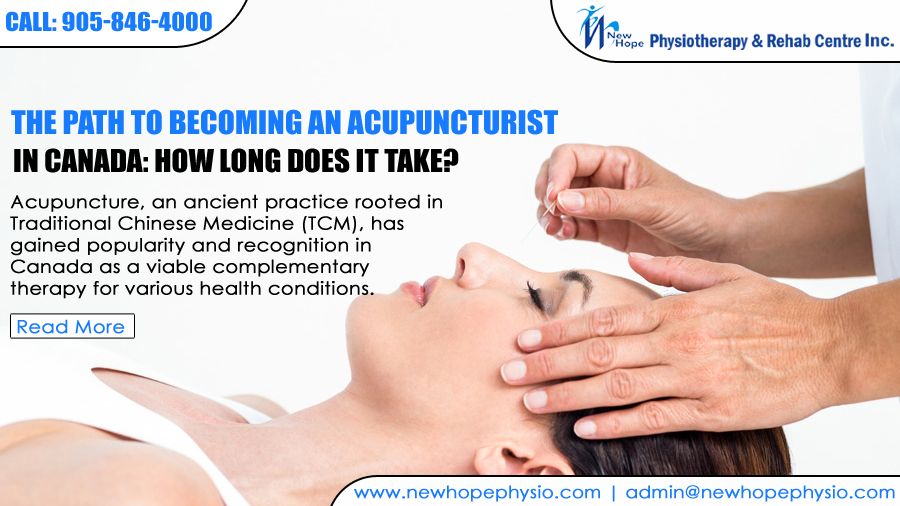
Acupuncture, an ancient practice rooted in Traditional Chinese Medicine (TCM), has gained popularity and recognition in Canada as a viable complementary therapy for various health conditions. As interest in acupuncture grows, many individuals contemplate pursuing a career in this field. One of the first questions that often arises is, “How long does it take to become an acupuncturist in Canada?”
Also Read: 5 Quick Home Remedies for Leg Cramp Relief and Prevention

Understanding Acupuncture and Its Relevance in Canada
It’s important to understand the importance of acupuncture in Canada’s healthcare system before diving into the educational timeline. In order to stimulate and balance the body’s energy, or “qi” (pronounced “chee”), acupuncture involves inserting tiny needles into certain locations on the body. It is frequently used to treat a variety of health ailments, reduce stress, and promote sleep.
Acupuncture is frequently utilized in conjunction with conventional medical therapies in Canada, where it is largely regarded as a supplementary therapy. It has become more popular among patients looking for alternate methods of health management. The need for skilled acupuncturists has grown over time as a result.
Also Read: 10 Safe Ways to Treat Neck Pain during Pregnancy
How to become an acupuncturist in Canada?
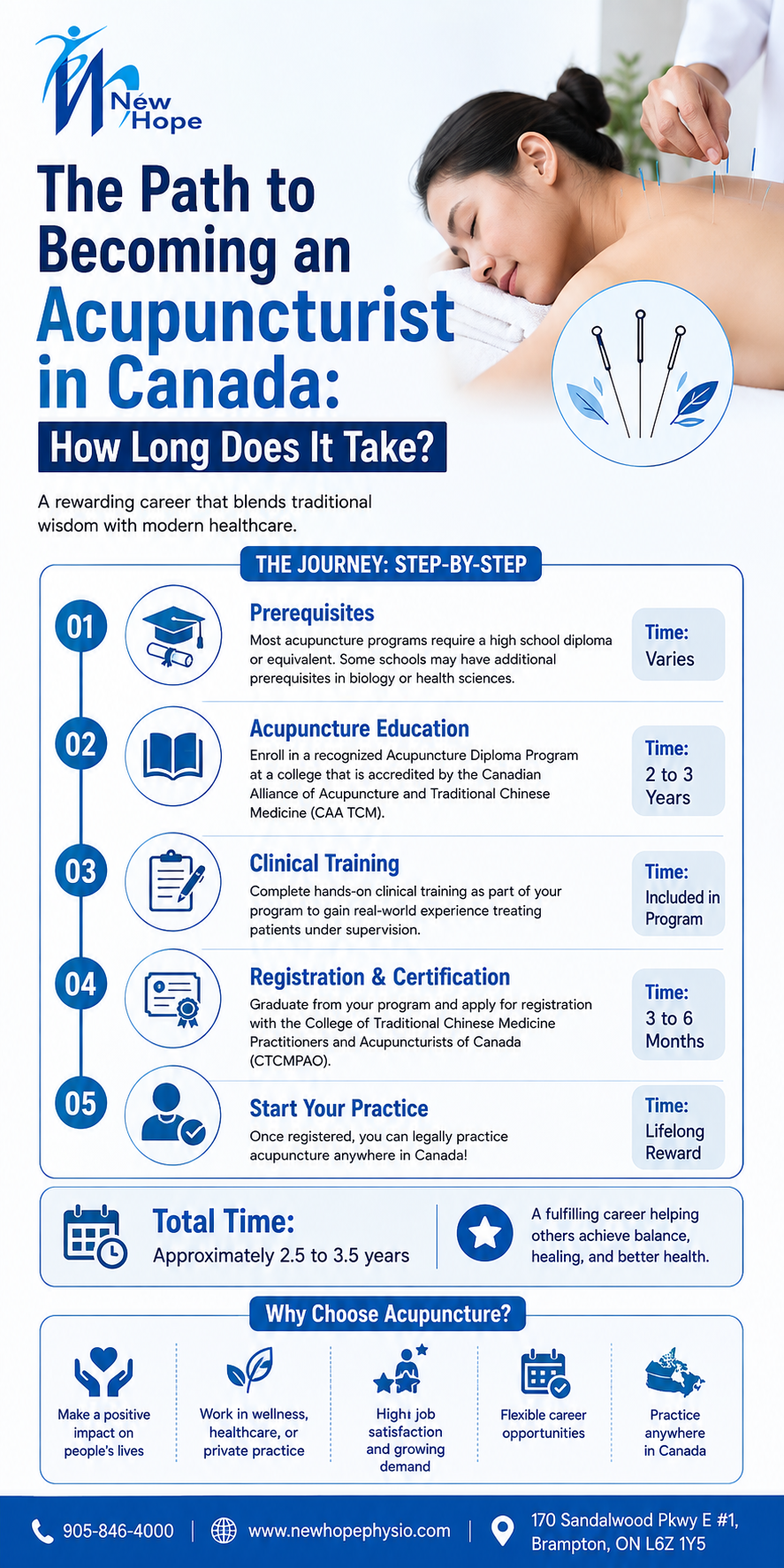
1. Complete High School
To become an acupuncturist, you need to finish high school or get a GED. It’s important to do well in school so you can go to college and learn what you need for this job. You can also take classes like biology, accounting, and business to get ready for this career because many acupuncturists have their businesses.
Also Read: Dry Cupping vs Wet Cupping: Key Differences & Treatments
2. Complete postsecondary education and relevant training
Acupuncturists can pick from a variety of educational programs to get licensed.
Also Read: Frozen Shoulder vs. Rotator Cuff Tear: Key Differences and Symptoms
Option 1: You can enrol in a three- or four-year diploma program at a private university. Options include:
- Pacific Rim College: Diploma of Acupuncture and Chinese Medicine
- Vancouver Beijing College of Chinese Medicine: Acupuncturist diploma
Option 2: You can pursue a bachelor’s degree in science and then get specialized training in acupuncture.
In either case, it’s a good idea to gain practical experience by working with a registered acupuncturist who can mentor you to qualify for the role.
3. Register with your provincial or territorial regulatory body
To work as an acupuncturist in some Canadian provinces like Newfoundland and Labrador, Quebec, Ontario, Alberta, and British Columbia, you need to get registered with a local authority. This means you have to pass an exam and maybe have some practical experience. For example, in Alberta, you must finish an approved acupuncturist program, pass a test, and do at least 500 hours of practice in the two years before you can register.
Also Read: Cupping Therapy: How Often Should You Schedule Sessions?
4. Continue your education
Keep learning to stay updated in your field and improve your skills. You can take extra courses to become better at your job. For example, you can learn how to use acupuncture to help people with PTSD. You can also learn about running a business, like managing stress or following good business practices. These courses can make you better at your job and look good on your resume.
Also Read: 5 Common Types of Back Pain You Should Know
Timeframes for Becoming an Acupuncturist in Canada
Several factors, like your educational background, the program you select, and your speed of study, might affect how long it takes to become a licensed acupuncturist in Canada. The broad breakdown of the timeframes concerned is as follows:
- Undergraduate Degree: Typically, four years are required to complete an undergraduate degree.
- Acupuncture Program: Most acupuncture programs in Canada span three to four years. However, part-time options may extend the duration.
- Clinical Training: The duration of clinical training varies, but often takes one to two years to complete alongside the acupuncture program.
- Licensing Examination: The time it takes to prepare for and pass the licensing examination can vary from a few months to a year, depending on your level of readiness.
Taking these factors into account, the total time required to become a licensed acupuncturist in Canada can range from approximately seven to ten years. This includes undergraduate education, an acupuncture program, clinical training, and the licensing process.
Also Read: 10 Gentle Workouts to Help Lower Back Pain at Home
Also Read: What Should You Not Do After Cupping?
FAQs
Q1: How long does it take to become an acupuncturist in Canada?
A1: Typically, aspiring acupuncturists in Canada need to complete a 3-4 year diploma or degree program in acupuncture from a recognized institution.
Q2: What comes after completing the educational program?
A2: Following graduation, individuals must pass licensing exams administered by the College of Traditional Chinese Medicine Practitioners and Acupuncturists of British Columbia (CTCMA) or equivalent regulatory bodies in other provinces.
Also Read: Shoulder Pain Solutions: 7 Essential Exercises for Quick Relief
Q3: What does the path involve?
A3: The path includes rigorous training, practical experience, and adherence to professional standards ensuring competency in providing safe and effective care.
Also Read: Unravelling the Mystery: Dry Needling vs. Acupuncture
Q4. What education do I need before studying acupuncture?
A4: Most acupuncture schools require a high school diploma or equivalent. Some programs may have extra admission requirements, so it’s best to check with the school before applying.
Q5. Do I need a license to work as an acupuncturist in Canada?
A5: Yes, in many provinces you need to pass licensing or registration requirements before you can practice. The rules are different in each province, so always check the local regulations.
Q6. What do students learn during acupuncture training?
A6: Students learn subjects such as:
- Human anatomy
- Traditional Chinese Medicine (TCM)
- Acupuncture techniques
- Patient care and safety
- Clinical practice with real patients
Q7. Can I study acupuncture while working?
A7: Yes. Many colleges offer part-time, evening, or flexible schedules, making it easier for working adults to complete their education.
Q8. Is clinical training included in the program?
A8: Yes. Most accredited acupuncture programs include hands-on clinical training. Students work under the supervision of experienced professionals to gain practical experience before graduating.
Q9. Is acupuncture a good career in Canada?
A9: Many people choose acupuncture because there is growing interest in natural and non-invasive healthcare. With the right education, licensing, and experience, it can be a rewarding career with opportunities to work in clinics, wellness centres, or private practice.
Also Read: Five Benefits of Sports Physiotherapy for Athletes
Q10. Is acupuncture covered by insurance?
A10: Coverage varies widely depending on your insurance plan and where you live. Some plans do cover acupuncture, especially for specific conditions like chronic pain. It is best to call your insurance provider ahead of time to ask about your benefits, any limits on sessions, and whether you need pre-authorization. Many clinics also offer payment plans if you are paying out of pocket.
Q11. How long does a typical session last?
A11: A standard acupuncture session usually lasts between 45 minutes and an hour. The first appointment tends to take a little longer because the practitioner will ask detailed questions about your health history, lifestyle, and symptoms before starting treatment. Follow-up visits are generally shorter.
Q12. What should I do to prepare for my first acupuncture session?
A12: Try to eat a light meal a couple of hours before your appointment — going in on an empty stomach is not a good idea. Wear loose, comfortable clothing so the practitioner can easily access the treatment areas. Avoid alcohol and try not to do any intense exercise right before your session. Also, take a few minutes beforehand to think about what symptoms or concerns you want to discuss.
Q13. What is the average salary of an acupuncturist in Canada?
A13: The salary of an acupuncturist in Canada can vary based on experience, location, qualifications, and whether they work for a clinic or have their own practice. Income may also vary between provinces and cities.
Also Read: Knee Pain After Sitting Too Long: Causes and Tips
Q14. Is acupuncture in demand in Canada?
A14: Yes, acupuncture is used by many people in Canada as part of their approach to managing pain and other health concerns. Demand can vary by location and the type of services offered.
Q15. What shouldn’t you do before acupuncture?
A15: Avoid having a very heavy meal immediately before your appointment. It is also best to avoid alcohol and excessive caffeine before treatment. Wear comfortable clothing that allows easy access to the treatment area.
Conclusion
Becoming an acupuncturist in Canada is a rewarding journey that involves dedicated education, practical experience, and licensure. The duration of your path to becoming an acupuncturist can vary based on the type of program you choose, but it typically ranges from two to five years. Additionally, the licensing requirements and career opportunities may differ from province to province.
If you are passionate about holistic healthcare and helping individuals on their wellness journey, a career in acupuncture can be a fulfilling choice. It’s essential to research and choose an accredited acupuncture program that aligns with your career goals and to stay informed about the specific requirements in your province to ensure a smooth transition into the profession.
Also Read: 5 Conditions Causing Your Shoulder Pain
About the Author
Gauravdeep Randhawa, Physiotherapist
Gauravdeep Randhawa is an experienced physiotherapist with over 17 years of experience helping patients manage pain, improve movement, and regain function. He started his own physiotherapy practice in Canada in 2009 and has worked with patients experiencing musculoskeletal, sports, neurological, and pelvic health conditions.
As a Certified Manual Therapist, Gauravdeep has also completed specialized training in Contemporary Medical Acupuncture and Pelvic Floor Therapy. His approach combines hands-on treatment, personalized exercise programs, and evidence-based physiotherapy to support safe and effective recovery.
Through his clinical experience and multidisciplinary practice, Gauravdeep understands the importance of individualized care and helping patients make informed decisions about their treatment options.
Professional Areas: Physiotherapy, Manual Therapy, Contemporary Medical Acupuncture, Pelvic Floor Therapy, Pain Management, Rehabilitation.


Leave a Comment