
Welcome to New Hope Physiotherapy
- Brampton 905-846-4000
- Malton 905-364-3900
- Orangeville 519-217-9300
- admin@newhopephysio.com
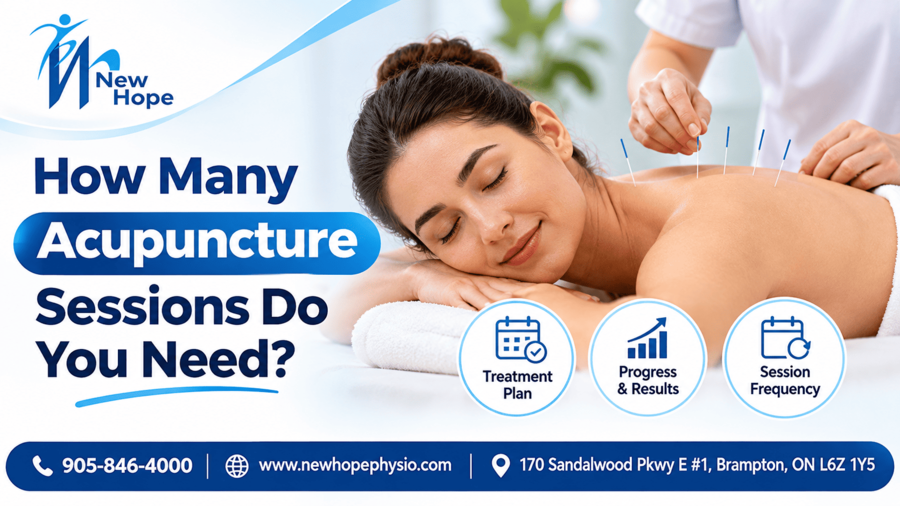
How Many Acupuncture Sessions Do You Need?
10 Nov 2026
How Many Acupuncture Sessions Do You Need?
Acupuncture is a popular treatment that may help manage pain, muscle tension, and certain health problems. Many people choose acupuncture to support their overall health and well-being.
If you are thinking about trying acupuncture, you may have a common question: How many acupuncture sessions do you need?
The answer depends on your health condition, symptoms, and how your body responds to treatment. Some people notice changes after one or two visits. Others may need several sessions before they feel an improvement.
At New Hope Physiotherapy, we offer acupuncture services to patients in Brampton and Mississauga. Our team can help you understand your treatment options and choose a plan that suits your needs.
Also Read: How Shockwave Therapy Helps Plantar Fasciitis?
What Is Acupuncture?
Acupuncture is a treatment that involves placing very thin needles into specific points on the body.
It is commonly used to help manage pain and may support relaxation. Some people use acupuncture alongside physiotherapy, exercise, and other treatments.
Acupuncture may help with conditions such as:
- Neck pain and stiffness
- Lower back pain
- Knee pain
- Muscle tension
- Certain types of headaches
- Joint pain
- Some long-term pain conditions
Results vary from person to person. Acupuncture does not work for every condition or every patient.
How Many Acupuncture Sessions Do You Need?
There is no fixed number of acupuncture sessions that works for everyone.
The number of treatments depends on several factors:
- Your condition: New pain may respond differently than long-term pain.
- Pain level: Severe symptoms may need more ongoing care.
- Health history: Other health conditions can affect your treatment plan.
- Treatment goals: Some people want short-term pain relief. Others need help managing ongoing symptoms.
- Your response: Your practitioner will review your progress and adjust the plan.
Some people notice improvement within the first few sessions. Others may need a longer trial of treatment.
A practitioner may suggest reviewing your progress after four to six sessions. This is a general example, not a required number of treatments.
Also Read: Chiropractic vs. Acupuncture: Why Not Both?
How Often Should You Get Acupuncture?
Many people ask, “How often should you get acupuncture?”
For some conditions, a practitioner may recommend one or two sessions per week at the beginning.
As symptoms improve, appointments may become less frequent.
A possible treatment schedule could include:
- First few weeks: One or two sessions per week, if appropriate.
- Following weeks: Weekly or less frequent visits based on progress.
- Long-term care: Occasional appointments only if they continue to offer a clear benefit.
This schedule is not suitable for everyone. Your treatment plan should be based on your needs.
How Many Times Can You Have Acupuncture in a Week?
Some people may receive acupuncture more than once a week. However, more sessions do not always mean faster or better results.
Your practitioner should consider your condition, comfort, and response before recommending frequent appointments.
How Long Does Acupuncture Take to Work?
How long does acupuncture take to work? This is another common question among first-time patients.
Some people feel relaxed or notice temporary pain relief shortly after treatment. Others may not notice a change until after several visits.
For long-term pain, it may take time to understand whether acupuncture is helping.
It is useful to track:
- Changes in your pain level
- How well you sleep
- Changes in movement and stiffness
- Your ability to complete daily activities
- How long any relief lasts
If your symptoms are not improving, your practitioner may suggest changing the treatment plan or exploring other options.
Also Read: Frozen Shoulder vs. Rotator Cuff Tear: Key Differences and Symptoms
How Do You Know If Acupuncture Is Working?
You may notice small changes before experiencing greater improvement.
Possible signs include:
- Less pain during daily activities
- Reduced muscle tightness
- Better movement
- Improved comfort while walking or sitting
- Less difficulty completing everyday tasks
Not everyone experiences these benefits. Changes in sleep or relaxation alone do not necessarily mean that the treatment is improving your main condition.
Keeping a simple record of your symptoms can help you and your practitioner evaluate your progress.
How Long Do Acupuncture Results Last?
The benefits of acupuncture can vary. Some people experience short-term relief, while others notice improvements that last longer.
The results may depend on the condition being treated, how long symptoms have been present, and whether other treatments are being used.
There is no guaranteed period of relief.
For ongoing pain, acupuncture may be used as part of a broader treatment plan that includes exercise, movement, and healthy daily habits.
Also Read: Shoulder Pain Solutions: 7 Essential Exercises for Quick Relief
Benefits of Choosing an Acupuncture Clinic in Mississauga
If you are searching for Acupuncture in Mississauga, choosing a qualified practitioner is important.
A good treatment experience should begin with a review of your symptoms, medical history, and treatment goals.
At New Hope Physiotherapy, patients can discuss whether acupuncture may be suitable for their condition.
When choosing an acupuncture clinic in Mississauga, look for:
- A properly qualified and registered practitioner
- Clean treatment rooms
- Single-use, sterile acupuncture needles
- Clear information about treatment
- A personalized care plan
- Regular reviews of your progress
Whether you are searching online for Acupuncture Near Me, Acupuncture Mississauga, or Acupuncture Brampton, choose a clinic that focuses on safe, patient-centred care.
What to Expect During Your First Acupuncture Session
Your first visit will usually begin with a discussion about your symptoms and health history.
Your practitioner may ask about your pain, medications, previous treatments, and health goals.
During the treatment, thin needles are placed into selected areas of your body. You may feel a mild pinch, tingling, or dull sensation.
The needles are often left in place for approximately 15 to 30 minutes, although appointment lengths vary.
Some people feel relaxed afterward. Others may notice mild soreness, bruising, or tiredness.
Your practitioner should explain the treatment and answer your questions before starting.
Also Read: 5 Common Types of Back Pain You Should Know
10 Frequently Asked Questions About Acupuncture
1. How many acupuncture sessions does it take to see results?
Some people notice changes after one or two sessions. Others may need several treatments. Your practitioner can review your progress after a short trial and recommend whether to continue.
2. What are the signs that acupuncture is working?
You may notice less pain, improved movement, or greater comfort during daily activities. Keeping track of your symptoms can help you identify meaningful improvements.
3. What not to do after acupuncture?
Avoid activities that make you feel unwell or worsen your symptoms. If you feel dizzy or tired, rest before driving or exercising. Follow any specific advice from your practitioner.
4. Should you sleep after acupuncture?
You do not need to sleep after acupuncture. However, if you feel tired, getting some rest may help you feel more comfortable. You can usually return to normal activities when you feel well.
5. Is it okay to get a massage after acupuncture?
A gentle massage may be suitable, but it depends on your condition and how you feel after treatment. Ask your practitioner before receiving deep-tissue massage on sensitive or recently treated areas.
Also Read: 5 Quick Home Remedies for Leg Cramp Relief and Prevention
6. Is acupuncture covered by insurance?
Some extended health insurance plans in Ontario cover acupuncture. Coverage depends on your insurer, policy, and the professional providing treatment. Check your benefits before booking.
7. What should I do to prepare for my first acupuncture session?
Eat a light meal, drink water, and wear comfortable clothing. Bring a list of your medications and tell your practitioner about any health conditions, pregnancy, or use of blood-thinning medication.
8. Do I need a doctor’s referral to see an acupuncturist?
In Ontario, you generally do not need a doctor’s referral to book acupuncture with a qualified practitioner. However, some insurance plans may require a referral for reimbursement.
9. How often can you get acupuncture?
Your practitioner may recommend weekly visits or a different schedule based on your condition. The goal is to use treatment only as often as it is helpful and appropriate.
10. Is acupuncture painful?
Most people experience little discomfort because acupuncture needles are very thin. You may notice a brief pinch, mild tingling, or dull pressure. Tell your practitioner if you experience significant pain.
Also Read: What Should You Not Do After Cupping?
Book an Acupuncture Appointment in Mississauga or Brampton
If you are experiencing muscle pain, stiffness, or ongoing discomfort, acupuncture may be one treatment option worth discussing.
At New Hope Physiotherapy, we help patients explore suitable treatments based on their symptoms and recovery goals.
Whether you are looking for Mississauga acupuncture services or an Acupuncture Brampton clinic, contact our team to learn more.
Call: 905-846-4000
Website: www.newhopephysio.com
Book your acupuncture consultation today and take the next step toward managing your pain.
Gurpreet Kaur Kandhole, Physiotherapist
Gurpreet Kaur Kandhole is an experienced and caring physiotherapist with a Master’s degree in Musculoskeletal Conditions. She has been practicing physiotherapy since 2010 and has been a registered physiotherapist in Ontario since 2018.
Gurpreet helps patients manage both short-term and long-term pain using evidence-based treatment. Her areas of care include manual therapy, acupuncture, personalized exercise programs, sports injuries, neurological conditions, musculoskeletal conditions, and care for older adults.
She believes every patient is different and creates treatment plans based on their individual needs and goals. Her goal is to help patients reduce pain, improve movement, regain strength, and return to their daily activities with confidence.
Gurpreet is committed to continuing her education and keeping up with the latest developments in physiotherapy. She takes a patient-centered approach and focuses on providing safe, effective, and compassionate care.
Medical Disclaimer
This article is for general information only. It is not a substitute for professional medical advice, diagnosis, or treatment. Acupuncture results vary, and treatment may not be suitable for everyone. Consult a qualified healthcare professional before starting treatment, especially if you have a medical condition or take blood-thinning medication.
Leave a Comment