
Welcome to New Hope Physiotherapy
- Brampton 905-846-4000
- Malton 905-364-3900
- Orangeville 519-217-9300
- admin@newhopephysio.com
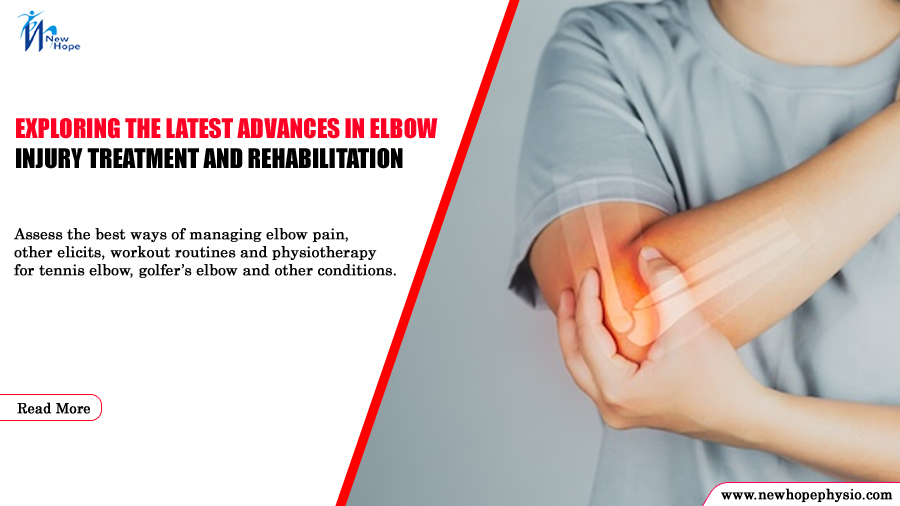
Exploring the Latest Advances in Elbow Injury Treatment and Rehabilitation
 22 Oct 2024
- newhope
- 0 Comments
- 1232
Exploring the Latest Advances in Elbow Injury Treatment and Rehabilitation
Elbow pain can affect people of any age. You do not have to be an athlete to develop an elbow problem. Daily work, sports, lifting, or repeated arm movements can all place stress on the elbow.
Common elbow problems include:
- Tennis elbow
- Golfer’s elbow
- Tendon strain
- Muscle strain
- Joint stiffness
- Overuse injuries
- Sports-related injuries
The good news is that modern elbow injury treatment can help reduce pain, improve movement, and support a safe return to daily activities.
Today, treatment may include physiotherapy, exercise, hands-on therapy, and other rehabilitation techniques.
Also Read: Golfer’s Elbow vs. Tennis Elbow: What’s the Difference?
Early Treatment Can Help
It is important to address elbow pain early. Continuing activities that cause pain may make the problem worse.
If you need elbow injury treatment in Malton, Brampton, or Orangeville, a physiotherapist can assess your elbow and help identify the possible cause of your symptoms.
For mild elbow pain, simple steps may help:
- Rest the affected arm
- Avoid movements that increase pain
- Apply ice for short periods
- Avoid heavy lifting
- Perform gentle movements as advised
- Use over-the-counter pain medication when appropriate and recommended by a healthcare professional
If the pain lasts for several days, keeps returning, or affects your normal activities, professional assessment may be helpful.
Physiotherapy for Elbow Injuries
Physiotherapy is commonly used as part of elbow injury rehabilitation.
The goal is not only to reduce pain. Physiotherapy may also help improve:
- Elbow movement
- Muscle strength
- Flexibility
- Grip strength
- Arm function
- Ability to complete daily tasks
Your treatment plan will depend on the type and severity of your injury.
Also Read: 5 Common Types of Back Pain You Should Know
Tennis Elbow Physiotherapy
Tennis elbow usually affects the tendons on the outside of the elbow. It can develop from repeated gripping, lifting, typing, sports, or other repetitive arm movements.
Tennis elbow physiotherapy may include:
- Gentle stretching
- Forearm strengthening
- Grip exercises
- Manual therapy
- Activity changes
- Advice on posture and movement
- A gradual return to work or sports
The aim is to reduce stress on the irritated tendon and gradually improve its ability to handle normal activity.
Golfer’s Elbow Treatment
Golfer’s elbow usually causes pain on the inside of the elbow.
Treatment may include:
- Wrist and forearm stretches
- Resistance exercises
- Grip-strengthening exercises
- Manual therapy
- Changes to repetitive activities
Although it is called golfer’s elbow, you do not have to play golf to develop this condition. Repeated gripping, lifting, or wrist movements can also cause it.
Exercises for Elbow Pain
Exercise is often an important part of recovery.
Depending on your condition, a physiotherapist may recommend exercises such as:
- Wrist flexor stretches
- Wrist extensor stretches
- Gentle wrist curls
- Resistance-band exercises
- Grip-strengthening exercises
- Forearm rotation exercises
These exercises are designed to improve strength and flexibility over time.
Avoid doing exercises that cause sharp or severe pain. A physiotherapist can show you how to perform each exercise safely.
Visual idea: Add an image showing a wrist stretch, resistance-band exercise, and gentle grip exercise.
Also Read: Shoulder Pain Solutions: 7 Essential Exercises for Quick Relief
Additional Treatments for Elbow Pain
Some physiotherapy clinics may also use additional treatments as part of an elbow rehabilitation plan.
These may include:
Dry Needling
Dry needling may be used to target tight or painful muscles. It may be combined with stretching and strengthening exercises.
Therapeutic Ultrasound
Ultrasound therapy may be used in some treatment programs to support soft-tissue rehabilitation.
Shockwave Therapy
Shockwave therapy may be considered for certain long-lasting tendon problems, including some cases of tennis elbow.
These treatments are usually used together with exercise rather than as a replacement for an active rehabilitation program.
Can You Treat Elbow Pain at Home?
Some mild elbow problems can be managed at home, especially when symptoms have only recently started.
Home care may include:
- Resting from painful activities
- Applying ice
- Gentle stretching
- Avoiding repeated gripping
- Using resistance bands as instructed
- Slowly returning to normal activity
A physiotherapist can also create an elbow pain exercise plan that you can follow at home.
Following the right exercises is important. Doing too much too soon may delay recovery.
How Quickly Can Elbow Pain Improve?
Recovery time is different for everyone.
It may depend on:
- The type of injury
- How long you have had symptoms
- The severity of the condition
- Your work or sports activities
- Your overall health
- How closely you follow your rehabilitation plan
There is usually no instant cure for tennis elbow or golfer’s elbow. However, early treatment and regular exercises may help improve symptoms and function.
In some cases, a doctor may discuss other options, such as medication or injections, when symptoms do not improve with conservative treatment.
Also Read: Frozen Shoulder vs. Rotator Cuff Tear: Key Differences and Symptoms
Returning to Work, Sports, and Daily Activities
The goal of elbow rehabilitation is to help you return to your normal activities safely.
Your physiotherapist may recommend gradually increasing:
- Lifting
- Carrying
- Gripping
- Sports activities
- Work duties
- Household tasks
Returning too quickly may irritate the elbow again.
A gradual approach can help reduce the risk of another injury.
When Should You See a Healthcare Professional?
Consider seeking professional care if:
- Elbow pain is getting worse
- Pain continues for more than a few days
- You cannot move the elbow normally
- Your grip feels weak
- You notice swelling or bruising
- Pain keeps returning
- Symptoms affect your work, sleep, or daily activities
Seek urgent medical attention after a serious injury, major swelling, visible deformity, severe weakness, or numbness.
Conclusion
Elbow injuries can make everyday activities difficult, but many conditions can improve with the right treatment and rehabilitation plan.
Modern elbow injury treatment may combine physiotherapy, stretching, strengthening exercises, hands-on treatment, and other rehabilitation techniques.
Whether you are dealing with tennis elbow, golfer’s elbow, or another type of elbow injury, early assessment can help you understand the problem and choose an appropriate treatment plan.
If you are looking for elbow injury treatment in Brampton, Malton, or Orangeville, speak with a qualified healthcare professional about a personalized rehabilitation program designed around your symptoms, activities, and recovery goals.
Also Read: Top 5 Exercises for Strengthening Your Pelvic Floor
FAQs:
Medical Disclaimer:
This information is for general education only and does not replace professional medical advice. Elbow injuries can vary from person to person. Please consult a qualified healthcare professional for proper assessment and treatment.
Also Read: What Should You Not Do After Cupping?
Leave a Comment