

Welcome to New Hope Physiotherapy
- Brampton 905-846-4000
- Malton 905-364-3900
- Orangeville 519-217-9300
- admin@newhopephysio.com
Choose Pelvic Floor Physiotherapy Experts in Brampton
 21 Aug 2022
Choose Pelvic Floor Physiotherapy Experts in Brampton
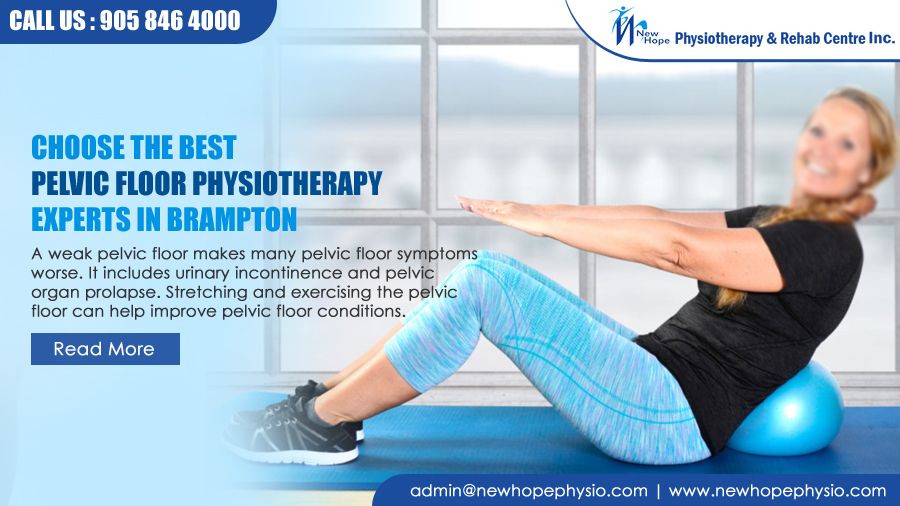
A weak pelvic floor makes many pelvic floor symptoms worse. It includes urinary incontinence and pelvic organ prolapse.
Stretching and exercising the pelvic floor can help improve pelvic floor conditions. It is frequently suggested that women with these conditions seek pelvic floor physical therapy.
Also Read : What Are The 3 Important Functions Of The Pelvic Floor Physiotherapy?
Your pelvic conditions include prolapse and some bowel problems, constipation, incontinence, or pain during bowel movements.
They can improved with the help of these pelvic floor rehabilitation specialists. They can teach you how to perform pelvic floor exercises properly.
Pelvic floor treatment can help treat many conditions. They are like incontinence and may even be able to cure over time. Additionally, sexual function can be enhanced. Healthy bowel movements can be facilitated. Pelvic pain can be reduced with pelvic floor exercises.
Also Read : What Is Involved With Pelvic Floor Physiotherapy?
How does the pelvic floor work?
What precisely is the pelvic floor that we are discussing? A collection of muscles called the pelvic floor surrounds the urethra, vagina, and rectum like a sling.
It supports the pelvic organs. No other muscle group has such a solid connection to bodily functions. They are like bowel, urinary, and sexual. As a result, a problem with the pelvic floor muscles and their capacity to contract and relax can cause disruptions in your daily activities. They have a significant impact on quality of life.
Also Read : A Guide To Understanding Pelvic Floor Treatments
In what ways does physical therapy help with pelvic floor function?
Physical therapy may help with symptoms like urinary frequency and urgency, bladder leakage, and different levels of pelvic pain. It all may initially seem surprising to hear. However, physical therapy is a discipline that aims to re-establish mobility and functionality. This goes for every part of your body, including your pelvic area.
Also Read: 10 Gentle Workouts to Help Lower Back Pain at Home
What kinds of ailments do we handle?
The following ailments frequently treated:
- Bowel issues, such as functional constipation, faecal and flatus incontinence, or bladder problems, such as incontinence, urinary frequency, or urgency (got to go, got to go) (leakage).
- Pelvic organ prolapses are the descent of any one of the pelvic organs (bladder, bowels, or uterus in women). They frequently observed in women. Gynecological surgery support can be provided before or after surgery (such as vaginal reconstructive surgery, hysterectomy)
- Support before and after surgery for prostate cancer treatment (for example, radical prostatectomy)
- Both men and women experience pelvic pain (Including pain with intercourse and pelvic examinations)
Also Read : Everything You Should Know About Pelvic Floor Physiotherapy
What is the process of pelvic floor physiotherapy exercises?
The first step in pelvic floor therapy is obtaining a patient’s medical and surgical past, current medications, and sexual, gynecologic, or obstetric history.
An extensive orthopaedic examination carried out. It pays close attention to the posture, gait, lumbar spine, and hips.
To help the therapist identify any existing posture or joint problems affecting the pelvic floor muscles, patients frequently asked to stand, walk, and sit during the assessment.
Also Read : Pelvic Floor Physiotherapy: The Things You Need To Know About It
It typically includes the evaluation of both internal and external muscles.
The evaluation directs the development of an appropriate care plan and assists in determining whether the therapy is appropriate.
Additionally, the recommended form of therapy typically depends on the symptoms present. For instance, exercises to lengthen and relax the muscles might required.
Choose our pelvic floor physiotherapy in Brampton
Our Pelvic floor physiotherapy Near me treats a wide range of conditions associated with pelvic floor dysfunction. It includes pelvic pain, faecal incontinence, overactive bladder, stress urinary incontinence, and pelvic organ prolapse.
Also Read : WHAT IS PELVIC FLOOR PHYSIOTHERAPY?

Leave a Comment