
Welcome to New Hope Physiotherapy
- Brampton 905-846-4000
- Malton 905-364-3900
- Orangeville 519-217-9300
- admin@newhopephysio.com
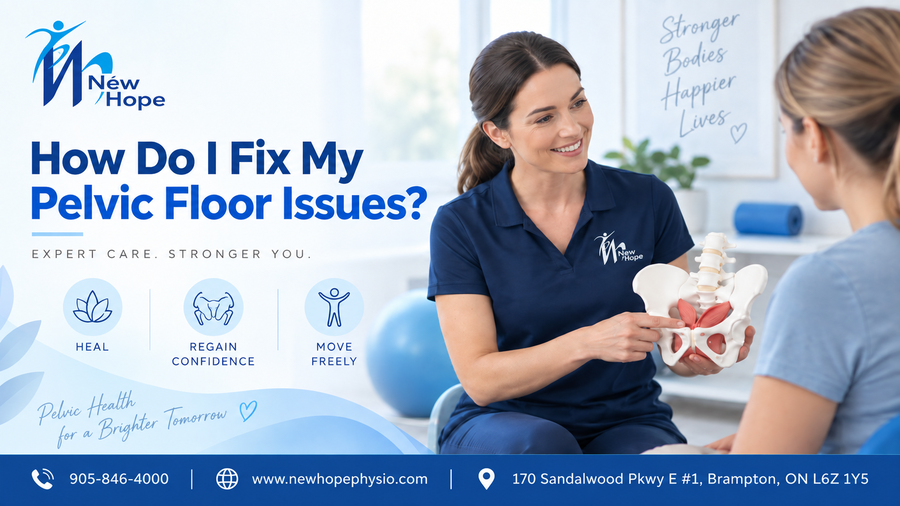
How Do I Fix My Pelvic Floor Issues?
15 Sep 2026
How Do I Fix My Pelvic Floor Issues?
Pelvic floor problems are common, but many people do not know what is causing their symptoms. You may notice bladder leaks, pelvic pressure, pain, constipation, or weakness. Some people may also have tight pelvic floor muscles that make it hard to relax.
The good news is that many pelvic floor issues can improve with the right care.
Pelvic Floor Physiotherapy Brampton may help identify the cause of your symptoms and create a treatment plan based on your needs.
Also Read: Pelvic Floor Physiotherapy vs. Kegel Exercises: Which One Works Best?
What Is the Pelvic Floor?
The pelvic floor is a group of muscles located at the bottom of the pelvis. These muscles help support the bladder, bowel, uterus, and other pelvic organs.
Your pelvic floor also helps with:
- Bladder control
- Bowel control
- Core stability
- Sexual function
- Supporting pelvic organs
- Pregnancy and recovery after childbirth
When these muscles become weak, tight, painful, or difficult to control, it may lead to Pelvic Floor Dysfunction.
Common Pelvic Floor Dysfunction Symptoms
Pelvic floor dysfunction symptoms can be different for each person.
Common symptoms may include:
- Urine leakage when coughing or sneezing
- A sudden urge to urinate
- Difficulty emptying the bladder
- Constipation
- Pelvic pain or pressure
- Pain during sexual activity
- Lower back or pelvic discomfort
- A feeling of heaviness in the pelvis
- Difficulty controlling gas or bowel movements
Weak Pelvic Floor Symptoms in Females
Common weak pelvic floor symptoms female patients may notice include:
- Bladder leakage
- Reduced bladder control
- Pelvic heaviness
- Weak core support
- Difficulty controlling bowel movements
- A feeling of pressure in the vaginal area
A weak pelvic floor may happen after pregnancy, childbirth, menopause, surgery, aging, or repeated heavy lifting.
Also Read: What Are Four Common Causes of Knee Pain?
What Causes Pelvic Floor Issues?
There are many possible causes of pelvic floor issues.
These may include:
- Pregnancy
- Childbirth
- Aging
- Menopause
- Pelvic surgery
- Chronic constipation
- Heavy lifting
- Repeated coughing
- High-impact exercise
- Pelvic injuries
- Stress and muscle tension
Some people have weak muscles. Others have tight pelvic floor muscles. Treatment will depend on the type of problem you have.
How Can Pelvic Floor Physiotherapy Help?
Pelvic Floor Physiotherapy focuses on improving the strength, movement, coordination, and relaxation of your pelvic floor muscles.
A physiotherapist may assess your symptoms and recommend:
- Pelvic floor exercises
- Breathing exercises
- Relaxation techniques
- Core strengthening
- Posture correction
- Bladder training
- Bowel habit education
- Lifestyle changes
- Manual therapy when appropriate
A personalized pelvic floor rehabilitation program can help you understand how your muscles are working.
Also Read: 5 Quick Home Remedies for Leg Cramp Relief and Prevention
Pelvic Floor Exercises for Women
Pelvic Floor Exercises for Women may help improve muscle strength and bladder control.
One common exercise is the Kegel exercise.
To try a gentle pelvic floor contraction:
- Sit or lie in a comfortable position.
- Relax your stomach and legs.
- Gently tighten the muscles you would use to stop urine or gas.
- Hold for a few seconds.
- Slowly relax.
- Repeat as advised by your physiotherapist.
No need to hold your breath or clench your buttocks too much.
In addition, you should know that not everyone can practice Kegels.
If the muscles of the pelvic floor are too tight already, Kegels might exacerbate the problem.
Also Read: What Should You Not Do After Cupping?
How to Relax Tight Pelvic Floor Muscles in Females
If you have tight pelvic floor muscles, your treatment may focus more on relaxation than strengthening.
Helpful techniques may include:
- Deep belly breathing
- Gentle stretching
- Relaxation exercises
- Warm baths or heat
- Improving posture
- Reducing straining during bowel movements
- Gentle yoga or mobility exercises
A pelvic floor physiotherapist can show you how to relax these muscles safely.
How to Improve Pelvic Floor Strength
To improve pelvic floor strength, consistency is important.
You may benefit from:
- Doing the correct pelvic floor exercises
- Strengthening your core
- Staying active
- Avoiding repeated straining
- Managing constipation
- Maintaining a healthy body weight
- Using proper lifting techniques
The correct program depends on whether your muscles are weak, tight, or poorly coordinated.
Also Read: 10 Gentle Workouts to Help Lower Back Pain at Home
Pelvic Floor Dysfunction Treatment
Pelvic floor dysfunction treatment should be based on your individual symptoms.
There is no single exercise that works for everyone.
Pelvic Floor Therapy Brampton may help people dealing with bladder leakage, pelvic pain, postpartum concerns, constipation, pelvic weakness, and other forms of pelvic floor muscle dysfunction.
If you have been searching for pelvic floor physiotherapy near me, consider speaking with a qualified pelvic floor physiotherapist for an assessment.
Frequently Asked Questions
1. What are signs of a weak pelvic floor?
Common signs include bladder leakage, pelvic heaviness, poor bowel control, reduced pelvic support, and difficulty controlling urine when coughing, laughing, or exercising.
2. Can pelvic floor issues be fixed?
Many pelvic floor issues can improve with proper assessment, exercises, education, and physiotherapy. Results depend on the cause and severity of the problem.
3. How long does it take to correct your pelvic floor?
Some people may notice changes within a few weeks. Others may need several months. Progress depends on your symptoms, health, and how consistently you follow your treatment plan.
4. Which vitamin is good for pelvic floor muscles?
No single vitamin can fix pelvic floor problems. A balanced diet with enough vitamin D, calcium, protein, and other nutrients supports overall muscle and bone health. Speak with your healthcare provider before taking supplements.
5. What should I avoid with a weak pelvic floor?
Try to avoid repeated straining, poor lifting techniques, untreated constipation, and exercises that increase pelvic pressure if they make your symptoms worse.
Also Read: 10 Safe Ways to Treat Neck Pain during Pregnancy
6. Which fruit is good for the pelvic floor?
Fruits that contain fibre, such as berries, pears, apples, oranges, and prunes, may help support regular bowel movements. This can reduce straining and pressure on the pelvic floor.
7. What are some good pelvic floor exercises for people over 60?
Gentle pelvic floor contractions, breathing exercises, walking, balance exercises, and safe core strengthening may be helpful. A physiotherapist can recommend exercises based on your health and abilities.
8. What happens during the first appointment?
Your physiotherapist will usually ask about your symptoms, bladder and bowel habits, medical history, daily activities, and goals. They may assess your posture, breathing, movement, and pelvic floor function with your consent.
9. How many sessions will I need?
The number of sessions varies. Some people need only a few visits, while others benefit from longer-term treatment.
10. How long does it take to see results?
Some people notice improvement after a few weeks of regular treatment. More complex conditions may take longer.
11. Do I need a doctor’s referral?
In many cases, you can see a physiotherapist without a doctor’s referral. However, your insurance provider may require one for reimbursement.
12. When should you not do Kegel exercises?
You might need to steer clear of doing any Kegels when you already have very tight or painful pelvic floor muscles that don’t relax well. A pelvic floor physiotherapist will be able to help decide what you need.
13. Can I treat pelvic floor dysfunction at home?
Certain mild symptoms might be managed through exercise and healthy living at home. However, engaging in exercises that do not suit your condition may worsen the symptoms. This is why professional evaluation is crucial for managing the symptoms effectively.
Start Your Pelvic Floor Recovery
Pelvic floor problems can affect your comfort, confidence, physical activity, sleep, and day-to-day tasks. This means that there is no need to be suffering silently.
Pelvic Floor Physiotherapy Brampton can assist you in determining if you have weak pelvic floor, tight pelvic floor muscles, or any other pelvic floor disorder.
Pelvic floor therapy treatment may aid in improving your strength, relaxation, bladder control, movement, and well-being.
Get in touch with a pelvic floor physiotherapy clinic in Brampton for more information on treatment options.
Gauravdeep Randhawa, Registered Physiotherapist
Gauravdeep Randhawa is a caring and experienced physiotherapist with over 17 years of experience helping patients recover and improve their quality of life.
She started her own practice in Canada in 2009 and has treated many patients with muscle, joint, sports, neurological, and pelvic health conditions. She has also owned and operated multidisciplinary clinics.
Gauravdeep is a Certified Manual Therapist and has completed training in Contemporary Medical Acupuncture and Pelvic Floor Therapy. She uses hands-on treatment, personalized exercise programs, and evidence-based care to support each patient’s recovery.
Her goal is to help people reduce pain, restore movement, improve function, and achieve long-term wellness in a comfortable and supportive environment.
Medical Disclaimer:
This information is for general education only and is not a substitute for professional medical advice, diagnosis, or treatment. Pelvic floor issues can have different causes, so consult a qualified healthcare professional for proper assessment and personalized care.


Leave a Comment