

Welcome to New Hope Physiotherapy
- Brampton 905-846-4000
- Malton 905-364-3900
- Orangeville 519-217-9300
- admin@newhopephysio.com
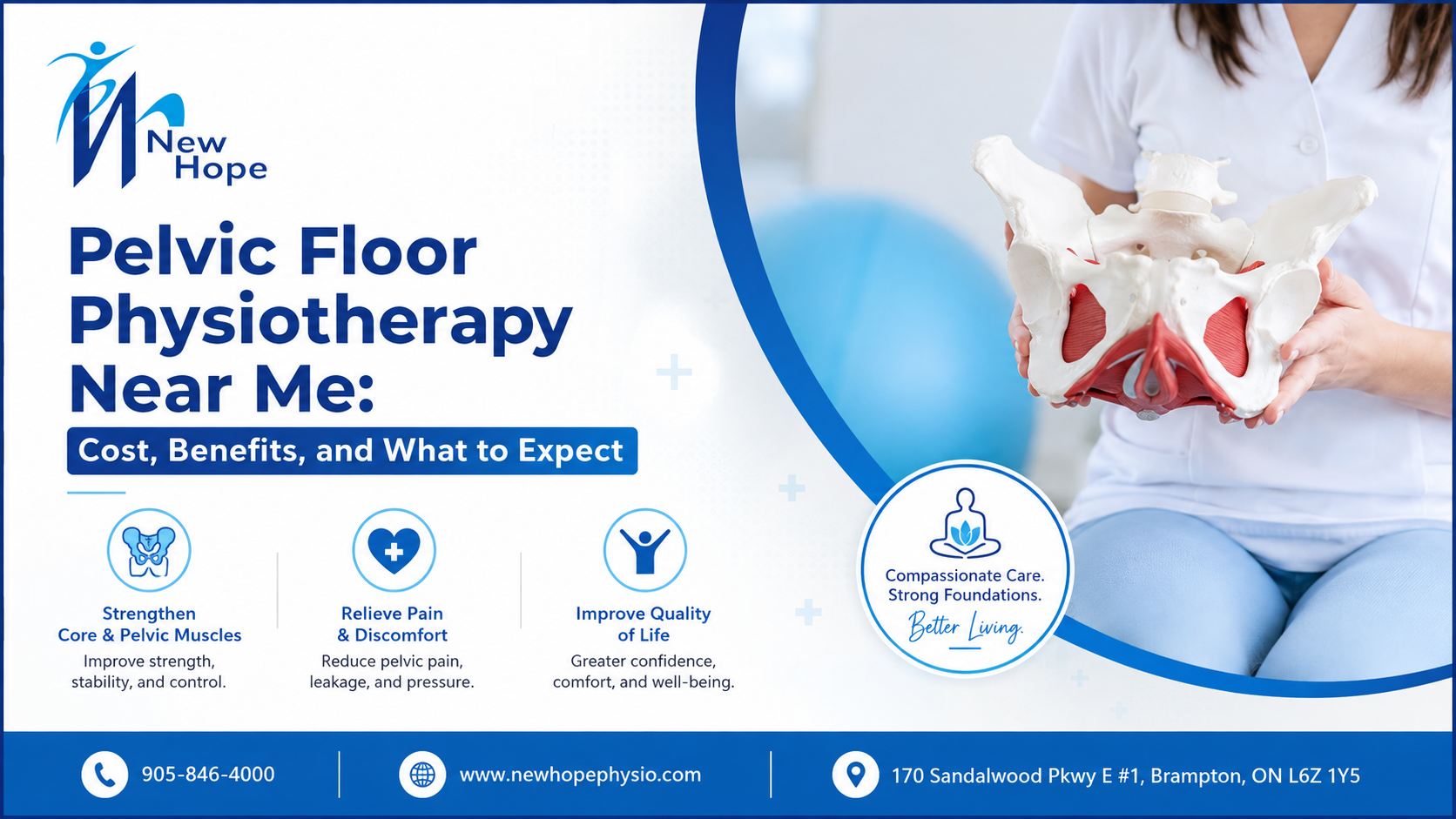
Pelvic Floor Physiotherapy Near Me: Cost, Benefits, and What to Expect
 7 Aug 2026
Pelvic Floor Physiotherapy Near Me: Cost, Benefits, and What to Expect
Sneezing and urine loss. Sex and pain. Again, rushing to the washroom. Such issues are normal. But it doesn’t mean that you need to suffer from them.
With pelvic floor physiotherapy, it becomes possible to solve these issues. The following manual will tell about this treatment, its price, and your first session.
Also Read: Pelvic Floor Physiotherapy vs. Kegel Exercises: Which One Works Best?
What Is the Pelvic Floor?
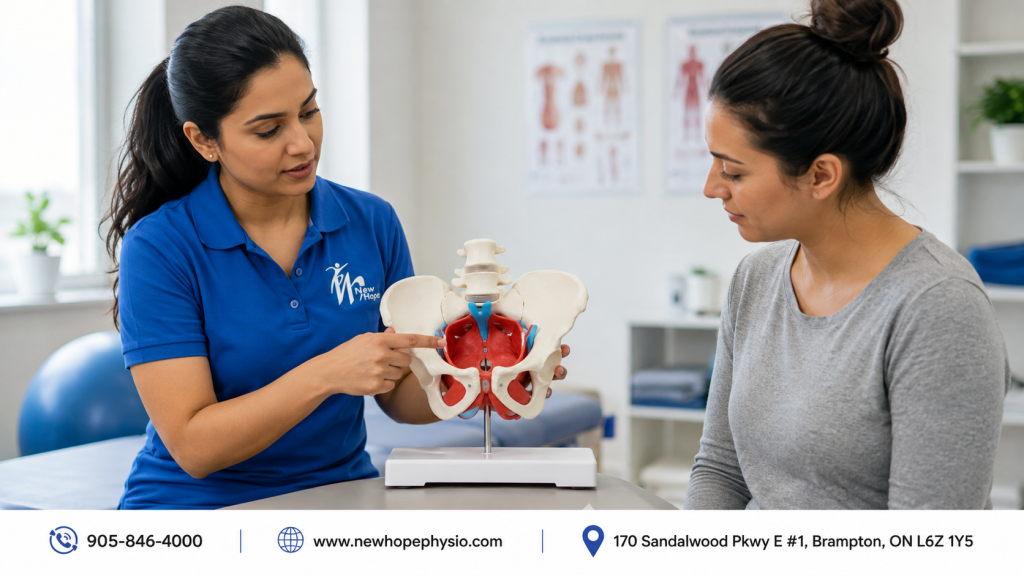
Your pelvic floor is a group of muscles at the base of your pelvis. Think of it as a hammock or a sling.
These pelvic floor muscles do four jobs:
- Hold up your bladder, bowel, and uterus
- Control when you pee and poop
- Support your lower back and hips
- Play a role in sexual function
When these muscles are too weak, too tight, or poorly coordinated, you get pelvic floor dysfunction.
What Is Pelvic Floor Physiotherapy?
Pelvic floor physiotherapy is treatment given by a registered physiotherapist with extra training in this area.
It is not just Kegels. A good plan may include:
- Hands-on therapy to release tight muscles
- Pelvic floor exercises to build strength and control
- Breathing and core work, because your diaphragm and deep core work with your pelvic floor
- Bladder and bowel training to reduce urgency
- Education on posture, lifting, and daily habits
Some clinics also offer advanced pelvic floor physiotherapy tools, such as biofeedback or muscle stimulation. These give you real-time feedback so you know you are using the right muscles.
Also Read: 5 Quick Home Remedies for Leg Cramp Relief and Prevention
Who Needs Pelvic Floor Therapy?
Many people think this is only for older women. It is not.
You may benefit if you have:
- Leaking urine when you laugh, cough, sneeze, or run
- A strong, sudden urge to go
- Pain during sex
- Ongoing pelvic, tailbone, or low back pain
- Constipation or straining
- A heavy or dragging feeling in the pelvis (possible prolapse)
- Recent childbirth, C-section, or abdominal surgery
- Pregnancy, and you want to prepare for delivery
Men benefit too, especially after prostate surgery.
Pelvic Floor Physiotherapy in Pregnancy
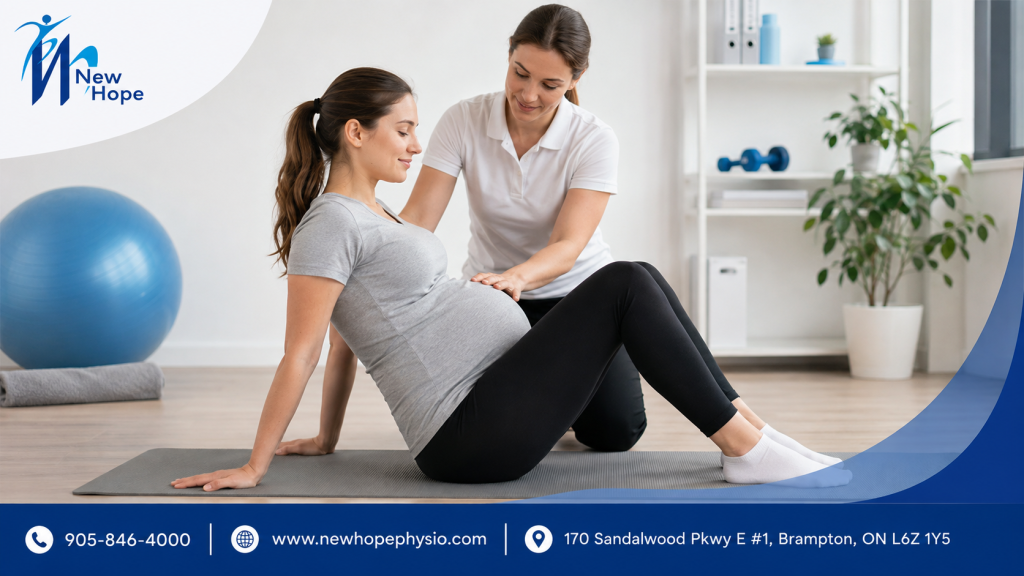
Searching for pelvic floor physiotherapy pregnancy near me? You are on the right track.
During pregnancy, therapy can:
- Reduce back and pelvic girdle pain
- Teach you how to push and relax during labour
- Lower your risk of leaking later
After birth, it helps you heal from tearing, C-section scars, and abdominal separation (diastasis recti). Most people can start around six weeks postpartum. Your therapist will confirm the right time for you.
Also Read: What Should You Not Do After Cupping?
What Does It Cost in Ontario?
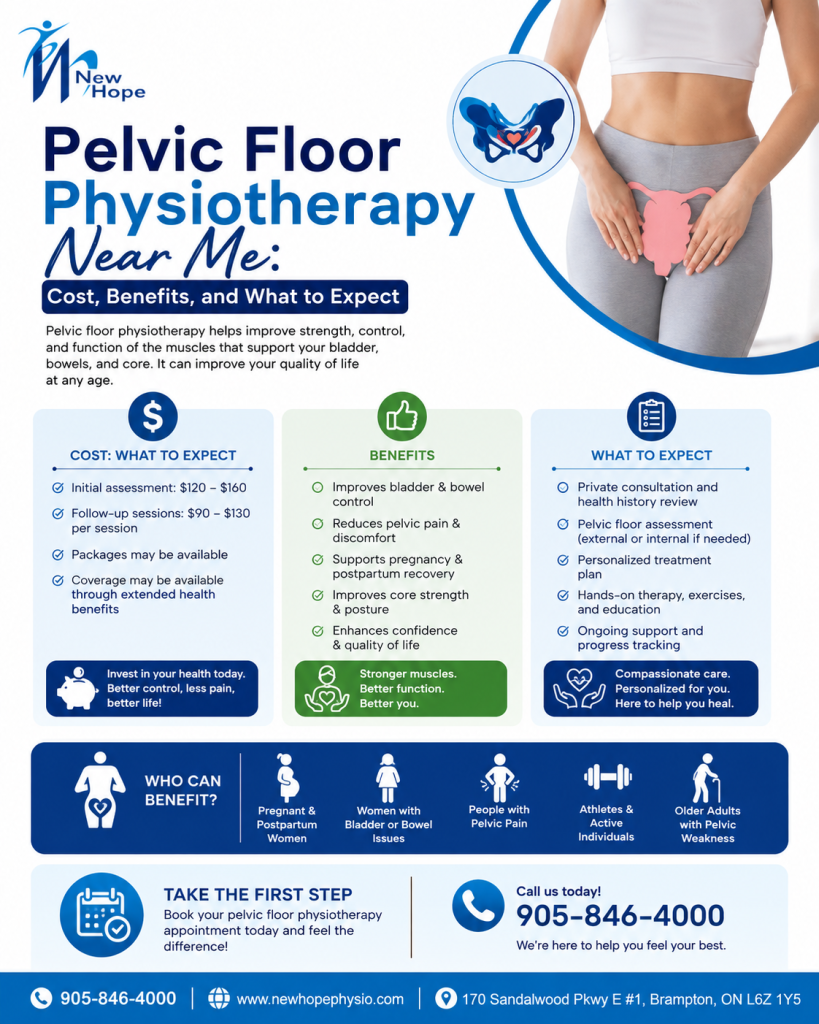
Fees vary by clinic and by session length. Across the GTA, most people can expect:
| Visit type | Typical range |
| Initial assessment (45–60 min) | $120 – $175 |
| Follow-up (30–45 min) | $90 – $140 |
A regular physiotherapy session in Ontario runs about $90 to $160. Pelvic floor visits often sit at the higher end. That is because the therapist needs extra training.
Good news: most extended health plans cover it. Workplace and private benefit plans usually pay for physiotherapy, including pelvic floor therapy, as long as a registered physiotherapist provides it. Many clinics also bill your insurer directly, so you pay little or nothing up front.
OHIP does not cover this service at most private clinics. Always check your plan’s yearly limit before you start.
Also Read: 5 Conditions Causing Your Shoulder Pain
The Benefits
Patients often report:
- Fewer leaks, or none at all
- Less pelvic and back pain
- Better bladder and bowel control
- More comfortable sex
- Stronger core and better posture
- More confidence at the gym, at work, and with your kids
Best of all, it treats the cause, not just the symptom. No pads, no surgery, no medication in most cases.
What to Expect at Your First Visit
Your first appointment is mostly talking and assessment. Nothing happens without your consent.
- History. You answer questions about your bladder, bowel, pain, pregnancy, and daily routine.
- Outside check. The therapist looks at your posture, breathing, hips, and core.
- Internal exam (optional). This is the gold standard for checking pelvic floor muscles. It uses one gloved finger. No stirrups. No speculum. You can say no and still get treatment.
- Your plan. You leave with home exercises and clear next steps.
You stay in control the whole time. You can stop at any point.
Also Read: 10 Safe Ways to Treat Neck Pain during Pregnancy
Finding Pelvic Floor Physiotherapy Near Me
When comparing clinics in Brampton, Mississauga, Malton, Orangeville, or anywhere in Ontario, ask:
- Is the therapist registered with the College of Physiotherapists of Ontario?
- Do they have post-graduate pelvic health training?
- Is the room private?
- Do they direct bill my insurance?
- How long is each session?
Choosing pelvic floor physiotherapy Brampton or pelvic floor physiotherapy Mississauga close to home also matters. Visits are easier to keep when the drive is short.
Frequently Asked Questions
1. Do benefits cover pelvic floor therapy?
Usually, yes. Most extended health plans cover physiotherapy from a registered physiotherapist, and that includes pelvic floor therapy. Some insurers ask for a doctor’s note before they pay, so check first.
2. What to expect at a pelvic floor physio appointment?
A private talk about your symptoms, a physical check, and a treatment plan. The first visit is usually 45 to 60 minutes. Any internal exam is optional and needs your consent.
3. How many visits for pelvic floor therapy?
Most people need 6 to 12 visits. Simple cases may take fewer. Long-standing pain may take more.
4. Is pelvic floor therapy worth the money?
For most people, yes. It often reduces or removes the need for pads, medication, or surgery. Insurance also covers a large part of the cost.
5. How long does it take for pelvic floor physio to work?
Many people notice some change in 4 to 6 weeks. Lasting results usually take about 3 months of steady work.
Also Read: Frozen Shoulder vs. Rotator Cuff Tear: Key Differences and Symptoms
6. What are signs of a weak pelvic floor?
Leaking urine, sudden urges, poor bladder control, a heavy feeling in the pelvis, reduced sensation during sex, or a core that feels unstable.
7. What not to do with pelvic floor dysfunction?
Avoid heavy lifting while holding your breath, hard straining on the toilet, endless crunches, and doing Kegels when your muscles are already too tight. Get assessed before you self-treat.
8. What can be mistaken for pelvic floor dysfunction?
Urinary tract infections, endometriosis, hip or low back problems, irritable bowel syndrome, and nerve irritation. This is why a proper assessment matters.
9. How long does it take to see results?
Small wins often come within the first month. Full results usually take 8 to 12 weeks, depending on your condition and how often you do your exercises.
10. Can pelvic floor physiotherapy help after having a baby?
Yes. It helps with healing, leaking, scar tissue, abdominal separation, and returning to exercise safely. It is helpful after both vaginal birth and C-section.
11. Can I do exercises at home?
Yes, and home exercises are a key part of the plan. But get assessed first. Studies show many people do Kegels wrong, and the wrong exercise can make symptoms worse.
12. Do I need a doctor’s referral?
No. In Ontario you can book directly with a physiotherapist. Your insurance company may still ask for a referral to reimburse you, so call them before your first visit.
This article is general information only. It is not medical advice. Speak to a registered physiotherapist or your doctor about your own situation.
Ready to book? Search “pelvic floor physiotherapy near me,” or contact our clinic to arrange a private assessment.


Leave a Comment