

Welcome to New Hope Physiotherapy
- Brampton 905-846-4000
- Malton 905-364-3900
- Orangeville 519-217-9300
- admin@newhopephysio.com
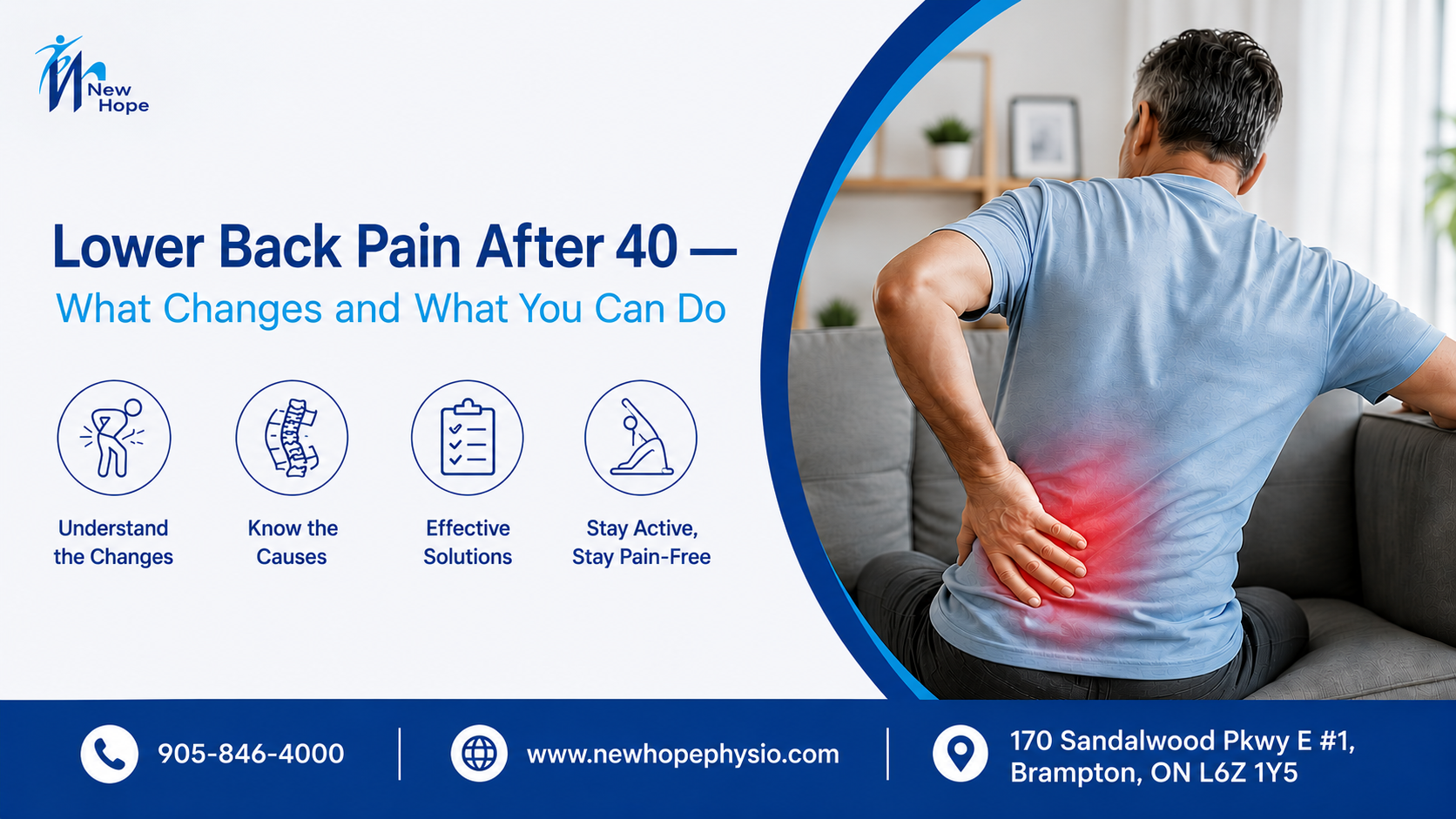
Lower Back Pain After 40 — What Changes and What You Can Do
 21 May 2026
- newhope
- 0 Comments
- 773
Lower Back Pain After 40 — What Changes and What You Can Do
I don’t know exactly when it starts happening. Maybe around 40. Maybe a bit before honestly. One day you bend down to pick something up and your lower back suddenly feels tight for the rest of the day. Not even from lifting something heavy either. Could literally be a laundry basket or reaching awkwardly into the car.
That’s the frustrating thing about Lower Back Pain after 40. It sneaks up slowly. At least for a lot of people.
When you’re younger, your body sort of forgives you for everything. Bad posture, sitting weird, sleeping 4 hours, lifting things wrong. Then later on… not so much. Your back remembers apparently.
And the weird part is sometimes the pain isn’t even severe. It’s just constantly there in the background. A dull ache. Tightness. Stiffness after sitting too long. Sometimes after doing absolutely nothing, which makes even less sense.
Also Read: Safe Yoga Poses for Lower Back Pain During Pregnancy
I started noticing it more after long workdays sitting at a desk. Then driving became annoying too. Then mornings. Mornings are different after 40 honestly.
Not trying to sound dramatic. Just real.
The Back Doesn’t Feel the Same Anymore
The biggest thing people notice is stiffness. Especially in the morning.
You wake up and your lower back feels tight for the first few minutes. Some people stretch immediately. Some just shuffle around the kitchen until things loosen up. Kind of funny actually how normal that becomes.
And sitting too long becomes a problem too.
You sit for an hour and when you stand up your back needs a second to “reset.” Like your body forgot how standing works for a minute. Hard to explain unless you’ve felt it.
Also Read: Upper Back Pain vs. Lower Back Pain
Some common lower back pain symptoms people notice after 40:
- stiffness in the morning
- soreness after driving
- tight muscles
- sharp pain when bending certain ways
- pain after sitting too long
- random flare-ups for no obvious reason
The random part is what throws people off most I think.
One week feels completely normal. Then suddenly your back hurts because you carried groceries weirdly. Or sneezed too aggressively. Which sounds ridiculous until it actually happens.
Also Read: Yoga For Tight Hamstrings: 5 Poses To Improve Flexibility
Lower Back Pain Causes Start Adding Up Slowly
Usually there’s not one single reason for back pain. It’s more like little things building over years.
Sitting too much
This is probably a huge one for most people.
Desk jobs. Driving. Phones. Everything keeps people sitting now. The body gets tight and weak at the same time somehow. Hips tighten up. Core muscles weaken. Then the lower back starts doing extra work.
And honestly you don’t really notice it happening slowly.
Stress
People underestimate this one constantly.
Stress absolutely affects back pain. You can physically feel tension sitting in your shoulders and lower back after stressful weeks. Especially if you already have tight muscles to begin with.
Also Read: How Can I Get Immediate Relief From Knee Pain?
Less movement
After 40 people usually move less than they used to. Life gets busier. Work. Kids. General exhaustion. Exercise becomes harder to fit in regularly.
And the body notices.
Old injuries
Sometimes an old sports injury or lifting injury from years ago starts bothering you later. It’s strange how the body stores these things.
Stretches for Lower Back Pain That Actually Help
Not every stretch works for everybody. Some feel amazing. Some make your back angry immediately. Bit of trial and error honestly.
A few stretches for lower back pain that people usually find helpful:
Knee-to-chest stretch
Simple stretch. Nothing fancy.
Lie down and slowly pull one knee toward your chest. Hold it there for maybe 20 seconds.
Sometimes the simplest stretches work best honestly.
Child’s pose
This one feels good especially after sitting all day. It gently stretches the lower back without needing much effort.
Sometimes I stay in this position longer than planned because it just feels relaxing. Almost too relaxing actually.
Also Read: 5 Quick Home Remedies for Leg Cramp Relief and Prevention
Cat-cow stretch
Good gentle movement for the spine.
The key is moving slowly though. A lot of people rush through stretches way too fast.
Hamstring stretches
Tight hamstrings pull on the lower back more than people realize. Weird connection but true.
And honestly most adults have tight hamstrings now from sitting constantly.
Exercises for Lower Back Pain Help More Than People Think
Stretching feels good temporarily but strength matters too. That part took me a while to understand.
A lot of lower back pain exercises focus on core stability more than heavy workouts.
Things like:
- bridges
- bird-dog exercises
- pelvic tilts
- gentle planks
- basic core exercises
Nothing dramatic.
Actually the people who go too hard too fast sometimes make things worse. Especially after watching random fitness videos online. I’ve definitely done that before.
Slow consistency works better. Kind of boring advice maybe but probably true.
And walking helps too. Walking is underrated honestly.
Even short walks loosen the back up. Especially if you’ve been sitting all day.
Also Read: Shoulder Pain Solutions: 7 Essential Exercises for Quick Relief
Small Things That Help Lower Back Pain Relief
Sometimes lower back pain relief comes from small boring habits. Not exciting treatments.
Getting up more often
Sitting for 3 or 4 hours straight is rough on the lower back.
Even standing up every 30 minutes helps a little.
Using heat
Heating pads help relax tight muscles. Especially before bed.
Ice can help too if the pain feels inflamed or sharp after lifting something badly.
Sleeping differently
A pillow under the knees or between the legs can reduce pressure on the spine. Small adjustment but surprisingly noticeable.
Not perfect obviously. But helpful.
Paying attention to posture
People hate hearing posture advice because it sounds repetitive. But posture really does matter over time.
Especially phone posture. Everybody’s neck and back are bent forward constantly now.
When It Might Be Time To Get Help
Sometimes stretching and resting at home just isn’t enough.
You should probably see someone if:
- pain shoots down the leg
- numbness develops
- walking becomes difficult
- pain keeps returning
- sleep gets affected
- symptoms last weeks without improving
A physiotherapist can help identify movement problems and figure out what exercises actually fit your body properly.
Some clinics offering back pain treatment in Brampton focus on movement correction, strengthening, posture work, and hands-on treatment together instead of just temporary relief. Places like New Hope Physiotherapy seem to take more of that personalized approach. Which makes sense honestly because people’s back pain situations are all slightly different.
Also Read: 5 Conditions Causing Your Shoulder Pain
FAQs
1. Is it normal to have lower back pain at 40?
Yeah honestly it’s pretty common. Bodies change with age and muscles tighten or weaken over time.
2. What are three causes of lower back pain?
Poor posture, weak muscles, and muscle strain are very common causes.
3. What treatment is best for lower back pain?
Usually movement, stretching, strengthening exercises, and physiotherapy help most people.
4. Is walking good for lower back pain?
For a lot of people yes. Walking keeps the body moving and reduces stiffness.
5. Which exercises should I avoid with lower back pain?
Heavy lifting or twisting exercises can sometimes make symptoms worse.
6. Is heat or ice better for back pain?
Heat helps tight muscles. Ice helps inflammation or fresh injuries.
7. What can make lower back pain worse?
Sitting too long, poor posture, stress, and inactivity usually make it worse.
8. What is the fastest way to cure lower back pain?
There usually isn’t one instant fix honestly. Improvement tends to happen gradually.
9. What is the most common cause of lower back pain?
Muscle strain and posture-related issues are probably the most common.
10. What diseases start with lower back pain?
Arthritis, disc problems, kidney conditions, and nerve issues can sometimes begin with back pain.
11. How do I treat lower back pain?
Gentle stretches, walking, strengthening exercises, and proper treatment if symptoms continue.
12. When should I worry about lower back pain?
If you develop numbness, weakness, severe pain, or bladder problems you should get medical help quickly.
Also Read: 36 questions should I ask a Physiotherapist?
Conclusion
Lower back pain after 40 feels frustrating mostly because it becomes part of regular life little by little. You notice it getting out of the car. Standing too long. Sitting too long. Sleeping weird. Sometimes all three at once honestly.
But most of the time it doesn’t mean your body is falling apart or anything dramatic like that.
Usually it just means the body needs more movement, better habits, maybe less sitting… probably less stress too if we’re being realistic.
Small things help more than people expect. Walking. Stretching. Moving more often. Paying attention to posture a bit. And sometimes getting help from a back pain clinic in Brampton before the pain gets worse.
Anyway. The earlier people deal with back pain, the easier it usually is later on. Or at least that’s what I’ve noticed.
Also Read: What Should You Not Do After Cupping?

Leave a Comment