
Welcome to New Hope Physiotherapy
- Brampton 905-846-4000
- Malton 905-364-3900
- Orangeville 519-217-9300
- admin@newhopephysio.com
Postpartum Back Pain: Easy Ways to Find Quick Relief
 30 Aug 2025
- newhope
- 0 Comments
- 1269
Postpartum Back Pain: Easy Ways to Find Quick Relief
Having a new baby is a great event, but numerous women become the victims of unforeseen physical complications after that. Postpartum back pain is one of the most frequent problems that may complicate every-day activities and the process of raising a child. This pain is common following the bodily stress of pregnancy, labor and the additional responsibility of breastfeeding, lifting and carrying a newborn.
The positive thing is that you can find easy ways to gain rapid relief and aid recovery with the help of simple strategies.
Also Read: World Arthritis Day 2026: Common Arthritis Mistakes to Avoid
Understanding the Causes
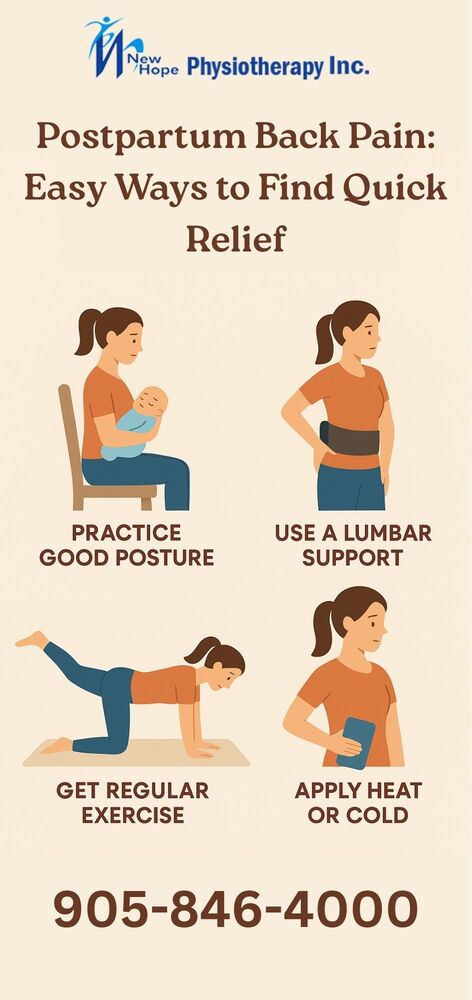
The changes in hormones during postpartum relax joints and ligaments making both upper back pain and lower back pain possible. Faulty postures during the act of breastfeeding or carrying the baby may increase the pain. In some cases, the untreated pregnancy problems persist and pose additional back pain care.
How to Soothe Uncomfort with a Minimum of Effort?
1. Practice Gentle Movement
The exercises of lower back pain or light yoga can be incorporated to strengthen the core and back muscles. Even brisk strolls are beneficial in enhancing posture and in alleviating stiffness.
2. Try Stretching
Lower back pain can be alleviated by stretching every day and increases flexibility. Stretching also provides mothers with the flexibility to move and avoid tightness of their muscles due to excessive sitting.
3. Focus on Posture
Good posture is important whether it is nursing, rocking, or carrying your baby. Use cushions to support your back and do not sit forward with prolonged sitting.
Also Read: Why Pregnant Moms Get Leg Cramps at Night—And What to Do About It
4. Supportive Sleep Setup
A good mattress is something many new mothers do not take seriously. The selection of the optimal mattress in the back pain can greatly contribute to sleep quality and lessen the morning stiffness.
5. Seek Professional Guidance
When the discomfort does not pass, then it may be time to see a specialist. A visit to a back pain clinic Brampton, or a search with a back pain doctor near me would offer specific answers. Professionals can prescribe physiotherapy, chiropractic treatment or tailored recovery strategies.
Additional Home Remedies
- Warm compress to loosen hard muscles.
- Hydrate to aid tissue healing.
- Light massage to the sore regions.
It is important to remember that early intervention is valued. The pain must not be overlooked in the long-term, particularly when it becomes an obstacle in the way of taking care of your infant.
Also Read: 10 Safe Ways to Treat Neck Pain during Pregnancy
FAQs
1. What is the common length of postpartum back pain?
Most women experience relief within a few weeks to months after delivery. Nevertheless, unattended postpartum back pain can last longer and may require medical intervention of back pain treatment.
2. When is postpartum back pain to be seen by a doctor?
When your backache is serious, and extends more than a few months, or when it is interfering with your daily activity, it is prudent to place a call to a back pain doctor near me to have it accurately assessed.
3. Are lifestyle changes useful to relieve back pain?
Yes, even small changes such as proper posture, lower back pain stretches, and getting a good mattress with back pain can significantly add to long-lasting recovery.
Also Read: 5 Quick Home Remedies for Leg Cramp Relief and Prevention
4. Is back pain normal after giving birth?
Yes, back pain is common after childbirth. Pregnancy can weaken abdominal muscles, change your posture, and put extra pressure on your back. Lifting and carrying your baby can also cause discomfort.
5. How long does postpartum back pain last?
Postpartum back pain often improves within a few weeks or months. However, some mothers may experience pain for longer. If the pain continues, gets worse, or affects daily activities, consult a healthcare professional.
6. What is the fastest way to relieve postpartum back pain?
You can try gentle stretching, a warm compress, short walks, and proper back support. Resting in a comfortable position may also help. Avoid heavy lifting and sudden movements that increase pain.
7. Can physiotherapy help with postpartum back pain?
Yes, physiotherapy can help reduce pain, improve posture, and strengthen muscles weakened during pregnancy. A physiotherapist can recommend safe exercises based on your recovery and delivery experience.
8. What sleeping position is best for postpartum back pain?
Sleeping on your side with a pillow between your knees may help reduce back pressure. If you sleep on your back, place a pillow under your knees for additional support. Choose the position that feels most comfortable.
9. Is walking good for postpartum back pain?
Yes, gentle walking can improve blood circulation, reduce stiffness, and support recovery. Start with short walks and slowly increase your activity as you feel comfortable. Follow your healthcare provider’s advice, especially after a C-section or complicated delivery.
Also Read: What Should You Not Do After Cupping?
10. Can breastfeeding cause back pain?
Breastfeeding itself does not usually cause back pain, but poor posture while feeding can strain your neck, shoulders, and back. Sit with proper back support and use pillows to bring your baby closer instead of bending forward.
11. What exercises help relieve postpartum back pain?
Gentle pelvic tilts, deep breathing, and appropriate core-strengthening exercises may help. Start slowly and avoid movements that cause discomfort. A physiotherapist can help you choose exercises suitable for your stage of recovery.
12. Should I use heat or ice for postpartum back pain?
Both can help. A warm compress may relax tight muscles and reduce stiffness, while an ice pack may ease soreness. Apply either for 15–20 minutes with a towel between your skin and the pack. Avoid placing heat or ice directly on your skin.
13. When should I see a doctor for postpartum back pain?
Seek medical advice if your pain is severe, getting worse, or not improving. Get urgent medical attention if you experience fever, new leg weakness, numbness around the groin, or loss of bladder or bowel control. Severe back pain with a fever after an epidural or spinal procedure also needs urgent assessment.
Final Thoughts
Postpartum back pain is common, but you do not have to ignore it. Gentle movement, good posture, proper rest, and physiotherapy can help you feel better and return to daily activities more comfortably. Every mother’s recovery is different, so choose treatments that suit your needs and stage of recovery.
Gauravdeep Randhawa, Registered Physiotherapist
Gauravdeep Randhawa is a caring and experienced physiotherapist with over 17 years of experience helping patients recover and improve their quality of life.
She started her own practice in Canada in 2009 and has treated many patients with muscle, joint, sports, neurological, and pelvic health conditions. She has also owned and operated multidisciplinary clinics.
Gauravdeep is a Certified Manual Therapist and has completed training in Contemporary Medical Acupuncture and Pelvic Floor Therapy. She uses hands-on treatment, personalized exercise programs, and evidence-based care to support each patient’s recovery.
Her goal is to help people reduce pain, restore movement, improve function, and achieve long-term wellness in a comfortable and supportive environment.
Medical Disclaimer:
This article is for general information only and is not a substitute for professional medical advice. Postpartum back pain can have different causes. Always consult your doctor or physiotherapist before starting any exercises or treatments. Seek immediate medical care if you experience severe pain, fever, or leg weakness.
Also Read: Knee Pain in Kids: What Parents Should Know
Leave a Comment