
Welcome to New Hope Physiotherapy
- Brampton 905-846-4000
- Malton 905-364-3900
- Orangeville 519-217-9300
- admin@newhopephysio.com
10 Benefits of Neurological Physiotherapy for Stroke Patients
 13 May 2023
- newhope
- 0 Comments
- 1199
10 Benefits of Neurological Physiotherapy for Stroke Patients
Stroke is one of the leading causes of long-term disability. It can affect movement, balance, strength, speech, and daily activities.
The good news is that recovery is possible. With the right treatment and support, many stroke survivors can improve their movement and become more independent.
Neurological physiotherapy can play an important role in stroke recovery.
Also Read: 10 Gentle Workouts to Help Lower Back Pain at Home
1. Helps Improve Movement
After a stroke, some muscles may feel weak, stiff, or difficult to control.
Physiotherapy helps retrain the brain and body through exercises such as:
- Strengthening weak muscles
- Practising reaching and gripping
- Walking exercises
- Stretching
- Balance training
- Electrical stimulation when appropriate
Regular practice may help improve movement and make daily activities easier.
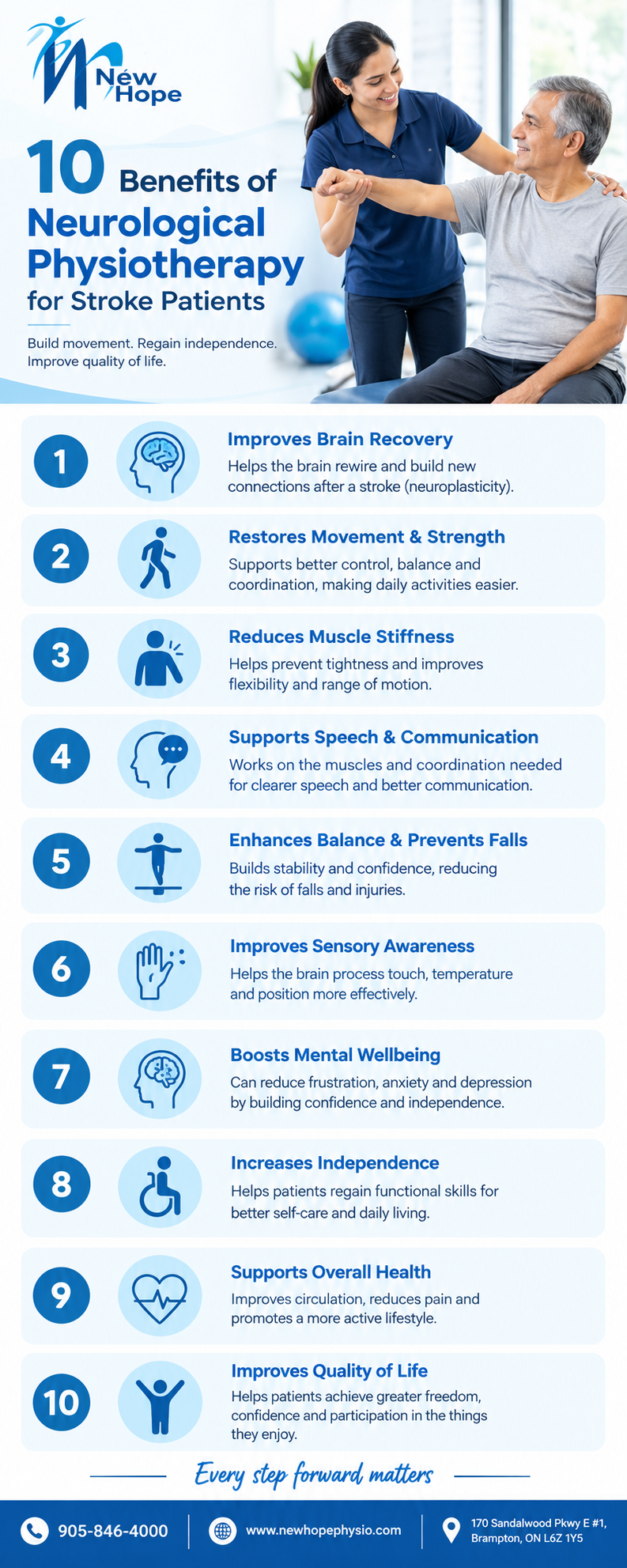
2. Improves Balance and Reduces Fall Risk
Balance problems are common after a stroke. This can make walking and standing more difficult and may increase the risk of falls.
A physiotherapist may use exercises such as:
- Shifting weight from one side to the other
- Standing with support
- Walking on different surfaces
- Practising turns and direction changes
- Exercises that improve body control
These exercises can help patients feel safer and more confident when moving.
Also Read: 5 Common Types of Back Pain You Should Know
3. Helps Reduce Pain and Stiffness
Some stroke survivors experience pain, tight muscles, or stiff joints.
Physiotherapy may help through:
- Gentle stretching
- Range-of-motion exercises
- Soft tissue techniques
- Positioning advice
- Movement exercises
Keeping the body moving may also help prevent joints from becoming too stiff.
4. Supports Greater Independence
One of the main goals of stroke rehabilitation is helping patients return to everyday activities.
Physiotherapy can help patients practise tasks such as:
- Getting in and out of bed
- Standing from a chair
- Walking
- Using stairs
- Getting dressed
- Moving safely around the home
Even small improvements can make a big difference in daily life.
Also Read: What Should You Not Do After Cupping?
5. Supports Heart and Overall Health
Regular physical activity is important after a stroke.
A physiotherapist may recommend safe exercises to improve:
- Strength
- Endurance
- Heart health
- Blood pressure control
- General fitness
Exercise may also support healthy habits that can help reduce the risk of future health problems.
Also Read: The Impact of Physiotherapy on Neurological Disorders
6. Helps With Coordination
A stroke may affect how well the arms and legs work together.
Physiotherapy may include exercises that improve:
- Hand and arm control
- Leg movement
- Walking pattern
- Body coordination
- Reaction time
The goal is to make movements smoother and safer.
7. Provides a Treatment Plan Based on Your Needs
Every stroke is different.
Some people may have mild weakness, while others may need more support with walking, balance, or daily activities.
A physiotherapist will assess:
- Strength
- Movement
- Balance
- Walking ability
- Pain
- Daily activity needs
- Personal recovery goals
A treatment plan can then be created based on the person’s needs and abilities.
8. Can Support Confidence and Mental Well-Being
Recovering from a stroke can be physically and emotionally challenging.
Making progress during physiotherapy may help patients feel more confident and motivated.
Treatment can provide:
- Encouragement
- Goal setting
- Regular progress tracking
- Support during rehabilitation
- A safe environment to practise movement
Physical activity may also help support mood and overall well-being.
Also Read: 5 Quick Home Remedies for Leg Cramp Relief and Prevention
9. Improves Fitness and Endurance
Stroke survivors may become tired quickly or lose strength after spending time in hospital or being less active.
Physiotherapy may include:
- Walking programs
- Stationary cycling
- Strength exercises
- Light aerobic activity
- Endurance training
Exercises are usually adjusted based on the patient’s abilities and medical needs.
10. May Help Reduce Long-Term Complications
Physiotherapy may help reduce the risk of problems caused by limited movement.
This may include:
- Falls
- Muscle weakness
- Joint stiffness
- Reduced mobility
- Loss of independence
- Complications from being inactive for long periods
Regular rehabilitation can help patients stay active and work toward their recovery goals.
What About Speech and Swallowing Problems?
Some stroke survivors may have difficulty speaking or swallowing.
These problems are usually treated by a speech-language pathologist.
A speech-language pathologist may help with:
- Speech
- Communication
- Voice
- Swallowing
- Eating and drinking safely
Stroke recovery often involves a team of healthcare professionals working together.
Also Read: 10 Safe Ways to Treat Neck Pain during Pregnancy
Is Neurological Physiotherapy Expensive?
The cost of physiotherapy depends on the clinic, treatment plan, and insurance coverage.
Some extended health insurance plans may cover physiotherapy services. It is a good idea to check your policy before starting treatment.
Physiotherapy may also help reduce future healthcare needs by improving mobility, preventing falls, and helping patients stay active.
Conclusion
Neurological physiotherapy can be an important part of stroke rehabilitation.
It may help improve:
- Strength and movement
- Balance
- Walking
- Coordination
- Pain and stiffness
- Fitness
- Confidence
- Independence
Recovery after a stroke can take time, and every person’s progress is different.
If you or a loved one has experienced a stroke, speak with a qualified physiotherapist or healthcare provider. They can assess your needs and create a treatment plan that supports your recovery goals.
Also Read: Frozen Shoulder vs. Rotator Cuff Tear: Key Differences and Symptoms
FAQs:
1. Why is physiotherapy important for stroke patients?
Physiotherapy helps stroke patients regain strength, balance, movement, and independence. It can improve walking, reduce muscle stiffness, and support a faster recovery.
2. What does a neurological physiotherapist do?
A neurological physiotherapist treats people with conditions affecting the brain, spinal cord, and nerves. They help improve movement, coordination, balance, and daily functioning.
3. What would a physiotherapist do for someone who had a stroke?
A physiotherapist creates a personalized treatment plan that may include exercises, balance training, walking practice, and strength-building activities to help the patient recover movement and function.
4. How long does it take for the brain to recover after a stroke?
Recovery time varies from person to person. Some people improve within weeks, while others may need months or years of rehabilitation. Early treatment and regular therapy can help recovery.
5. What should stroke patients avoid?
Stroke patients should avoid smoking, excessive alcohol, unhealthy foods, inactivity, and skipping medications. Following medical advice and maintaining a healthy lifestyle are important for recovery.
6. What are the 5 major areas of neurological assessment?
The five major areas of neurological assessment are mental status, cranial nerves, motor function, sensory function, and reflexes. These assessments help healthcare professionals evaluate nervous system function.
Medical Disclaimer:
This information is for general education only and is not a substitute for professional medical advice, diagnosis, or treatment. Stroke recovery varies from person to person. Always consult a qualified healthcare professional before starting physiotherapy.
Gauravdeep Randhawa, Registered Physiotherapist
Gauravdeep Randhawa is a caring and experienced physiotherapist with over 17 years of experience helping patients recover and improve their quality of life.
She started her own practice in Canada in 2009 and has treated many patients with muscle, joint, sports, neurological, and pelvic health conditions. She has also owned and operated multidisciplinary clinics.
Gauravdeep is a Certified Manual Therapist and has completed training in Contemporary Medical Acupuncture and Pelvic Floor Therapy. She uses hands-on treatment, personalized exercise programs, and evidence-based care to support each patient’s recovery.
Her goal is to help people reduce pain, restore movement, improve function, and achieve long-term wellness in a comfortable and supportive environment.
Leave a Comment