

Welcome to New Hope Physiotherapy
- Brampton 905-846-4000
- Malton 905-364-3900
- Orangeville 519-217-9300
- admin@newhopephysio.com
A Step-by-Step Look at Physiotherapy Sessions for Back Pain
 24 May 2025
- newhope
- 0 Comments
- 1317
A Step-by-Step Look at Physiotherapy Sessions for Back Pain
Many individuals in countries around the world suffer from back pain, regardless of what their lives are like. When back pain is because of poor posture, an injury or a medical reason, physiotherapy may help a lot. Once you know the goals of physiotherapy, you should feel more comfortable and follow your assigned routine. Let’s go into detail about the process you will follow if you see a physiotherapist for back pain.
Also Read: Upper Back Pain vs. Lower Back Pain
A Step-by-Step Look at Physiotherapy Sessions for Back Pain

Also Read: What Are the 7 Principles of Massage Therapy?
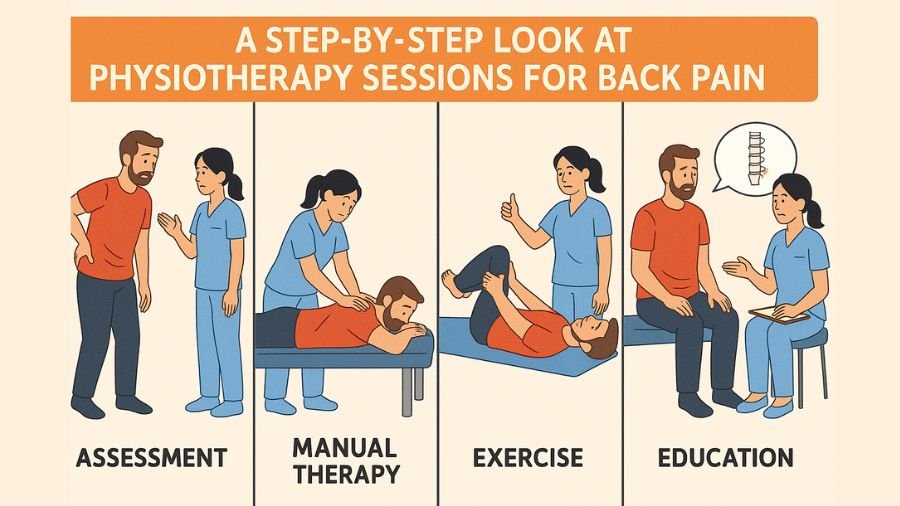
1. Initial Assessment
At the beginning, parents go through a detailed assessment. Your therapist will want to know about your medical background, how you spend your time, your daily activities and the type of pain you are experiencing. They can test your body using various exercises to see your flexibility, how you stand and your muscle power. At Back Pain Clinic Brampton, they use the latest technology to find out why you are feeling discomfort.
The information from this checklist lets them make a treatment plan that is unique to your situation. You can expect the assessment process to be the same no matter if you visit a physiotherapy center in Brampton, Mississauga or Orangeville.
Also Read: World Arthritis Day 2026: Common Arthritis Mistakes to Avoid
2. Partnering to Establish Goals and a Type of Treatment
When your condition is looked at, your physiotherapist outlines both short and long term goals for your recovery. Some examples are pain reduction, improving how you move, building up muscle strength and avoiding additional harm.
Generally, treatment is a mix of getting treatment by hand, guided movement, posture adjustments and sometimes applying electrotherapy. If you came across a physiotherapy clinic nearby after an “physiotherapy near me” search, look for a center that helps you in the long run and not just by fixing your symptoms temporarily.
Also Read: Shoulder Pain Solutions: 7 Essential Exercises for Quick Relief
3. Therapy and Active Exercises
The main methods used in physiotherapy are called mobilization, soft tissue release and manipulation. Patients also get these therapies together with exercises focused on the back and the core. Your therapist might show you exercises that can be continued at home to have lasting effects.
Clinics using ergonomic tools and always-available feedback systems in Mississauga and parts of Ontario help people heal properly and protect against reinjury.
4. Evaluating and Revising the Plan
During your sessions, your physiotherapist will regularly check how well you are improving. Should you grow stronger, they have the option to advance your routines or focus on another part of your fitness. The goal is for you to continue improving and learn to care for yourself on your own as things progress.
Certain patients from Physiotherapy Orangeville state they see major improvements after just a few weeks, but others may continue with treatment for a longer time depending on their case.
Also Read: 10 Gentle Workouts to Help Lower Back Pain at Home
5. Learn and Work to Prevent Cases
Physiotherapy relies heavily on learning. Your therapist will show you how to use proper movements, correct posture and tips to stop back pain from returning. They could suggest making your desk or chair more comfortable and starting regular exercise.
Ensure you pay as much attention to prevention as to treatment, no matter what Back Pain Clinic you see.
Also Read: 5 Conditions Causing Your Shoulder Pain
FAQs
1: How quickly will you see improvements with physiotherapy for back pain?
A majority of patients start to feel better within 2 to 4 weeks. Chronic problems sometimes necessitate longer treatment for pain relief that remains.
2: Is a doctor’s referral necessary to get physiotherapy?
Most physiotherapy clinics, for example those in Brampton or Mississauga, can be reached without requiring your doctor’s referral in advance.
3: Is physiotherapy suitable for managing any kind of back pain?
Myofascial and postural back aches usually respond very well to physiotherapy. Even so, patients with severe disorders often benefit from the use of several types of medical treatments.
Also Read: Massage Therapist in Mississauga Using Therapy to Treat Body Pain
4. How many days of physiotherapy should be done for back pain?
The number of physiotherapy sessions depends on how serious your back pain is. Some people may need treatment once or twice a week for a few weeks, while others may need longer care. A physiotherapist will create a treatment plan based on your condition and recovery.
5. What is the best sleeping position for back pain?
Sleeping on your side with a pillow between your knees can help reduce pressure on your back. You can also sleep on your back with a pillow under your knees. Try to avoid sleeping on your stomach if it makes your pain worse.
6. Is heat or ice better for back pain?
Both heat and ice can help relieve back pain. Ice may help reduce pain and swelling after a recent injury. Heat can relax tight muscles and reduce stiffness. Use a towel between your skin and the heat or ice pack, and apply it for about 15–20 minutes at a time.
7. Is walking good for lower back pain?
Yes, gentle walking is often helpful for lower back pain. It keeps your body moving, reduces stiffness, and helps improve flexibility. Start with short walks and slowly increase your walking time as you feel better.
8. How long is too long for back pain?
Most new episodes of back pain improve within a few weeks. If your pain lasts longer than four to six weeks, keeps getting worse, or affects your daily activities, consider seeing a healthcare professional. Severe pain or concerning symptoms may need medical attention sooner.
9. What should you avoid with back pain?
Avoid heavy lifting, sudden twisting, prolonged bed rest, and activities that make your pain worse. Try not to sit or stand in the same position for too long. Gentle movement is usually better than staying completely inactive.
10. What should you do all day with back pain?
Stay gently active throughout the day. Take short walks, change your sitting position regularly, and do comfortable stretches or exercises recommended by your physiotherapist. Take short rest breaks when needed, but avoid spending the whole day in bed.
Also Read: Knee Pain After Sitting Too Long: Causes and Tips
11. What are the do’s and don’ts for back pain?
Do’s:
-
Stay active with gentle movement.
-
Maintain comfortable sitting and sleeping positions.
-
Take regular breaks from sitting.
-
Follow your physiotherapy exercise plan.
-
Lift objects carefully.
Don’ts:
-
Avoid lifting heavy objects if it increases pain.
-
Do not stay in bed for long periods.
-
Avoid sudden movements that worsen symptoms.
-
Do not push through severe pain.
-
Do not ignore worsening symptoms.
12. Can physiotherapy help relieve lower back pain?
Yes, physiotherapy can help many people manage lower back pain. Treatment may include stretching, strengthening exercises, movement advice, and hands-on therapy. A physiotherapist can also teach you ways to improve movement and reduce the chances of recurring pain.
13. What is the fastest way to relieve lower back pain at home?
Gentle walking, comfortable resting positions, and using heat or ice may provide temporary relief. Avoid movements that make your pain worse. If your back pain continues, a physiotherapist can recommend exercises suited to your condition.
Conclusion
Following your treatment plan and keeping in touch with your therapist will allow physiotherapy to help your back pain for a long time and improve your life. No matter where you are, making that first appointment in Physiotherapy Mississauga is often the start of healing.
Also Read: Cupping Therapy: How Often Should You Schedule Sessions for Optimal Results?
Gauravdeep Randhawa, Registered Physiotherapist
Gauravdeep Randhawa is a caring and experienced physiotherapist with over 17 years of experience helping patients recover and improve their quality of life.
She started her own practice in Canada in 2009 and has treated many patients with muscle, joint, sports, neurological, and pelvic health conditions. She has also owned and operated multidisciplinary clinics.
Gauravdeep is a Certified Manual Therapist and has completed training in Contemporary Medical Acupuncture and Pelvic Floor Therapy. She uses hands-on treatment, personalized exercise programs, and evidence-based care to support each patient’s recovery.
Her goal is to help people reduce pain, restore movement, improve function, and achieve long-term wellness in a comfortable and supportive environment.
Medical Disclaimer:
This content is for informational purposes only and is not a substitute for professional medical advice, diagnosis, or treatment. Consult a qualified physiotherapist or healthcare professional for personalized advice about back pain.
Also Read: What Should You Not Do After Cupping?


Leave a Comment