
Welcome to New Hope Physiotherapy
- Brampton 905-846-4000
- Malton 905-364-3900
- Orangeville 519-217-9300
- admin@newhopephysio.com
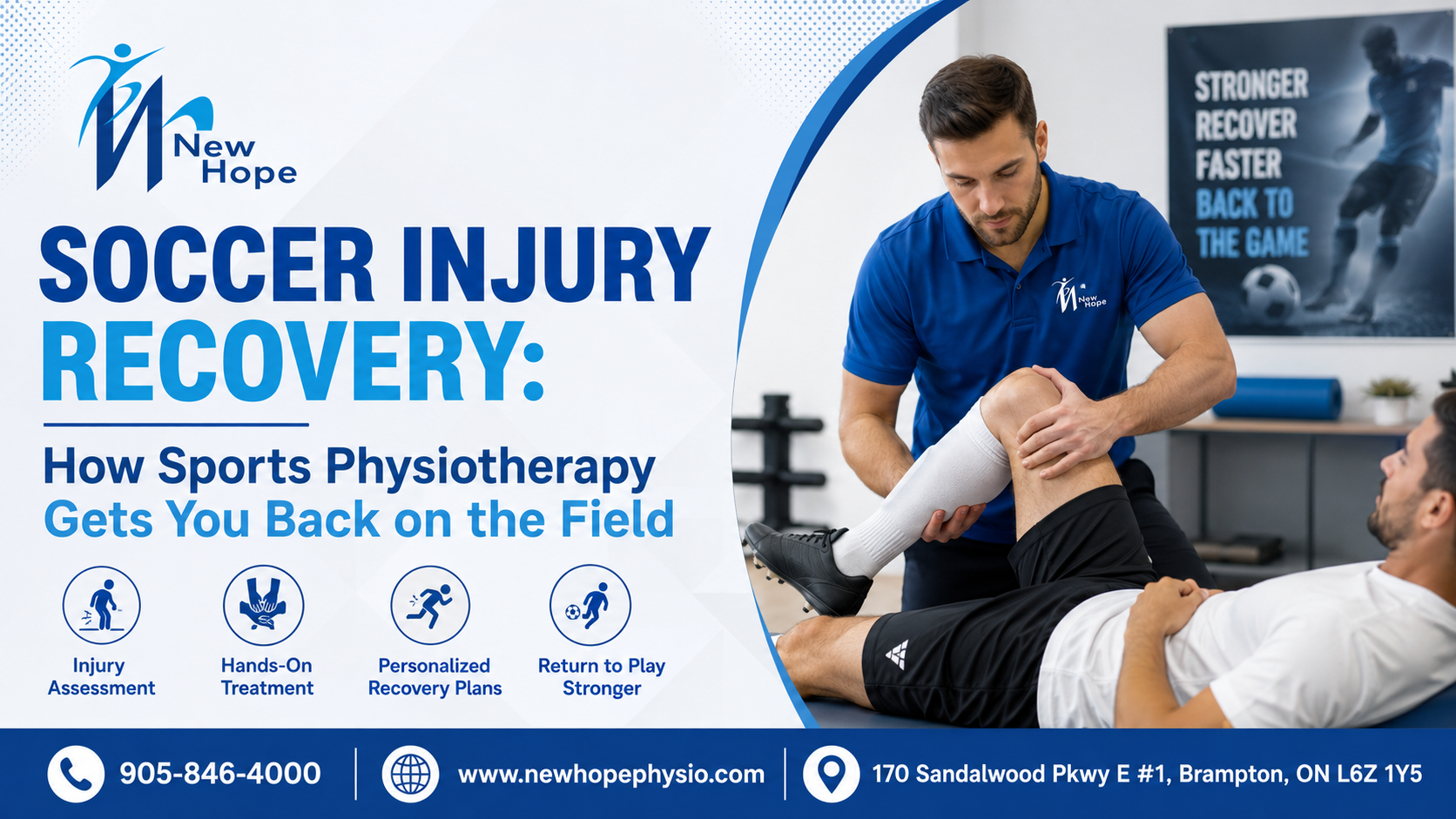
Soccer Injury Recovery: How Sports Physiotherapy Gets You Back on the Field
20 Jun 2026
Soccer Injury Recovery: How Sports Physiotherapy Gets You Back on the Field
⚽ Whether you participate in your local league, at school, or simply enjoy some games with your friends on weekends, a soccer injury is definitely annoying.
One minute you are running along the field, and the other one finds you sitting by the side trying to figure out when you will be playing again.
But there is also some good news for all those who have had an injury. Namely, most of the soccer injuries heal well if proper measures are taken. And here is how Sports Physiotherapy may come into play.
Sports physiotherapists assist their clients to reduce pain, enhance motion abilities, and get back to their game safely.
With the FIFA World Cup 2026 approaching and anticipation getting high, more Canadian athletes and soccer lovers than ever before become active participants of this game.
Also Read: Sports Injury Rehabilitation: How Physiotherapy Can Speed Up Your Recovery
⚽ Common Soccer Injuries
Soccer involves running, jumping, cutting, kicking, and sudden changes in direction.
Because of this, injuries can happen at any level.
Some common Soccer Injury types include:
- Ankle sprains
- Knee ligament injuries
- Hamstring strains
- Groin strains
- Shin splints
- Achilles tendon injuries
- Lower back pain
- Muscle tears
Some injuries happen suddenly during a game. Others develop over time from repeated stress.
🏥 What Is Sports Physiotherapy?
Sports Physiotherapy focuses on preventing, treating, and managing sports-related injuries.
The goal is not just to reduce pain.
The goal is to help athletes return to their sport safely and confidently.
A sports physiotherapist may help with:
- Injury assessment
- Pain management
- Strength training
- Balance exercises
- Mobility improvement
- Sport-specific rehabilitation
- Injury prevention strategies
Whether you are a competitive athlete or a recreational player, treatment is usually tailored to your needs.
Also Read: 5 Quick Home Remedies for Leg Cramp Relief and Prevention
⚽ Why Soccer Players Need Sports Physiotherapy
Many athletes try to return to play too quickly.
This often leads to:
- Re-injury
- Longer recovery times
- Ongoing pain
- Reduced performance
Sports physiotherapy helps make sure the body is ready before returning to the field.
Recovery is not just about feeling better.
It is about moving properly, building strength, and reducing the risk of future injuries.
📋 What Happens During Sports Physiotherapy?
Every injury is different.
Your physiotherapist will usually begin with a detailed assessment.
They may evaluate:
- Pain levels
- Strength
- Flexibility
- Balance
- Walking and running mechanics
- Range of motion
After the assessment, a treatment plan is created.
The plan may include:
Manual Therapy
Hands-on techniques may help improve movement and reduce stiffness.
Strength Exercises
Weak muscles are strengthened to support injured areas.
Stretching Programs
Stretching may improve flexibility and movement.
Balance Training
Balance exercises can help prevent future injuries.
Return-to-Sport Training
Exercises gradually become more soccer-specific as recovery progresses.
⚽ Soccer Injuries Seen at Every Level
Injuries are inherent to all games from the youth leagues right up through the professionals.
Even players who represent organizations such as Canada Soccer or the Canada Men’s National Soccer Team invest a lot of time with physiotherapists during their careers.
Sports physiotherapy is an integral component of any training routine at the elite level.
The methods that are applied to the professionals may be applied to the recreational athletes as well.
Also Read: Frozen Shoulder vs. Rotator Cuff Tear: Key Differences and Symptoms
🌎 Soccer Growth in Canada
Soccer remains on the rise throughout the nation.
With Canada gearing up to host games in the FIFA World Cup 2026, there has never been more excitement about the game.
The number of people participating in soccer programs is increasing each year.
As the trend rises, so will the importance of proper injury management and prevention.
🚨 Signs You Should See a Sports Physiotherapist
Consider booking an assessment if you have:
- Ongoing pain after soccer
- Swelling that does not improve
- Difficulty running or kicking
- Repeated ankle sprains
- Knee instability
- Reduced strength
- Lower back pain during play
Ignoring symptoms often makes recovery take longer.
Early treatment can often prevent small issues from becoming bigger problems.
⚽ Tips for Returning to Soccer After an Injury
Recovery takes patience.
Many athletes want to jump right back into games.
It is usually better to return gradually.
Helpful tips include:
Start Slowly
Begin with light exercises and controlled training sessions.
Follow Your Rehabilitation Program
Consistency matters.
Missing exercises can delay progress.
Listen to Your Body
Pain is often a warning sign.
Do not ignore it.
Build Strength First
Strong muscles help protect joints and reduce injury risk.
Focus on Warm-Ups
Proper warm-ups prepare the body for activity.
Also Read: Shoulder Pain Solutions: 7 Essential Exercises for Quick Relief
📖 A Real Example
A recreational soccer player from Brampton had suffered a sprained ankle while playing a game during the weekend.
Initially, he believed that a few days’ rest would suffice.
However, even though the pain diminished, he found himself experiencing soreness and instability in his ankle each time he played.
Following consultation with a physiotherapist for sports injuries, he underwent a rehabilitation process that emphasized building up strength and balance.
Through several weeks of treatment, he built up his ankle strength and stability.
He was able to get back into training gradually and then return to playing matches as well.
Each injury case is unique, but this is an example where proper rehabilitation made a better difference than rest.
📍 Finding Sports Physiotherapy Near You
If you are searching for:
- Sports Physiotherapy Brampton
- sports physiotherapy Mississauga
- sports physiotherapy near me
- sports injury physiotherapy
Look for a clinic with experience treating athletes and sports-related injuries.
The right rehabilitation plan can help you recover safely and return to the activities you enjoy.
Final Thoughts
Injuries are part of life as a soccer player, but they don’t necessarily spell the end of your season.
If managed properly through sports physiotherapy, most soccer players manage to bounce back and come out better for it.
No matter whether you play recreational soccer or even compete on a high level, timely intervention and the right rehabilitation can work wonders.
It’s one thing to go back to the field.
It’s quite another to go back safely and stay there.
Frequently Asked Questions
1. How to get back into soccer after injury?
Start gradually. Follow your rehabilitation program, rebuild strength, improve mobility, and return to training before playing full matches.
2. Do soccer players ever recover from injury back pain?
Yes. Many soccer players recover from back pain with proper treatment, exercise, and rehabilitation. Recovery time varies depending on the cause and severity.
3. What is the hardest sports injury to recover from?
Serious knee ligament injuries, such as ACL tears, are often considered among the most challenging because recovery can take many months.
4. What is the role of physiotherapy in the recovery of an injured athlete?
Physiotherapy helps reduce pain, restore movement, improve strength, and guide athletes through a safe return-to-sport process.
5. What do you do as a sports physio?
A sports physiotherapist assesses injuries, creates treatment plans, provides rehabilitation exercises, and helps athletes prevent future injuries.
6. How long does it take to recover from a soccer injury?
Recovery depends on the injury. Minor strains may improve within weeks, while more serious injuries can take several months.
7. Can sports physiotherapy help prevent injuries?
Yes. Sports physiotherapy can identify weaknesses, improve movement patterns, and reduce injury risk through targeted exercises.
8. When should I see a physiotherapist after a soccer injury?
It is often helpful to seek assessment if pain, swelling, weakness, or movement limitations continue after an injury.
9. Can I play soccer while recovering from an injury?
This depends on the injury and stage of recovery. A physiotherapist can help determine when it is safe to return to training and competition.
10. Is sports physiotherapy only for professional athletes?
No. Sports physiotherapy can benefit athletes of all ages and skill levels, including recreational and amateur soccer players.

Leave a Comment