
Welcome to New Hope Physiotherapy
- Brampton 905-846-4000
- Malton 905-364-3900
- Orangeville 519-217-9300
- admin@newhopephysio.com
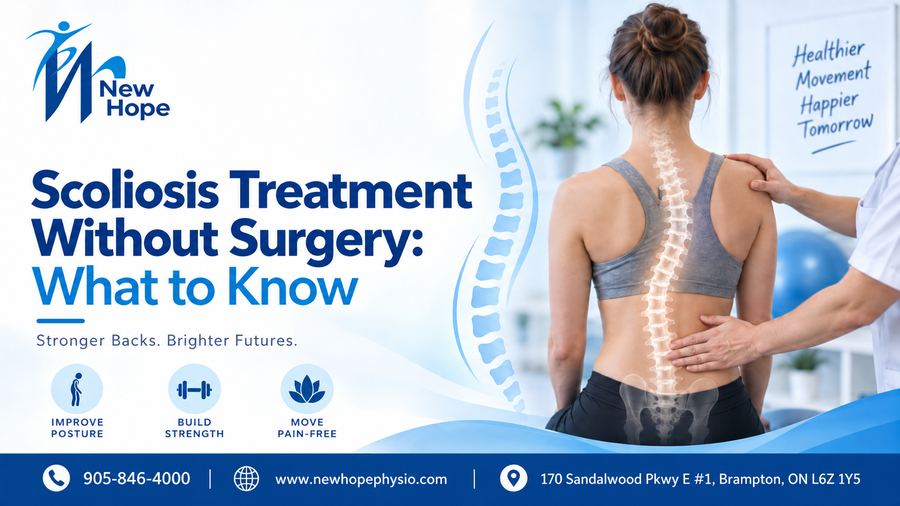
Scoliosis Treatment Without Surgery: What to Know
19 Sep 2026
Scoliosis Treatment Without Surgery: What to Know
Scoliosis is a condition where the spine curves sideways instead of staying straight. The curve may look like the letter “C” or “S.”
Some people develop scoliosis during childhood or the teenage years. Others may notice it later in life because of changes in the spine.
Many people ask, “Can scoliosis be treated without surgery?” In many cases, the answer is yes. Treatment depends on the size of the curve, your age, symptoms, and how much the condition affects your daily life.
Physiotherapy, scoliosis exercises, stretching, posture training, and regular monitoring may help manage symptoms and improve movement.
Also Read: Scoliosis Awareness Month 2026: Common Questions Answered
What Is Scoliosis?
Scoliosis is an abnormal sideways curve of the spine. It may affect the:
- Upper back, also called the thoracic spine
- Lower back, also called the lumbar spine
- Both the upper and lower back pain
The condition can range from mild to more severe.
Some people with scoliosis have no pain. Others may experience stiffness, muscle weakness, tiredness, or back pain.
Common Scoliosis Symptoms
Possible scoliosis symptoms include:
- One shoulder higher than the other
- Uneven hips
- One shoulder blade sticking out more
- Uneven waistline
- Back stiffness
- Back or neck pain
- Muscle tightness
- Changes in posture
- Difficulty standing for long periods
- Reduced movement in the spine
Symptoms can be different from one person to another.
Also Read: 10 Gentle Workouts to Help Lower Back Pain at Home
Can You Fix Scoliosis Without Surgery in Adults?
Not every person with scoliosis needs surgery.
For many adults, scoliosis treatment focuses on reducing pain, improving movement, maintaining strength, and helping the person stay active.
Non-surgical treatment may include:
- Physiotherapy
- Scoliosis physiotherapy exercises
- Strengthening exercises
- Stretching
- Posture training
- Core exercises
- Activity changes
- Pain management
- Regular medical monitoring
These treatments may not completely straighten the spine, especially in adults. However, they may improve comfort, strength, posture, and daily function.
Scoliosis Exercises for Adults
Exercise can be an important part of treatment for scoliosis in adults.
A physiotherapist may recommend exercises based on the type and location of the spinal curve.
Scoliosis Stretching Exercises
Gentle stretching may help reduce muscle tightness.
Examples may include:
- Chest stretches
- Side stretches
- Hip flexor stretches
- Hamstring stretches
- Upper-back stretches
- Gentle spinal mobility exercises
Stretching should feel comfortable. Stop if you experience sharp pain.
Also Read: What Should You Not Do After Cupping?
Thoracic Scoliosis Exercises
Thoracic scoliosis affects the upper and middle back.
Exercises may focus on:
- Upper-back mobility
- Shoulder blade strength
- Breathing control
- Core strength
- Posture awareness
These exercises may help improve movement and reduce muscle tension.
Lumbar Scoliosis Exercises
Lumbar scoliosis affects the lower back.
Exercises may include:
- Core strengthening
- Pelvic control exercises
- Hip strengthening
- Gentle lower-back stretches
- Balance exercises
Your physiotherapist can choose exercises that match your spinal curve and symptoms.
Also Read: 5 Quick Home Remedies for Leg Cramp Relief and Prevention
Functional Scoliosis Exercises
Functional exercises focus on movements used in daily life.
They may include:
- Sitting correctly
- Standing with better balance
- Lifting safely
- Reaching
- Walking
- Getting up from a chair
- Improving body awareness
These exercises can help make everyday activities easier.
Scoliosis Exercises to Straighten the Spine
People often search for scoliosis exercises to straighten the spine.
Exercises may assist in enhancing one’s posture, balance, strength, and flexibility. Nevertheless, exercising only rarely will be sufficient to correct the curvature in structural scoliosis.
It is intended to make you move more freely and relieve unnecessary stress from your spine.
Scoliosis Exercises to Avoid
No one list can apply to everyone who suffers from scoliosis as to what exercises to avoid.
Be sure not to do any exercises which cause pain or put too much strain on your back.
Depending on your condition, a healthcare professional may recommend avoiding or modifying:
- Heavy lifting with poor technique
- Repeated extreme twisting
- Deep back bending
- High-impact exercises that increase pain
- Exercises performed with incorrect posture
Always ask your physiotherapist before starting a new exercise program.
Also Read: Shoulder Pain Solutions: 7 Essential Exercises for Quick Relief
How to Fix Scoliosis Naturally
There is no proven home remedy that can completely cure structural scoliosis.
However, healthy habits may help control symptoms.
Try to:
- Stay physically active
- Maintain good posture
- Build core strength
- Stretch regularly
- Maintain a healthy body weight
- Use proper lifting techniques
- Follow your physiotherapy program
- Get enough sleep
- Attend regular medical checkups
Early treatment may also help prevent problems from becoming worse.
When Is Surgery Considered?
Surgery may be considered when scoliosis is severe, continues to progress, causes major pain or disability, or affects important body functions.
Most people should first discuss their treatment options with a doctor or spine specialist.
Physiotherapy can often remain useful before or after surgery to help improve movement and strength.
Also Read: World Physiotherapy Day 2026: Helping People Move Without Pain
Frequently Asked Questions About Scoliosis
1. Can I fix my scoliosis without surgery?
Many people can manage scoliosis without surgery. Physiotherapy, exercise, posture training, and regular monitoring may help reduce symptoms and improve daily function. Whether surgery is needed depends on the severity of the curve and other health factors.
2. What are the do’s and don’ts for people with scoliosis?
Do stay active, strengthen your core, stretch regularly, and use good posture. Do not ignore ongoing pain or perform exercises that make symptoms worse.
3. How do I stop my scoliosis from progressing?
Regular medical checkups are important. Following an appropriate exercise or physiotherapy program may also help maintain strength and movement. Children and teenagers may require closer monitoring because their bodies are still growing.
4. What food should I avoid if I have scoliosis?
There is no specific food proven to cause scoliosis. Try to limit highly processed foods, excessive sugar, and foods high in unhealthy fats. A balanced diet can support healthy bones and muscles.
5. Is walking good for scoliosis?
Yes. Walking is a low-impact activity that can help maintain mobility, circulation, strength, and general fitness. Start gradually if you have significant pain.
Also Read: 10 Safe Ways to Treat Neck Pain during Pregnancy
6. What is the best sleeping position for scoliosis?
Many people find sleeping on their back or side comfortable. Using a supportive mattress and pillows may help maintain a comfortable spinal position.
7. What should a person with scoliosis not do?
Avoid activities that repeatedly increase pain or strain your back. Heavy lifting, extreme twisting, or aggressive exercises may need to be modified depending on your condition.
8. What gets mistaken for scoliosis?
Poor posture, uneven leg length, muscle imbalance, pelvic changes, and temporary spinal curves may sometimes look similar to scoliosis. A healthcare professional can perform an assessment to confirm the cause.
9. When should an older adult see a physiotherapist?
Consider seeing a physiotherapist if you experience increasing back pain, stiffness, weakness, balance problems, difficulty walking, or problems performing daily activities.
10. How many times a week should I perform scoliosis stretching exercises?
This depends on your condition. Many gentle stretches may be performed several times per week, but your physiotherapist can recommend the safest frequency for you.
Also Read: Frozen Shoulder vs. Rotator Cuff Tear: Key Differences and Symptoms
11. Are there precautions before starting scoliosis stretching exercises?
Yes. Avoid forcing your body into painful positions. Start slowly and use proper technique. Speak with a healthcare professional if you have severe pain, numbness, weakness, or another medical condition.
12. Can scoliosis exercises reduce back pain?
They may. Exercises that improve strength, flexibility, posture, and movement can help reduce discomfort for some people.
13. Is physiotherapy effective for scoliosis?
Physiotherapy may help improve strength, flexibility, posture, balance, and daily function. Results depend on the type and severity of scoliosis and the person’s overall health.
14. Can adults develop scoliosis later in life?
Yes. Some adults develop scoliosis because of age-related changes in the discs, joints, and bones of the spine. This is often called degenerative scoliosis.
15. Can scoliosis be completely cured?
Structural scoliosis is not always completely correctable without surgery. However, many people manage it successfully with exercise, physiotherapy, activity changes, and regular medical care.
Also Read: Top 10 Home Remedies for Reducing Neck Pain and Headaches
Final Thoughts
Living with scoliosis does not always mean you need surgery.
A personalized treatment plan may include scoliosis exercises for adults, scoliosis stretching exercises, thoracic scoliosis exercises, lumbar scoliosis exercises, and scoliosis physiotherapy exercises.
The main goals are to reduce pain, improve movement, build strength, and help you stay active.
If you have scoliosis or ongoing back pain, speak with a qualified healthcare professional or physiotherapist before starting a new exercise program.
Gauravdeep Randhawa, Registered Physiotherapist
Gauravdeep Randhawa is a caring and experienced physiotherapist with over 17 years of experience helping patients recover and improve their quality of life.
She started her own practice in Canada in 2009 and has treated many patients with muscle, joint, sports, neurological, and pelvic health conditions. She has also owned and operated multidisciplinary clinics.
Gauravdeep is a Certified Manual Therapist and has completed training in Contemporary Medical Acupuncture and Pelvic Floor Therapy. She uses hands-on treatment, personalized exercise programs, and evidence-based care to support each patient’s recovery.
Her goal is to help people reduce pain, restore movement, improve function, and achieve long-term wellness in a comfortable and supportive environment.
Medical Disclaimer:
This information is for general education only and is not a substitute for medical advice. Scoliosis treatment varies from person to person. Please consult a qualified healthcare professional for proper assessment and treatment recommendations.

Leave a Comment