
Welcome to New Hope Physiotherapy
- Brampton 905-846-4000
- Malton 905-364-3900
- Orangeville 519-217-9300
- admin@newhopephysio.com
Is low-level laser therapy right for you?
 7 Oct 2022
- newhope
- 0 Comments
- 1229
Is low-level laser therapy right for you?
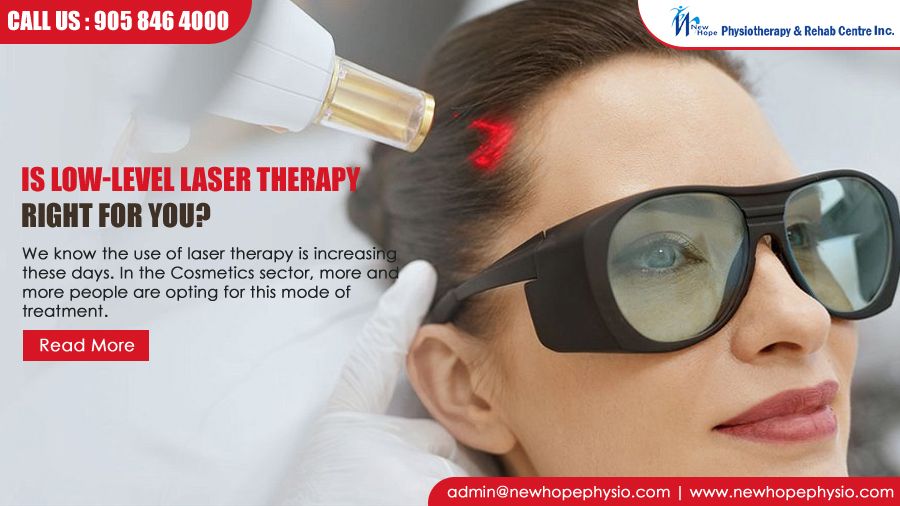
We know the use of laser therapy is increasing these days. In the Cosmetics sector, more and more people are opting for this mode of treatment.
Laser stands for Light Amplification by Stimulated Emission of Radiation. This mode of treatment involves the use of focused light, which is powerful beams.
Apart from the different uses, laser therapy for pain is also in excellent service. This mode of treatment is helpful in pain relief and healing.
Also Read: 10 Gentle Workouts to Help Lower Back Pain at Home
Laser therapy for pain is helpful in pain and inflammation. It expedites healing in impaired tissues. Moreover, laser therapy in physiotherapy is also supportive and handy.
The type which has become of intense use is Low-Level Laser Therapy (LLLT). Some physiotherapists use it to treat various musculoskeletal conditions. This is a non-light procedure.
LLLT is usually a trend that western countries follow. This mode of treatment is helpful to get the skin and texture one desires. This is because of the societal pressure to look a certain way.
LLLT came in a long time ago, but only recently that it has come into effect in the field of dermatology. Our skin reacts well to light, which is why this treatment is effective on the skin, despite all its side effects.
Though the effects that LLLT has may be less intense, it still targets the tissues.
Also Read : How Does Laser Therapy Work For Pain?
Advantages of LLLT
- Reduces UV damage
- Decrease pain
- Stimulates immunity
- Treats brain injury, stroke, and skin conditions
Remember! LLLT should never be applied when pregnant. One should wear protective sunglasses during this treatment.
Laser therapy in physiotherapy is LLLT. It is an application to get relief from pain, speeds up tissue regeneration, and ease inflammation. Hip or shoulder bursitis, sciatica, tennis elbow, disc herniation, and TMD are some conditions that LLLT treats.
This mode of treatment is effective. But, it may have some side effects, which include harm to the eyes if one looks into the laser. Also, the skin texture and colour can change quite negatively.
Moreover, such treatments need many sessions, making the cost and time ineffective.
Also Read : Laser Therapy : Get To Know The Purpose, Procedure, And Risks
Laser Therapy in Brampton
Though there are a lot of places where one can go for laser therapy, if we talk about a specific place, Brampton, the procedure and the effects can vary. In Canada, laser therapy has proven to have no adverse effects.
The complete treatment is of five or fifteen minutes. Some places offer special packages on laser treatments if one purchases six, twelve, or twenty sessions.
Many clinics offer excellent services with special packages and discounts for laser therapy in Brampton. There are a lot of the best clinics.
Also Read : What Is Laser Therapy?
Laser Therapy Treatment
The laser treatment in Brampton is very cost-effective. The time for each person may vary depending upon how intense their concern is.
All in all, low-level laser therapy is right for you. One can go for it if they have major muscular and skeletal issues.
FAQs:
1. What is low-level laser therapy?
Low-level laser therapy uses gentle light energy to support the body’s natural healing process. It may help reduce pain, swelling, and inflammation.
2. Who can benefit from low-level laser therapy?
People with muscle pain, joint pain, sports injuries, or certain soft-tissue problems may benefit. A healthcare professional can determine if it is suitable for you.
3. Can low-level laser therapy help with pain?
It may help reduce pain and inflammation in some conditions. Results can vary depending on the cause and severity of your pain.
4. Is low-level laser therapy painful?
No. The treatment is generally gentle and does not usually cause pain. Most people feel little or nothing during the session.
Also Read: What Should You Not Do After Cupping?
5. How long does a laser therapy session take?
Treatment time depends on the area being treated and your condition. Your physiotherapist can explain how long your sessions may take.
6. How many treatments will I need?
The number of sessions varies from person to person. Your physiotherapist may recommend a treatment plan based on your symptoms and progress.
7. Can low-level laser therapy be used for sports injuries?
Yes, it may be used as part of a rehabilitation plan for some sports injuries. It can be combined with exercises and other physiotherapy treatments.
8. Are there any side effects?
Low-level laser therapy is generally well tolerated. Your physiotherapist will review your health history and explain any precautions before treatment.
9. Can laser therapy replace physiotherapy exercises?
Usually, laser therapy is used as part of a broader treatment plan rather than as a replacement for exercise. Your plan may include stretching, strengthening, and other physiotherapy techniques.
10. How do I know if low-level laser therapy is right for me?
The best way to know is to have an assessment by a qualified physiotherapist. They can identify the cause of your pain and decide whether laser therapy may be helpful for your condition.
Also Read: 5 Common Types of Back Pain You Should Know
Leave a Comment