
Welcome to New Hope Physiotherapy
- Brampton 905-846-4000
- Malton 905-364-3900
- Orangeville 519-217-9300
- admin@newhopephysio.com
How does Laser Therapy Work for Pain?
 31 Aug 2022
How does Laser Therapy Work for Pain?
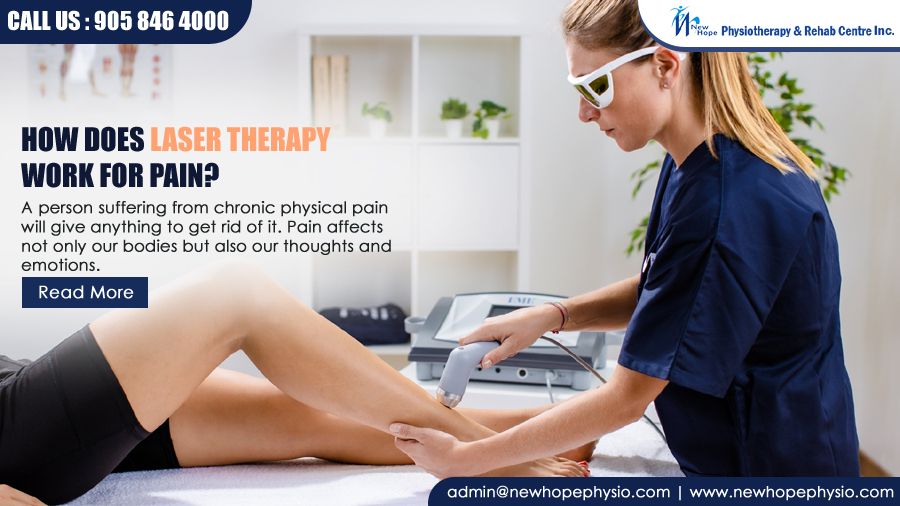
A person suffering from chronic physical pain will give anything to get rid of it. Pain affects not only our bodies but also our thoughts and emotions.
For many years doctors and scientists have toiled to reduce the adverse effects of chronic pain.
The field of pain management underwent some revolutionary changes. After hot/cold therapy, yoga, meditation, acupuncture, etc., the scientific world wanted to explore new ideas.
One such core idea was the use of various sources of energy to cause stimulation inside the body. Our bodies have an internal vibration frequency because of blood flow.
They also produce minimally small electrical voltages to power up our nervous system. These facts provoked scientists to tap into the use of electricity and accelerate the healing process.
Hence, they developed the techniques of Electrical Stimulation (TENS) and Ultrasound therapy.
Also Read : Is Low-Level Laser Therapy Right For You?
LASER THERAPY FOR PAIN
Various studies established that Electrical and ultrasound stimulation help reduce pain and inflammation. The use of Laser therapy for pain management is along the same lines.
Light is the source of energy to cause stimulation used instead of using electricity or sound. In medical terms, the process is known as “photobiomodulation.”
This technique uses light emitting sources called SLDs (Superluminous and Laser Diodes). SLDs shower the damaged body parts with small bundles of light called photons. The molecules of bones, muscles, etc., use these energy particles to trigger chemical reactions.
Also Read : Laser Therapy : Get To Know The Purpose, Procedure, And Risks
LASER THERAPY IN PHYSIOTHERAPY
Several physiotherapy clinics provide laser Therapy in Brampton. The procedure is entirely painless with no heat or burning sensation. It is used as an individual treatment or combined with exercise therapy.
Laser devices used are of two classes based on the power output: Class 3 and Class 4 units. Class 3 machines produce 0.5 watts or less, and type 4 more than 0.5 watts. The New Hope Physio Clinic uses the renowned class 4 BiolflexTM system for providing laser therapy in Orangeville.
Also Read: World Arthritis Day 2026: Common Arthritis Mistakes to Avoid
Laser treatment in physiotherapy forms a part of the regime in the treatment of:
- Osteoarthritis
- Contusions
- Tennis elbow
- Rehabilitation after reconstruction and replacement surgeries
- Scar tissues
- Sore muscles
- Neurological pain
Apart from reducing pain and inflammation, this procedure also promotes bone and cartilage formation. It also acts as a catalyst for wound healing and even works on open wounds.
Also Read : What Is Laser Therapy?
However, the laser can damage the eyes. The team providing this treatment always use eye protection. They also ensure the laser does not pass over pacemakers, cancer-affected areas, and the midsection of pregnant women.
Laser treatment in Malton is supported by established, continuously emerging research and is highly affordable.
The clinic providing treatment conducts an initial evaluation at the first appointment. Then they curate a tailor-made treatment plan per the severity of the pain and its causes.
Treatment can range from 2-5 sessions in case of acute pain. This can also extend up to 10-15 sessions if the pain is chronic and severe. So clinics provide laser treatment in Brampton with a team of certified laser therapists always at your service.
Also Read: What Should You Not Do After Cupping?
FAQs:
1. How does laser therapy work for pain?
Laser therapy uses focused light energy on the painful area. The light may help support the body’s natural healing process and reduce pain and inflammation.
2. What is laser therapy used for?
Laser therapy may be used for different types of muscle, joint, and soft-tissue pain. It may help with conditions such as back pain, neck pain, arthritis, tendon injuries, and sports injuries.
3. Does laser therapy reduce inflammation?
Laser therapy may help reduce inflammation in some conditions. This can help decrease swelling, stiffness, and discomfort.
4. Is laser therapy painful?
Laser therapy is generally comfortable. Most people do not feel pain during treatment. Some people may notice mild warmth in the treated area.
5. How long does a laser therapy session take?
Treatment time depends on the condition and the area being treated. A session may take only a few minutes to complete.
Also Read: 10 Gentle Workouts to Help Lower Back Pain at Home
6. How many laser therapy treatments are needed?
The number of treatments varies from person to person. Your physiotherapist can recommend a treatment plan based on your condition, symptoms, and progress.
7. Can laser therapy help with chronic pain?
Laser therapy may be included as part of a treatment plan for some chronic pain conditions. It is often combined with exercises, manual therapy, or other physiotherapy treatments.
8. Is laser treatment safe?
Laser therapy is generally considered safe when used correctly by a trained professional. Your physiotherapist will assess whether it is suitable for you before treatment.
9. Can laser therapy help sports injuries?
It may be used as part of rehabilitation for some sports injuries. Treatment may help manage pain and support recovery while you work on strength, flexibility, and movement.
10. What should I do after laser therapy?
Follow your physiotherapist’s advice after treatment. You may be given specific exercises or activity recommendations to support your recovery. If your pain gets worse or you develop new symptoms, contact your healthcare professional.
Medical Disclaimer:
Laser treatment may help reduce pain and support healing, but results can vary from person to person. It may not be suitable for everyone. Always consult a qualified healthcare professional before starting treatment.
Also Read: Top 5 Exercises for Strengthening Your Pelvic Floor
Leave a Comment