

Welcome to New Hope Physiotherapy
- Brampton 905-846-4000
- Malton 905-364-3900
- Orangeville 519-217-9300
- admin@newhopephysio.com
What is the Fastest Way to Cure Sciatica?
 5 Jul 2022
What is the Fastest Way to Cure Sciatica?
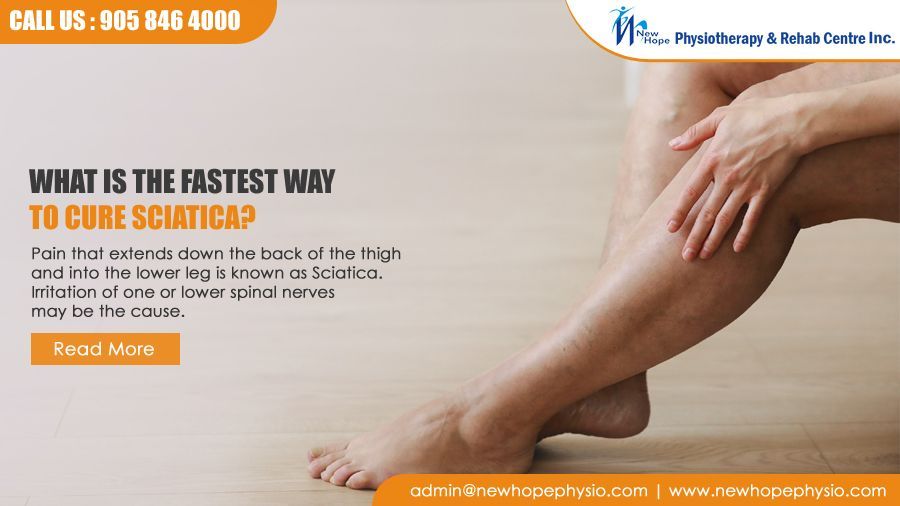
Pain that extends down the back of the thigh and into the lower leg is known as Sciatica. Irritation of one or lower spinal nerves may be the cause. The good news is that conservative treatment for Sciatica is usually effective and can be treated in a matter of weeks without surgery.
Also Read : What Is The Fastest Way To Cure Sciatica?
Why Does It Hurt So Much?
The sciatic nerves run from the lower back to the legs. Sciatica occurs when something presses on them, such as a slipped disc or a bone spur.
A burning feeling, numbness, weakness, or pain may be present. Some say it’s like being on pins and needles. Others compare sciatic nerve pain to stabbing with a knife or receiving an electrical shock.
Also Read : Common Signs And Symptoms Of Sciatica
How to Cure It?
Approximately 90% of persons with Sciatica will improve without surgery, regardless of the a etiology. In just a few weeks, most of them will be cursed.
You can begin treating your Sciatica from the comfort of your own home, and you may only require home treatment. This is especially important if you know your sciatica results from an injury or pregnancy.
Even if you don’t know what’s causing your Sciatica, there are things you may do at home to alleviate the discomfort. Contact your doctor if the pain is unbearable or if you have any additional concerns. Get immediate relief for sciatica pain. Here are a few sciatica treatment options :
Also Read : What Is The Duration Of Sciatica Pain?
Cushion for Pressure Relief
While it is crucial to keep moving, it is also critical to ensure that you rest properly. A back support cushion from Airospring is handy. It is for people who have back pain.
This is because it ensures that weight is distributed evenly. It’s small enough to take with you wherever you go. Keep your pillow nearby so you may easily sit and rest. You can get it anywhere, at any time.
Also Read : Get A Chiropractor To Cure Your Sciatica
Stretching
Stretching in a specific and sensible manner as part of your daily practice can help with more than just sciatica discomfort. A chiropractor for Sciatica improves overall spinal health and helps to prevent future flare-ups.
These stretches should be focused on increasing spinal flexibility and range of motion, and it helps in the development of core and spinal strength. Most stretches are easy to do and may be included in your daily routine. They’re similar to watching the news or your favourite TV show.
Also Read : Steps For Curing Sciatic Nerve Pain During Pregnancy?
Massage
It’s also feasible to alleviate sciatic nerve pain using tried-and-true massage techniques. There are various options available, and you may wish to try them on your own or seek the help of a professional Massage therapist. Choose a method that works well for you. As soon as you experience sciatica pain, incorporate massage into your daily regimen.
Also Read: What Should You Not Do After Cupping?
Pain relievers
There’s no reason to suffer when there are effective pain relievers accessible. If paracetamol alone isn’t cutting it, try a combination of paracetamol and ibuprofen. Consult your pharmacist for reliable recommendations.
If your sciatica pain does not improve, we recommend that you see your doctor. This is because they may want to suggest physical or psychological assistance, making it easier for you to cope with the pain.
Also Read : Symptoms That Show Signs Of Sciatica
Conclusion
Our multidisciplinary experts at New Hope Physio are ready to assist you in determining the source of your sciatic pain. We devise the best treatment for sciatica strategy that is unique to you. We may recommend a combination if we take a comprehensive approach.
It combines at-home treatments and other treatments like physical therapy or regular chiropractic adjustments. Our experts will collaborate with you to develop a strategy.
It is appropriate for your requirements. It assists you in achieving your rehabilitation and pain-free future objectives. Get in touch with us as soon as possible to set up your first appointment.
Also Read : Common Signs and Symptoms of Sciatica
FAQs:
1. What is the fastest way to cure sciatica?
There is no instant cure for sciatica. The fastest way to recover is to get the right diagnosis, stay active, do gentle stretches, and start physiotherapy early. Some people feel better within a few weeks with proper treatment.
2. Can physiotherapy help sciatica?
Yes. Physiotherapy is one of the most effective treatments for sciatica. A physiotherapist can reduce pain, improve movement, strengthen your back and core muscles, and help prevent the pain from coming back.
3. Should I rest or stay active with sciatica?
Stay active as much as you can. Short periods of rest may help if the pain is severe, but too much bed rest can slow recovery. Gentle walking and stretching are usually recommended.
4. What exercises are good for sciatica?
Simple stretching and strengthening exercises can help reduce pressure on the sciatic nerve. A physiotherapist can recommend exercises that are safe for your specific condition.
5. Can ice or heat help sciatica pain?
Yes. Ice packs can reduce swelling during the first 24–48 hours. Heat therapy can help relax tight muscles and reduce stiffness after the initial inflammation has settled.
Also Read: 10 Gentle Workouts to Help Lower Back Pain at Home
6. How long does sciatica take to heal?
Many people recover within 4 to 6 weeks with proper care. More serious cases may take several months, especially if the nerve is severely irritated.
7. What makes sciatica worse?
Sitting for long periods, poor posture, heavy lifting, sudden twisting movements, and not staying active can make sciatica symptoms worse.
Also Read: 5 Conditions Causing Your Shoulder Pain
8. When should I see a physiotherapist for sciatica?
You should see a physiotherapist if your pain lasts more than a few days, keeps returning, or makes it difficult to walk, stand, or do your daily activities.
9. Can sciatica go away on its own?
Yes. Mild cases may improve without medical treatment. However, getting professional treatment can help reduce pain faster and lower the risk of future flare-ups.
10. When should I seek immediate medical help for sciatica?
Seek emergency medical care if you have severe weakness in your leg, lose control of your bladder or bowels, or have numbness around the groin area. These symptoms require urgent medical attention.
Also Read: 5 Quick Home Remedies for Leg Cramp Relief and Prevention

Leave a Comment