
Welcome to New Hope Physiotherapy
- Brampton 905-846-4000
- Malton 905-364-3900
- Orangeville 519-217-9300
- admin@newhopephysio.com
Can Cupping Therapy Help You Avoid Pain Medication?
 9 Jul 2026
Can Cupping Therapy Help You Avoid Pain Medication?
Living with pain can make everyday life difficult. Many people take pain medication to feel better. While medicine can help, some people also want a natural way to manage pain.
Cupping Therapy is one option that has been used for many years. It may help reduce muscle pain, improve blood flow, and support the body’s natural healing process. For many people, it becomes part of a complete treatment plan that may reduce their need for pain medication. However, you should never stop taking prescribed medication without speaking to your doctor.
Also Read: 7 Surprising Benefits of Cupping Massage Therapy
What Is Cupping Therapy?
The cups used in the cupping therapy are placed on the body by a qualified practitioner. The suction effect is created through which skin and muscles are pulled up.
The suction may help:
- Increase blood circulation
- Relax tight muscles
- Reduce muscle tension
- Improve movement
- Support the body’s healing process
Many people choose cupping therapy treatment along with physiotherapy, massage therapy, or chiropractic care.
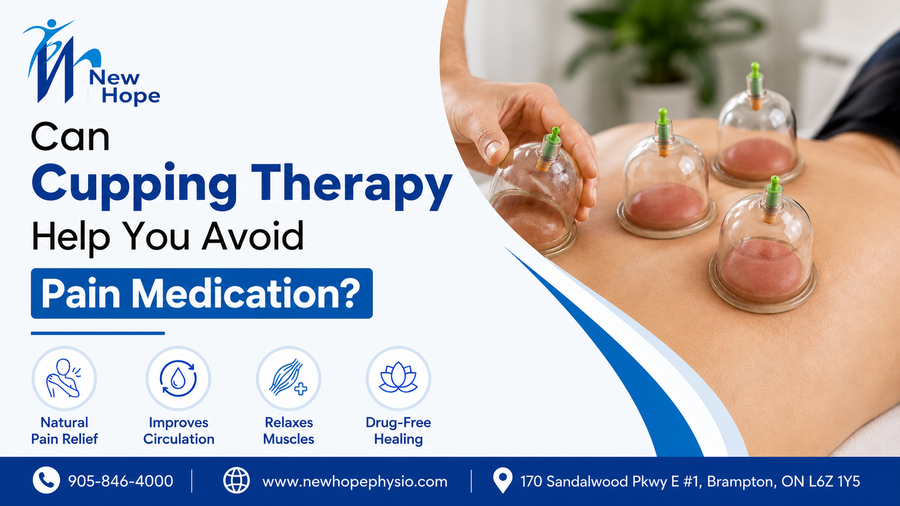
Visual Idea: Image showing cups placed on the back during a cupping therapy session.
Also Read: Cupping Therapy vs. Massage: Which one is better for Pain Relief?
History of Cupping Therapy
The History of cupping therapy goes back more than 2,000 years. It was used in ancient China, Egypt, and the Middle East.
Today, modern cupping uses safe plastic or silicone cups with controlled suction. It is commonly offered by trained healthcare professionals as part of pain management.
How Can Cupping Therapy Help With Pain?
Pain often happens because muscles become tight or irritated.
Cupping suction therapy may help by:
- Loosening tight muscles
- Improving blood flow
- Reducing muscle stiffness
- Helping your body recover after activity
- Improving flexibility
Many patients notice they can move more comfortably after treatment.
Remember, results are different for everyone. Cupping is not a cure, but it may help manage symptoms.
Also Read: 10 Gentle Workouts to Help Lower Back Pain at Home
Can Cupping Therapy Help You Avoid Pain Medication?
Some people find that regular Cupping Therapy helps reduce pain enough that they rely less on over-the-counter pain medicine.
It is not recommended that you discontinue any pain medication on your own.
Instead, cupping may:
- Help lower muscle tension
- Reduce flare-ups
- Improve daily comfort
- Support other treatments
- Make it easier to stay active
Always speak with your healthcare provider before making changes to your medication.
Real Patient Example
Nora is an office worker who had been dealing with neck and shoulder pain for several months. She was taking pain medication to help manage her discomfort during the day, but the pain kept coming back.
She visited New Hope Physiotherapy, where one of our physiotherapists completed a full assessment and created a personalized treatment plan. Her program included targeted exercises, posture correction, and cupping therapy to reduce muscle tension, improve movement, and relieve pain. With regular treatment and following her home exercise program, Nora began to feel better and returned to her daily activities with greater comfort.
After about 6 weeks, Nora noticed:
- Less neck stiffness
- Better shoulder movement
- Fewer headaches
- Better sleep
- She needed over-the-counter pain medicine less often
Her improvement came from following her full treatment plan, not from cupping alone. Every patient responds differently.
Also Read: 5 Quick Home Remedies for Leg Cramp Relief and Prevention
Before and After Cupping Therapy
Many people wonder about before and after cupping therapy.
Before Treatment
- Muscles may feel tight.
- Pain may limit movement.
- You may feel stiff.
After Treatment
- Muscles often feel looser.
- Movement may improve.
- Some people feel relaxed.
- Temporary circular marks may appear.
These marks are normal and usually fade within several days.
Visual Idea: Before-and-after illustration showing improved shoulder movement after cupping.
Who Can Benefit From Cupping Therapy?
People often use cupping for:
- Neck pain
- Back pain
- Shoulder pain
- Sports injuries
- Muscle tightness
- Tension headaches
- Chronic muscle soreness
A healthcare provider can tell you if cupping is right for you.
Is Cupping Right for You?
In case pain interferes with your day-to-day activities, then you might need cupping therapy.
Individuals looking for cupping therapy near me are seeking natural pain reduction methods that allow for ease in movement. In case you are considering cupping therapy Brampton, Cupping Therapy Mississauga, and Cupping Therapy Orangeville, then selecting a professional physiotherapy clinic is important.
A right assessment will ensure that you receive the right treatment, and whether there is a need for other methods to be included in order to get the best out of the process.
Also Read: Frozen Shoulder vs. Rotator Cuff Tear: Key Differences and Symptoms
What Happens During a Cupping Session?
A typical session includes:
- A health assessment.
- The therapist places the cups.
- Gentle suction is created.
- Cups stay in place for about 5 to 15 minutes.
- The therapist removes the cups.
Many patients describe the feeling as tight pressure rather than pain.
Tips After Your Treatment
To help your recovery:
- Drink plenty of water.
- Rest if you feel tired.
- Avoid very hot showers right away.
- Follow your therapist’s advice.
- Continue your exercise program if recommended.
FAQs:
1. How does cupping help with pain relief?
The suction may improve blood flow, relax tight muscles, and reduce muscle tension, helping many people feel more comfortable.
2. How long do cupping results last?
Most individuals have an improved condition for several days, while others have good results for weeks together.
3. How do I tell if cupping is working?
You may notice less pain, better movement, reduced muscle tightness, and easier daily activities.
4. Why am I in more pain after cupping?
Some mild soreness can happen after treatment. It usually improves within one or two days.
5. How long does it take for cupping to stop hurting?
Any tenderness normally settles within 24 to 48 hours.
6. What should you not do before cupping?
Do not come dehydrated. Do not consume a large meal right before the therapy session. Inform your therapist about your medical problems or drugs you take.
7. Which cupping is better, wet or dry?
Dry cupping is the most popular one applied by physiotherapists and rehabilitation centers. The wet cupping procedure includes skin cuts and does not resemble the procedure provided at most physiotherapy centers.
Also Read: The Path to Becoming an Acupuncturist in Canada: How Long Does It Take?
8. What should you avoid with cupping?
Avoid intense exercise, alcohol, very hot baths, and activities that may irritate the treated area for the rest of the day unless your therapist advises otherwise.
9. Why should you avoid showering right after cupping?
Very hot water may irritate the treated skin. Waiting a few hours allows your skin to settle.
10. Will I get marks from cupping therapy?
Yes. Many people develop round red or purple marks. These are temporary and usually disappear within several days.
11. Can I drink something after cupping?
Yes. Drinking water after treatment is encouraged to help you stay hydrated.
12. How many cupping sessions will I need?
It depends on your condition, your goals, and how your body responds. Your therapist will recommend a treatment plan.
Also Read: 5 Common Types of Back Pain You Should Know
13. How long does a cupping session take?
Most appointments last between 30 and 60 minutes, with the cups usually remaining on the skin for 5 to 15 minutes.
14. How do I prepare for a cupping session?
Wear comfortable clothing, drink water, eat a light meal, and tell your therapist about any health concerns or medications.
15. Is it OK to exercise?
Light walking is usually fine. It is often best to avoid heavy workouts until the next day unless your healthcare provider advises otherwise.
Final Thoughts
Cupping Therapy can also be useful for people who suffer from muscle pains or stiffness and athletes who injure themselves. Although cupping therapy is not meant to substitute conventional treatment, it can be part of a more comprehensive treatment program which will help you to recover.
If you experience constant pain, consult your healthcare provider and see if cupping therapy treatment can suit you.
Also Read: 9 Easy Tricks to Relieve Lower Back Pain
Sonee Desai, Registered Massage Therapist & Certified Cupping Therapist
Sonee Desai has extensive experience helping people with pain, movement, and recovery. She began her career as a Physiotherapist in India and has been practicing as a Registered Massage Therapist for nearly five years.
Sonee takes a careful and personalized approach to every treatment. She focuses on understanding each client’s needs, reducing pain, improving movement, supporting recovery, and helping clients feel their best over the long term.
She also has experience in prenatal and postnatal massage care and is certified in cupping therapy. Sonee offers treatments tailored to each client’s comfort, goals, and wellness needs.
Also Read: Top 5 Exercises for Strengthening Your Pelvic Floor

Leave a Comment