

Welcome to New Hope Physiotherapy
- Brampton 905-846-4000
- Malton 905-364-3900
- Orangeville 519-217-9300
- admin@newhopephysio.com
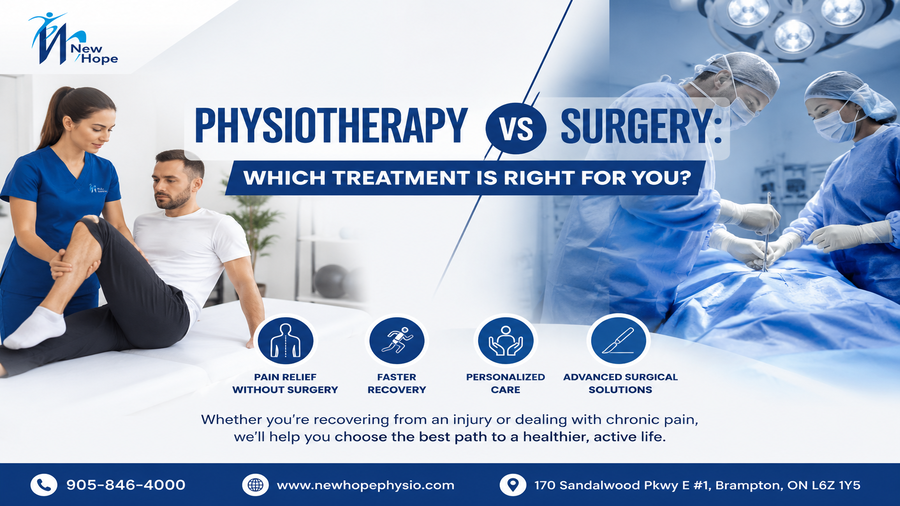
Physiotherapy Vs Surgery: Which Treatment Is Right for You?
 26 May 2026
- newhope
- 0 Comments
- 472
Physiotherapy Vs Surgery: Which Treatment Is Right for You?
Honestly, when people hear the word surgery, most of them panic a little. Maybe more than a little. I probably would too. Hospitals, recovery time, not being able to move properly for weeks. Maybe months. It sounds like a lot because it is a lot.
But then again, living with pain every day also becomes exhausting after a while. Like your body slowly starts controlling your mood, your sleep, your patience. Everything. Even simple things become annoying. Getting out of bed. Sitting too long. Turning your neck while driving. Weird small things you normally never think about.
So then comes the question almost everyone asks at some point.
Do I try physiotherapy first? Or is surgery the better option?
And the annoying thing is everybody says something different. One person says surgery changed their life. Another says it made things worse. Someone else tells you physiotherapy fixed their back pain after years. It gets confusing really fast honestly.
Also Read: 10 Gentle Workouts to Help Lower Back Pain at Home
If you’ve been searching things like Physiotherapy in Brampton, Physiotherapy near me, or even just what is physiotherapy, chances are you’re already somewhere in that confused stage trying to figure things out.
There’s no perfect answer though. Which probably isn’t what people want to hear. But yeah.
What Is Physiotherapy Anyway?
A lot of people think physiotherapy is basically just stretching for an hour and going home. I used to think that too honestly.
But it’s more than that.
Physiotherapy is really about helping your body move properly again. Reducing pain. Improving strength. Fixing movement problems before they become bigger problems. Sometimes helping you avoid surgery altogether. Sometimes helping after surgery too, which people forget about.
A physiotherapist usually helps with things like:
- Back pain
- Neck pain
- Knee injuries
- Sports injuries
- Shoulder stiffness
- Muscle tightness
- Recovery after accidents
- Slipped discs
- Post-surgery rehab
Sometimes they use exercises. Sometimes hands-on treatment. Sometimes acupuncture or posture work. Depends on the person and what’s going on.
And honestly everybody reacts differently too. That’s part of what makes this stuff frustrating.
Also Read: 5 Quick Home Remedies for Leg Cramp Relief and Prevention
Why A Lot of People Try Physiotherapy First
Most people don’t want surgery if they can avoid it. That’s usually the reality.
Physiotherapy feels less scary. Less invasive. No anesthesia. No hospital stay. No major cutting into your body obviously. And for many conditions, physiotherapy actually helps enough that surgery doesn’t end up happening at all.
Which surprises people sometimes.
I remember hearing about someone who thought they absolutely needed shoulder surgery because they couldn’t lift their arm properly anymore. They started going to a Physiotherapy Brampton clinic and after a few months they were moving normally again. Not perfect maybe, but normal enough to work and sleep without pain. Which honestly matters a lot.
Some reasons people choose physiotherapy first:
- Lower risk
- No surgery complications
- Usually shorter recovery time
- Helps strengthen muscles naturally
- Less downtime
- Can improve mobility gradually
- Often more affordable
That doesn’t mean physiotherapy fixes everything though. Some injuries are just too severe. Sometimes the damage is structural and exercises alone won’t fully solve it. It really depends.
That’s the annoying answer people keep giving because it’s true.
Also Read: Shoulder Pain Solutions: 7 Essential Exercises for Quick Relief
Surgery Is Not Just The Surgery
I think people focus too much on the actual operation itself. Like the procedure day. But recovery after surgery is honestly the bigger thing.
The surgery might take two hours. Recovery can take six months. Sometimes longer.
And weirdly enough, physiotherapy usually becomes part of recovery anyway. That part surprises people.
Like someone gets knee surgery thinking the hard part is over. Then suddenly they realize they need months of rehab just to walk normally again without stiffness.
That doesn’t mean surgery is bad obviously. Sometimes surgery is completely necessary. But recovery is work. Real work.
Some common things people deal with after surgery:
- Swelling
- Stiffness
- Muscle weakness
- Pain during recovery
- Frustration from slow healing
- Trouble sleeping comfortably
And honestly, some days mentally feel harder than physically. Nobody talks about that enough either.
Sometimes Physiotherapy Is Enough
For a lot of conditions, physiotherapy really does help quite a bit.
Especially with things like:
Back Pain
Back pain is weird because sometimes the cause isn’t even what people think it is. Weak muscles. Poor posture. Sitting too much. Tight hips. Stress. Bodies are strange honestly.
Sports Injuries
Sprains and strains often improve with proper rehab and strengthening.
Slipped Discs
A slipped disc sounds terrifying when you first hear it. But not every slipped disc needs surgery. A lot of people improve with guided movement and strengthening programs.
Joint Pain
Knees, shoulders, hips. Sometimes improving movement patterns and strength changes everything.
People searching physiotherapy clinic near me are often just looking for a way to feel normal again without going straight into surgery discussions. Which makes sense honestly.
Also Read: 36 questions should I ask a Physiotherapist?
But Sometimes Surgery Really Is Necessary
There are definitely times where surgery becomes the right option. Or the only option.
Not everything can be stretched or exercised away. If only it worked like that.
Sometimes surgery may be necessary for:
- Severe ligament tears
- Broken bones
- Major joint damage
- Nerve compression
- Progressive weakness
- Serious spinal issues
If symptoms keep getting worse or start affecting basic daily life badly, surgery may become unavoidable.
And delaying surgery too long can sometimes create more problems too. So it’s not always about “avoiding surgery at all costs.” That part matters.
Also Read: Lower Back Pain After 40 — What Changes and What You Can Do
Physiotherapy After Surgery Matters More Than People Think
This honestly deserves its own section because people underestimate it constantly.
Physiotherapy after surgery is usually a huge part of recovery. Huge.
Without rehab, people often stay stiff longer, weaker longer, and recovery just drags on. Sometimes they regain movement improperly too.
Post-surgical physiotherapy can help with:
- Restoring movement
- Rebuilding strength
- Reducing stiffness
- Improving flexibility
- Helping normal movement come back
Some clinics offering Physiotherapy in Brampton help people through post-surgery rehab step by step, which honestly probably makes recovery feel less overwhelming mentally too.
Because recovery alone can feel pretty isolating after a while. Especially when progress feels slow.
The Mental Side Of All This Is Weird Too
Nobody really talks about how draining pain becomes mentally.
After enough weeks or months, pain changes your patience level. Your sleep. Your energy. Even small things start feeling bigger than they should.
And making treatment decisions while stressed is hard.
Some people avoid surgery because they’re scared. Others avoid physiotherapy because they think it’s pointless or too slow. Fear kind of affects both sides honestly.
Reading too many stories online makes it worse too. One person says surgery ruined their life. Another says physiotherapy didn’t help at all. Meanwhile somebody else says it completely fixed them.
It’s hard knowing what applies to your own body.
That’s why getting assessed properly matters. Probably more than random internet advice honestly.
Also Read: What Should You Not Do After Cupping?
Small Things That Actually Help Recovery
A few things people underestimate:
- Consistency matters more than perfection
- Recovery is usually slower than expected
- Rest matters too
- Strength takes time to rebuild
- Comparing yourself to others usually makes things worse
And honestly, skipping exercises because you “feel better now” usually backfires later. A lot of people do that.
FAQs
1. Is physiotherapy better than surgery?
Sometimes yes. Sometimes no. It depends on the condition and severity of the injury.
2. How important is physio after surgery?
Very important honestly. It helps regain strength, flexibility, and normal movement.
3. Physiotherapy after surgery – your do’s and dont’s?
Do stay consistent with exercises.
Do ask questions if something feels wrong.
Don’t rush recovery too fast.
4. What are the 7 roles of physiotherapy?
Pain relief, rehabilitation, mobility improvement, strengthening, injury prevention, posture correction, and improving physical function.
5. What exactly does a physiotherapist do?
They assess movement problems, reduce pain, guide exercises, and help recovery happen safely.
6. Did you guys do physiotherapy after the surgery?
A lot of people do. In many surgeries it’s actually part of the recovery plan.
7. Can slipped disc be treated with physiotherapy or surgery?
Both are possible. Many slipped discs improve with physiotherapy, but severe cases may need surgery.
8. Is physiotherapy just as effective as surgery?
For certain conditions, yes actually. Especially some back, knee, and shoulder issues.
9. When is surgery absolutely necessary?
Usually when there’s severe structural damage, worsening nerve symptoms, or serious instability.
10. What are the main advantages of physiotherapy?
Less invasive treatment, lower risk, better movement, pain relief, and often avoiding surgery completely.
Also Read: 10 Safe Ways to Treat Neck Pain during Pregnancy
Conclusion
So physiotherapy vs surgery. Which one is right?
Honestly… it depends. Still the same answer.
Physiotherapy is often a really good starting point because it helps improve strength, movement, and pain without immediately jumping into something invasive. Surgery can absolutely be the right choice too though, especially when there’s significant damage or symptoms that shouldn’t be ignored.
If someone is searching for Physiotherapy near me or looking into Physiotherapy Brampton services, starting with a proper assessment at a place like New Hope Physiotherapy could help make things feel a little clearer. Sometimes just understanding what’s actually happening with your body reduces half the stress already.
Pain makes everything feel urgent. I get that. But usually the best decision comes from slowing down enough to understand your options properly first.
Even if the progress feels slow at the beginning. Sometimes slow still works.

Leave a Comment