

Welcome to New Hope Physiotherapy
- Brampton 905-846-4000
- Malton 905-364-3900
- Orangeville 519-217-9300
- admin@newhopephysio.com
How to Protect Your Shoulders During Everyday Activities
 30 Jun 2025
- newhope
- 0 Comments
- 1239
How to Protect Your Shoulders During Everyday Activities
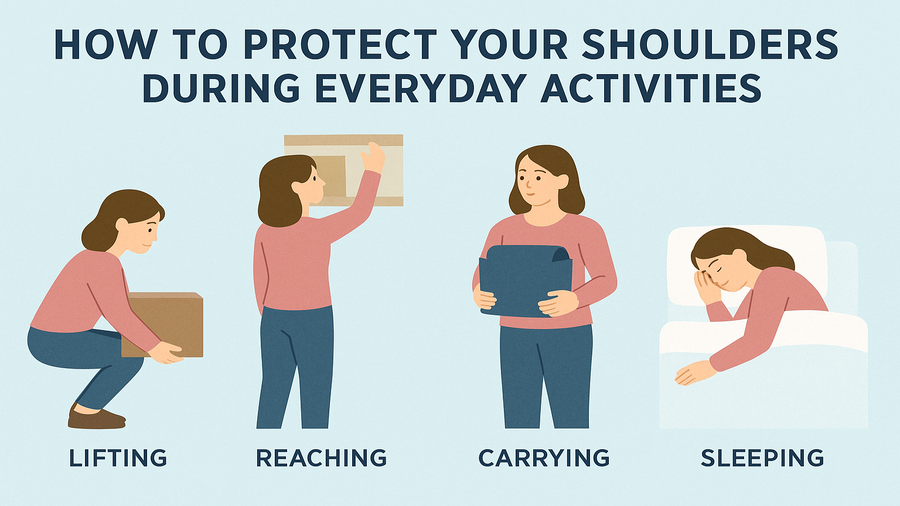
Your shoulders are probably the most versatile and the hardest working joints of your body that help you in most activities including picking up groceries and even typing on your desk. However it is surprising to find that because of poor posture, repetitive use or lack of attention, shoulder injuries are a common phenomena despite their high amount of significance. As a way of averting pain and permanent injury, it is important to learn how to safeguard your shoulders when performing daily activities.
Also Read: 15-Minute Shoulder Pain Relief: Easy Exercises You Can Do Anywhere
Pick a Good Posture
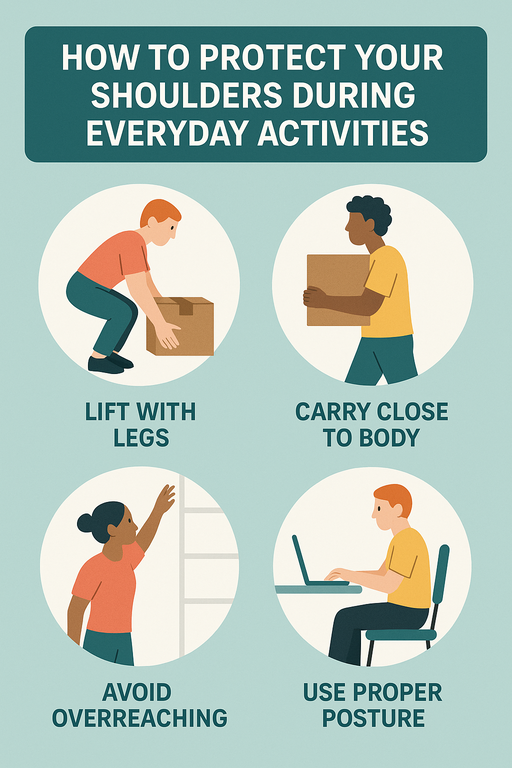
A good posture is a very easy method of preventing shoulder injuries. Brushing or a poor posture in a sitting position exert unwarranted strain on the shoulder joints. Keep your back straight and relax your shoulders downward. Keep your elbows close to your body. This posture reduces strain and lowers the risk of misalignment that can lead to shoulder ache.
Also Read: 10 Gentle Workouts to Help Lower Back Pain at Home
Lift with Care
Shoulder ache greatly occurs through improper lifting of heavy weights. Always bend your knees and use your legs to lift, not your back or shoulders. Keep objects close to your body to prevent arm strain and reduce the risk of muscle or rotator cuff injuries. It is one of the most typical causes of shoulder pain that individuals neglect most of the time at home or at the gym.
Incorporate Gentle Movement and Strengthening
The most important factor to shoulder health is preventative movement. Perform exercises on shoulder ache on a regular basis to develop strength and flexibility. Use exercises which stretch the shoulder muscles slightly and otherwise enhance joint stability. In case of a long-term experience of shoulder ache, physiotherapy exercises to relieve shoulder ache may significantly contribute to the improvement of mobility in the long term.
Also Read: 9 Easy Tricks to Relieve Lower Back Pain
Adjust Tasks that are Repeated Endlessly
Overuse injuries can result in the repetitive actions of the shoulder when typing, cleaning, cooking, etc. The issue is to make slight changes: use ergonomic instruments, get rest, switch hands whenever it is possible. These habits may be very useful in getting shoulder pain relief and eliminating the reasons for more intensive treatment of shoulder ache.
Also Read: Cupping Therapy: How Often Should You Schedule Sessions for Optimal Results?
Seek Professional Help In Case Of Need
In case of chronic discomfort, it is important to address a specialist. Brampton, Mississauga and Orangeville areas can avail the services of experienced physiotherapists who provide special care to shoulder pain. The clinics that provide the services of Shoulder Pain Treatment Brampton, Shoulder Pain Treatment Mississauga and Shoulder Pain Treatment Orangeville address the root cause by providing tailored care plans that may include manual therapy. dry needling, exercise-based rehabilitation, etc.
Also Read: What Are the 7 Principles of Massage Therapy?
FAQs
Q1. Which activities in daily life may cause pain in the shoulders?
A1: Avoid using your shoulders excessively—if you lift groceries, sleep in awkward positions, type too much, or frequently reach overhead, you can reduce shoulder ache by simply stopping or limiting these activities.In the long run, these activities can lead to targeted treatment of shoulder ache in case of neglect.
Q2. Is it possible to engage in shoulder joint pain exercise at home?
A2: Yes, a lot of exercise routines related to shoulder joint pain can be done at home provided its exercise involves stretching, and low-resistance strength. Nonetheless, a new routine must be conducted in the presence of a physiotherapist to prevent worsening the condition.
Q3. What is the efficacy of physiotherapy exercises to shoulder ache?
A3: Shoulder pain exercises under physiotherapy are very satisfying provided that they are done in line with your malady. They not only relieve pain but also make you stronger, increase the range of motion, and prevent future injury.
Also Read: Why Office Workers Experience Shoulder Pain and How to Fix It
Q4. What is the best exercise to protect your shoulders?
A4: The best exercises are gentle shoulder strengthening and stretching exercises. Shoulder blade squeezes, wall slides, and resistance band exercises help keep the shoulder muscles strong and improve movement. Always start slowly and stop if you feel pain.
Q5. What is the most common shoulder problem?
A5: One of the most common shoulder problems is rotator cuff injury. Other common conditions include frozen shoulder, shoulder arthritis, bursitis, and shoulder tendonitis. These problems can cause pain, stiffness, and difficulty lifting the arm.
Q6. What shoulder problems can happen with age?
A6: As people get older, the shoulder joint naturally wears down. Common age-related shoulder problems include arthritis, rotator cuff tears, frozen shoulder, tendonitis, and bursitis. Early treatment and regular exercise can help reduce pain and improve movement.
Q7. What are the best shoulder exercises for seniors?
A7: Some of the best shoulder exercises for seniors include:
- Shoulder rolls
- Wall walks
- Pendulum exercises
- Shoulder blade squeezes
- Resistance band exercises
- Gentle arm raises
These exercises help improve flexibility, strength, and balance. It is best to perform them under the guidance of a physiotherapist if you have shoulder pain.
Also Read: Frozen Shoulder vs. Rotator Cuff Tear: Key Differences and Symptoms
Q8. How can a 70-year-old woman build stronger shoulders?
A8: A 70-year-old woman can build shoulder strength by doing light resistance exercises with bands or small weights two to three times a week. Gentle stretching, good posture, and regular physical activity also help improve shoulder strength. A physiotherapist can create a safe exercise plan based on individual needs.
Q9. When should I see a physiotherapist for shoulder pain?
A9: You should see a physiotherapist if your shoulder pain lasts more than a few days, limits your daily activities, or makes it difficult to lift your arm. Early treatment can help reduce pain, improve movement, and prevent the problem from getting worse.
Q10. Can physiotherapy help with shoulder pain in older adults?
A10: Yes. Physiotherapy can help reduce shoulder pain, improve flexibility, increase strength, and restore normal movement. A personalized treatment plan may include exercises, manual therapy, posture correction, and pain management techniques to help seniors stay active and independent.
Also Read: How to Avoid Lower Back Pain While Lifting Heavy Items
Conclusion
Using some simple precautions, Awareness of the movements and early interventions you will prevent your shoulders and will experience a pain-free movement in the course of daily life.
Also Read: What Should You Not Do After Cupping?


Leave a Comment