

Welcome to New Hope Physiotherapy
- Brampton 905-846-4000
- Malton 905-364-3900
- Orangeville 519-217-9300
- admin@newhopephysio.com
Improving Your Quality of Life with Pelvic Floor Physiotherapy
 15 Apr 2023
- newhope
- 0 Comments
- 1276
Improving Your Quality of Life with Pelvic Floor Physiotherapy
Pelvic Floor Physiotherapy is a specialized type of physical therapy that aims to help individuals who experience problems with their pelvic floor muscles. These muscles form a sling-like structure at the bottom of the pelvis and are responsible for supporting the bladder, uterus, and rectum. When these muscles are weak, tight, or dysfunctional, it can lead to a range of issues, including urinary incontinence, pelvic pain, sexual dysfunction, and more.
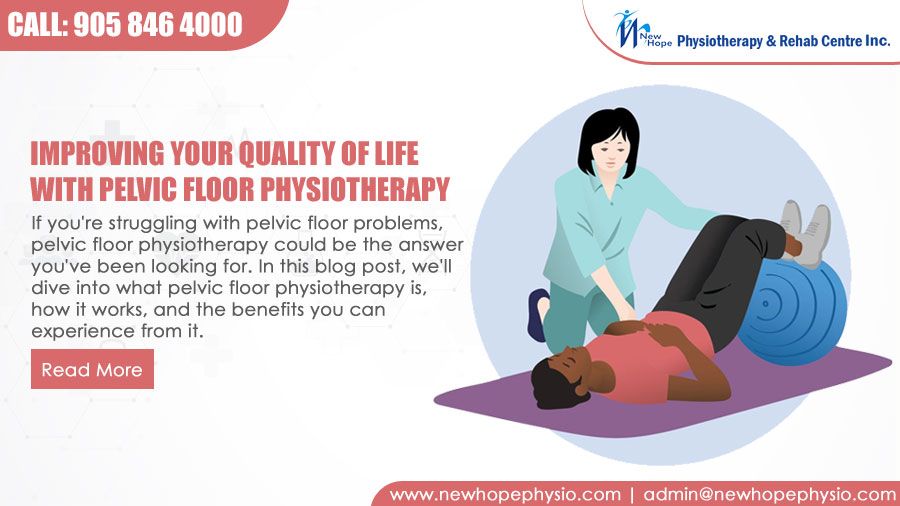
If you’re struggling with pelvic floor problems, pelvic floor physiotherapy could be the answer you’ve been looking for. In this blog post, we’ll dive into what pelvic floor physiotherapy is, how it works, and the benefits you can experience from it.
Also Read: 10 Gentle Workouts to Help Lower Back Pain at Home
What is Pelvic Floor Physiotherapy?
Pelvic Floor Physiotherapy is a form of physical therapy that focuses on the muscles, ligaments, and connective tissues that make up the pelvic floor. The therapy involves the assessment and treatment of conditions related to the pelvic floor muscles, including pelvic pain, incontinence, and sexual dysfunction. A pelvic floor physiotherapist will work with you to develop an individualized treatment plan tailored to your specific needs.
Assessment and Treatment
The first step in pelvic floor physiotherapy is a thorough assessment. Your therapist will ask you about your symptoms and medical history, as well as perform a physical examination of your pelvic floor muscles. They may also use techniques such as ultrasound or biofeedback to assess muscle function.
Once your therapist has determined the root cause of your pelvic floor dysfunction, they will create a treatment plan designed to help alleviate your symptoms. This plan may include exercises to strengthen weak muscles or stretches to release tight ones. Your therapist may also recommend lifestyle changes such as dietary adjustments or stress management techniques.
Also Read: 5 Quick Home Remedies for Leg Cramp Relief and Prevention
Benefits of Pelvic Floor Physiotherapy
Pelvic floor physiotherapy has been shown to be highly effective in treating a range of pelvic floor problems, including urinary incontinence, pelvic pain, and sexual dysfunction. By working with a pelvic floor physiotherapist, you can expect to see improvements in:
1. Urinary Incontinence:
Strengthening the pelvic floor muscles through exercises such as Kegels can help reduce or even eliminate episodes of urinary incontinence.
2. Pelvic Pain:
Pelvic floor physiotherapy can help to reduce pain and discomfort in the pelvic region, which can be caused by conditions such as endometriosis, interstitial cystitis, or vulvodynia.
3. Sexual Dysfunction:
Many women experience sexual dysfunction due to pelvic floor dysfunction. Pelvic floor physiotherapy can help improve sexual function by reducing pain, improving muscle tone, and increasing blood flow to the area.
4. Pregnancy and Postpartum Recovery:
Pelvic floor physiotherapy can be incredibly helpful during pregnancy and after childbirth. It can help prepare the pelvic floor muscles for labor and delivery and aid in postpartum recovery.
5. Improved Bowel Function:
Pelvic Floor Physiotherapy can help treat conditions like fecal incontinence, constipation, and difficulty passing stool. By strengthening the pelvic floor muscles and improving their coordination, bowel function can improve.
6. Reduced Pelvic Organ Prolapse:
Pelvic Organ Prolapse is a condition where the pelvic organs (bladder, uterus, or rectum) descend or bulge into the vaginal canal. Pelvic Floor Physiotherapy can help reduce the severity of prolapse and alleviate the symptoms associated with it.
7. Pre and Post-Surgical Care:
Pelvic Floor Physiotherapy can help patients prepare for surgery and recover better after it. For instance, women undergoing hysterectomy, prostatectomy, or colorectal surgery can benefit from pre and post-operative Pelvic Floor Physiotherapy.
Also Read: 5 Common Types of Back Pain You Should Know
8. Improved Posture and Balance:
Pelvic Floor muscles are interconnected with other muscles responsible for posture and balance. Strengthening these muscles can improve core stability, posture, and balance, reducing the risk of falls and injuries.
9. Improved Athletic Performance:
Pelvic Floor muscles play an essential role in athletic performance, especially in high-impact sports. Pelvic Floor Physiotherapy can help improve muscle coordination, strength, and endurance, leading to better athletic performance.
10. Relief from Pelvic Pain:
Pelvic pain can be caused by various factors, such as endometriosis, interstitial cystitis, or pelvic floor muscle tension. Pelvic Floor Physiotherapy can help identify and address the underlying causes of pelvic pain, reducing or eliminating the symptoms.
Overall, Pelvic Floor therapy can help individuals of all ages and genders. The therapy can provide significant benefits in addressing various Pelvic Floor Dysfunctions, improving quality of life, and reducing the need for surgical interventions.
Pelvic Floor Physiotherapy Techniques
Here are some common Pelvic Floor Physiotherapy techniques:
1. Kegel Exercises:
Kegel exercises involve contracting and relaxing the pelvic floor muscles. This technique can help improve muscle strength, endurance, and control.
2. Biofeedback:
Biofeedback is a technique that uses sensors to measure muscle activity and provide feedback to the patient. This technique can help patients learn how to activate and relax their pelvic floor muscles correctly.
3. Electrical Stimulation:
Electrical stimulation involves applying a low-level electrical current to the pelvic floor muscles. This technique can help stimulate muscle contraction, improve blood flow, and reduce pain.
4. Manual Therapy:
Manual therapy involves the use of hands-on techniques, such as massage and stretching, to improve muscle function and reduce tension.
5. Breathing Techniques:
Breathing exercises can help improve pelvic floor muscle coordination and relaxation. This technique involves breathing in and out slowly while focusing on relaxing the pelvic floor muscles.
Also Read: 10 Safe Ways to Treat Neck Pain during Pregnancy
6. Lifestyle Changes:
Lifestyle changes, such as maintaining a healthy weight, avoiding constipation, and reducing high-impact activities, can help reduce stress on the pelvic floor muscles and improve their function.
7. Pelvic Floor Muscle Relaxation:
Pelvic Floor Muscle Relaxation techniques can help patients who have pelvic floor muscle tension or pain. These techniques involve consciously relaxing the pelvic floor muscles to reduce tension and pain.
8. Bladder and Bowel Retraining:
Bladder and Bowel Retraining techniques involve developing a routine for using the bathroom to help improve bladder and bowel function. This technique can help reduce urgency, frequency, and incontinence.
9. Postural and Movement Education:
Postural and Movement Education can help patients learn proper body alignment and movement patterns to reduce stress on the pelvic floor muscles.
10. Education and Counseling:
Pelvic Floor Physiotherapists provide education and counseling to patients to help them better understand their condition, how the pelvic floor muscles work, and how to manage their symptoms.
11. Pelvic Floor Massage:
Pelvic Floor Massage involves the gentle manipulation of the muscles and connective tissues in the pelvic floor region. This technique can help relieve muscle tension and pain, improve circulation, and promote relaxation.
Overall, Pelvic Floor therapy techniques are designed to help patients improve their pelvic floor muscle function, reduce symptoms, and improve their quality of life. A Pelvic Floor Physiotherapist will assess each patient’s needs and develop a personalized treatment plan using a combination of techniques.
Conclusion
If you’re experiencing problems with your pelvic floor, It may be just what you need to get relief. With its focus on personalized treatment plans and non-invasive techniques, pelvic floor physiotherapy is a safe and effective way to address a range of pelvic floor problems. Contact a pelvic floor physiotherapist today to learn more about how you can benefit from this type of therapy.
Also Read: Shoulder Pain Solutions: 7 Essential Exercises for Quick Relief
FAQs:
1. What is pelvic floor physiotherapy?
Pelvic floor physiotherapy is a type of physiotherapy that helps strengthen and relax the muscles around the bladder, bowel, and pelvic organs. It can help improve pain, bladder control, bowel problems, and other pelvic health concerns.
2. Who can benefit from pelvic floor physiotherapy?
People of all ages and genders may benefit. It can help with issues such as pelvic pain, urinary leakage, constipation, pregnancy-related changes, and recovery after childbirth or surgery.
3. Can pelvic floor physiotherapy help with urinary leakage?
Yes. Specific exercises and treatment techniques can help improve pelvic floor muscle strength and control, which may reduce urinary leakage.
4. Can it help with pelvic pain?
Yes. Pelvic floor physiotherapy may help reduce pain by improving muscle movement, flexibility, strength, and relaxation. Your physiotherapist will create a treatment plan based on your needs.
5. Is pelvic floor physiotherapy helpful during pregnancy?
Yes. It can help prepare the pelvic floor for childbirth and may help manage common concerns such as pelvic pain, pressure, and bladder leakage during pregnancy.
6. Can pelvic floor physiotherapy help after childbirth?
Yes. It may support recovery after childbirth by helping improve pelvic floor strength, core function, bladder control, and overall movement.
7. What happens during a pelvic floor physiotherapy appointment?
Your physiotherapist will discuss your symptoms and health concerns and may assess your posture, movement, breathing, and pelvic floor muscles. Treatment may include exercises, education, manual therapy, and relaxation techniques.
8. How long does pelvic floor physiotherapy take to work?
Everyone responds differently. Some people notice changes within a few sessions, while others may need several weeks or months of treatment and regular exercises at home.
9. Do pelvic floor exercises help everyone?
Pelvic floor exercises can be helpful, but they are not the right approach for every person. Some people have pelvic floor muscles that are too tight and may need relaxation and other treatments instead of strengthening exercises.
10. How can pelvic floor physiotherapy improve my quality of life?
By addressing pelvic health problems, physiotherapy may help you move more comfortably, improve bladder or bowel control, reduce pain, and feel more confident during daily activities.
Also Read: What Should You Not Do After Cupping?
Gauravdeep Randhawa, Registered Physiotherapist
Gauravdeep Randhawa is a caring and experienced physiotherapist with over 17 years of experience helping patients recover and improve their quality of life.
She started her own practice in Canada in 2009 and has treated many patients with muscle, joint, sports, neurological, and pelvic health conditions. She has also owned and operated multidisciplinary clinics.
Gauravdeep is a Certified Manual Therapist and has completed training in Contemporary Medical Acupuncture and Pelvic Floor Therapy. She uses hands-on treatment, personalized exercise programs, and evidence-based care to support each patient’s recovery.
Her goal is to help people reduce pain, restore movement, improve function, and achieve long-term wellness in a comfortable and supportive environment.
Medical Disclaimer:
Pelvic floor physiotherapy may help improve strength, mobility, and daily comfort. Results can vary from person to person. This information is for general education and is not a substitute for professional medical advice, diagnosis, or treatment. Please consult a qualified healthcare professional for personalized care.


Leave a Comment