

Welcome to New Hope Physiotherapy
- Brampton 905-846-4000
- Malton 905-364-3900
- Orangeville 519-217-9300
- admin@newhopephysio.com
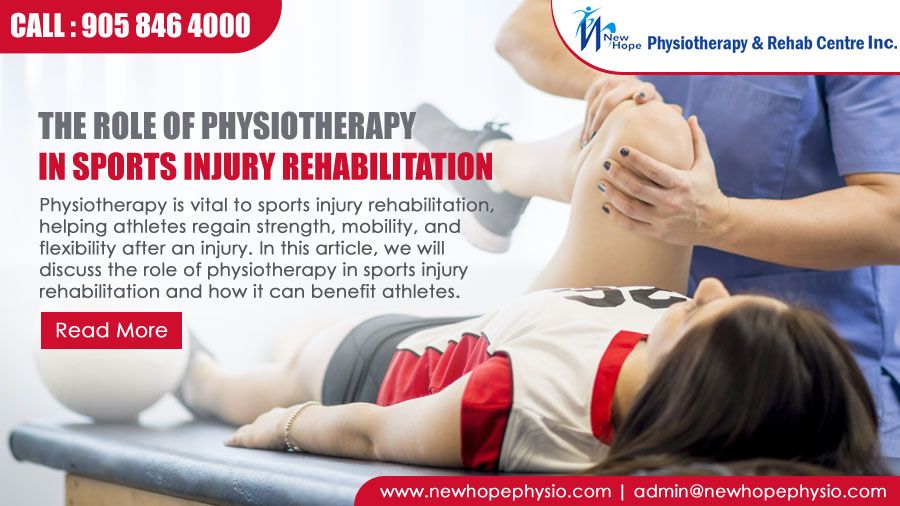
The Role of Physiotherapy in Sports Injury Rehabilitation
 20 Mar 2023
- newhope
- 0 Comments
- 1758
The Role of Physiotherapy in Sports Injury Rehabilitation
Whether you’re a weekend warrior or a competitive athlete, injuries are part of sport. A twisted ankle, a torn muscle, a bad fall — they happen to everyone. What separates a full recovery from a prolonged setback is often one thing: the quality of your rehabilitation.
Physiotherapy is the cornerstone of sports injury recovery. It gets you back on the field faster, stronger, and with a much lower risk of getting hurt again.
Also Read :Can Athletes Resume Sports Right After Chiropractic Treatment?
Why Sports Injuries Need Specialised Care
Sports injuries aren’t like everyday injuries. Athletes push their bodies to the limit — and they need to get back to doing exactly that after recovery. A generic approach just doesn’t cut it.
Physiotherapy for sports injuries focuses on:
- Eliminating pain and reducing inflammation
- Restoring full movement and flexibility
- Rebuilding strength and power
- Retraining balance and body awareness
- Getting you back to your sport safely — not just back to daily life

Also Read :How Sports Physiotherapy Helps You Bounce Back Stronger After Injuries
How Physiotherapy Helps Athletes Recover
1. Pain Management
Pain is the first barrier to recovery. If it’s not addressed properly, it limits everything else.
Physiotherapists use a range of techniques to manage pain:
| Technique | How It Helps |
|---|---|
| Manual therapy | Hands-on treatment to reduce tension and improve movement |
| Heat therapy | Relaxes muscles and improves blood flow |
| Cold therapy | Reduces swelling and numbs acute pain |
| Electrical stimulation (TENS) | Blocks pain signals and triggers natural pain relief |
| Ultrasound therapy | Reduces deep inflammation and promotes tissue healing |
Getting pain under control early means you can start moving sooner — which speeds up the entire recovery process.

Also Read: What Should You Not Do After Cupping?
2. Restoring Movement and Flexibility
After an injury, joints stiffen and muscles tighten. Your range of motion shrinks. For an athlete, this is a serious problem.
Physiotherapy uses targeted stretching and mobility exercises to:
- Loosen stiff joints and tight muscles
- Restore your full range of movement
- Improve tissue flexibility so you can perform at your best
- Reduce the risk of re-injury caused by compensating movements
3. Rebuilding Muscle Strength
Injured areas lose strength fast — sometimes within just a few days of reduced activity. Weak muscles mean unstable joints, and unstable joints mean a higher chance of getting hurt again.
Strength rehabilitation typically follows this progression:
Early Stage    → Gentle activation exercises, no load
      ↓
Mid Stage      → Resistance training with bands or light weights
      ↓
Later Stage    → Sport-specific strength and power work
      ↓
Final Stage    → Full training load, match intensity
Your physiotherapist controls the pace — pushing you forward when you’re ready and pulling back if needed.
4. Improving Balance and Body Awareness
This one often gets overlooked — but it’s critical for athletes.
After an injury, your body’s ability to sense its own position in space (called proprioception) is disrupted. This is why re-injury rates are so high without proper rehab.
Balance and proprioception training includes:
- Standing on unstable surfaces
- Single-leg exercises
- Sport-specific movement drills
- Reaction and agility training
Rebuilding this awareness is what truly protects you from future injuries.
5. Safe Return to Sport
This is the goal everything else builds toward. But returning too early is one of the most common reasons athletes get re-injured.
Also Read: 10 Gentle Workouts to Help Lower Back Pain at Home
Your physiotherapist will guide you through a structured return-to-sport programme that includes:
- Sport-specific movement testing
- Gradual reintroduction of training loads
- Performance benchmarks that must be met before full return
- Clear guidance on what to watch for during the transition
You don’t just get cleared and sent off. You’re guided every step of the way.

Also Read: 10 Safe Ways to Treat Neck Pain during Pregnancy
6. Preventing Future Injuries
Great physiotherapy doesn’t just fix the current injury — it stops the next one from happening.
How physiotherapists help prevent re-injury:
- Identifying weaknesses or imbalances that contributed to the original injury
- Teaching proper warm-up and cool-down techniques
- Advising on training load management
- Recommending the right equipment and footwear
- Providing a maintenance exercise programme to keep the body resilient
What Does a Sports Physiotherapist Actually Do?
A sports physiotherapist is a specialist in athletic injuries and performance. Here’s what your sessions typically involve:
Initial Assessment:
- Full evaluation of strength, flexibility, and balance
- Understanding how the injury happened
- Identifying contributing factors — not just the site of pain
- Setting clear, realistic recovery goals
Ongoing Treatment:
- Hands-on manual therapy
- Supervised exercise sessions
- Modalities like ultrasound, TENS, or laser therapy
- Progress monitoring and programme adjustments
Education and Support:
- Teaching you about your injury and recovery
- Home exercise programmes
- Injury prevention advice
- Coordination with coaches, doctors, or surgeons when needed
Common Sports Injuries Treated with Physiotherapy
Sprains and Strains
Ligament and muscle injuries are the most common in sport. Physio manages pain, restores movement, and rebuilds strength around the affected area.
Fractures
Once the bone is healing, physiotherapy prevents muscle wasting, maintains joint mobility, and guides a safe return to loading.
Tendinitis
Inflammation of a tendon — common in knees, elbows, and shoulders. Physio reduces irritation and progressively strengthens the tendon to handle load again.
Also Read: 5 Common Types of Back Pain You Should Know

Dislocations
After a joint is relocated, physiotherapy rebuilds the stability needed to prevent it happening again.
Rotator Cuff Injuries
Common in throwing and overhead sports. Physio restores shoulder strength, mobility, and the precise muscle coordination needed for sport-specific movements.
Knee Injuries (ACL, Meniscus, Patella)
Knee injuries are among the most complex in sport. Physio is essential both for conservative management and for post-surgical rehabilitation.
Also Read: 5 Quick Home Remedies for Leg Cramp Relief and Prevention
Concussions
Physiotherapy helps manage symptoms like dizziness, headaches, and balance problems — and follows a careful, step-by-step return-to-sport protocol.
The Main Goals of Sports Injury Physiotherapy — At a Glance
| Goal | How It’s Achieved |
|---|---|
| Reduce pain and swelling | Ice, heat, TENS, ultrasound, manual therapy |
| Restore range of motion | Joint mobilisation, stretching, mobility drills |
| Rebuild strength | Progressive resistance and loading exercises |
| Improve balance | Proprioception training, unstable surface work |
| Return to sport | Graduated sport-specific programme |
| Prevent re-injury | Strength maintenance, education, load management |
Also Read: 5 Conditions Causing Your Shoulder Pain
FAQs:
1. How soon after a sports injury should I see a physiotherapist?
As soon as possible — ideally within 24 to 48 hours of the injury. Early treatment controls swelling, prevents compensatory movement patterns from developing, and gives you a clear recovery plan right away. The sooner you start, the smoother and faster your recovery tends to be. Don’t wait for the pain to “settle” on its own if it’s not improving within a day or two.
2. Do I need a doctor’s referral to see a sports physiotherapist?
In most cases, no. You can book directly with a physiotherapy clinic without a referral. However, if your injury involves a suspected fracture, dislocation, or serious ligament damage, it’s worth seeing a doctor or going to emergency first to rule out anything that needs imaging or immediate medical attention. Your physiotherapist will let you know if they need a medical report to proceed.
3. I’ve been told I need surgery. Should I do physiotherapy before or after?
Both, ideally. Pre-surgery physiotherapy — sometimes called “prehab” — strengthens the muscles around the injured area before the operation, which leads to significantly better outcomes post-surgery. Post-surgical physiotherapy then guides your recovery, prevents complications, and gets you back to sport safely. If you’ve been told you need surgery, ask your surgeon about a referral for prehab.
4. What’s the difference between a sports physiotherapist and a regular physiotherapist?
A sports physiotherapist has additional specialised training in athletic injuries, sports performance, and return-to-sport protocols. They understand the demands of specific sports and the level of function an athlete needs to return to — not just day-to-day function. If you’re an athlete with a sports-related injury, seeing someone with sports physio experience will give you a more targeted and effective recovery plan.
5. How do I know when I’m truly ready to return to my sport?
You should be meeting specific physical benchmarks — not just feeling okay. These include full pain-free range of motion, strength that matches your uninjured side, passing sport-specific movement tests, and completing a graduated return-to-training programme without setbacks. Your physiotherapist will assess all of these before clearing you. Returning based on how you feel alone — without testing — is one of the most common causes of re-injury.
Also Read: Shoulder Pain Solutions: 7 Essential Exercises for Quick Relief
6. What is sports injury rehabilitation?
Sports injury rehabilitation is the process of helping your body recover after a sports injury. Physiotherapy helps reduce pain, improve movement, and safely return you to your sport or daily activities.
7. How can physiotherapy help with sports injuries?
Physiotherapy helps by reducing pain, improving flexibility, increasing strength, and restoring normal movement. It also helps prevent the injury from happening again.
8. What types of sports injuries can physiotherapy treat?
Physiotherapy can treat many sports injuries, including:
- Sprains and strains
- Knee injuries
- Shoulder injuries
- Tennis elbow
- Runner’s knee
- Ankle injuries
- Muscle tears
- Back and neck pain
9. When should I start physiotherapy after a sports injury?
It is best to start physiotherapy as soon as possible after your injury. Early treatment can reduce pain, speed up healing, and prevent long-term problems.
10. What happens during a physiotherapy session?
Your physiotherapist will assess your injury, explain the problem, and create a personalized treatment plan. Treatment may include exercises, manual therapy, stretching, and advice on safe movement.
11. How long does sports injury rehabilitation take?
Recovery depends on the type and severity of the injury. Some people recover in a few weeks, while others may need several months of rehabilitation.
12. Do I need a doctor’s referral for physiotherapy?
In many cases, you do not need a doctor’s referral to see a physiotherapist. However, some insurance plans may require one, so it’s a good idea to check your coverage.
13. Can I continue playing sports during rehabilitation?
It depends on your injury. Your physiotherapist will let you know which activities are safe and when you can gradually return to your sport.
14. Why should I choose physiotherapy for sports injury recovery?
Physiotherapy provides a safe, non-surgical, and personalized approach to recovery. It helps relieve pain, restore function, improve performance, and get you back to doing the activities you enjoy with confidence.
Final Thoughts
Sports injuries are setbacks — but they don’t have to define your season or your career. With the right physiotherapy support, most athletes recover fully and come back stronger than before.
The key is not just treating the injury, but treating the whole athlete. A good sports physiotherapist looks at what caused the injury, fixes it properly, and makes sure it doesn’t happen again.
If you’re dealing with a sports injury right now, don’t push through it and hope for the best. Get assessed, get a plan, and give your body the recovery it deserves.
Also Read: Frozen Shoulder vs. Rotator Cuff Tear: Key Differences and Symptoms
Medical Disclaimer:
This information is for general education only and does not replace professional medical advice. Every sports injury is different. A qualified physiotherapist or healthcare professional should assess your condition and recommend the right treatment and rehabilitation plan.
Prabhjot Kaur, Registered Physiotherapist
Prabhjot Kaur is a Registered Physiotherapist with over 10 years of clinical experience. She has been practicing since 2015 and holds a Master’s degree in Physiotherapy with a specialization in Neurology. She provides personalized care for people with neurological and musculoskeletal conditions. Her areas of focus include orthopedic and neurological rehabilitation, pain management, therapeutic exercises, balance and mobility training, and injury recovery. Prabhjot believes in a patient-centered approach and works closely with each individual to reduce pain, improve movement, restore function, and help them return to their daily activities with greater confidence and independence. She is registered with the College of Physiotherapists of Ontario.
Also Read: Top 5 Exercises for Strengthening Your Pelvic Floor


Leave a Comment