

Welcome to New Hope Physiotherapy
- Brampton 905-846-4000
- Malton 905-364-3900
- Orangeville 519-217-9300
- admin@newhopephysio.com
Why Spinal Disc or Degenerative Disc Disease Give Pain Symptoms?
 6 May 2022
- admin
- 0 Comments
- 1235
Why Spinal Disc or Degenerative Disc Disease Give Pain Symptoms?
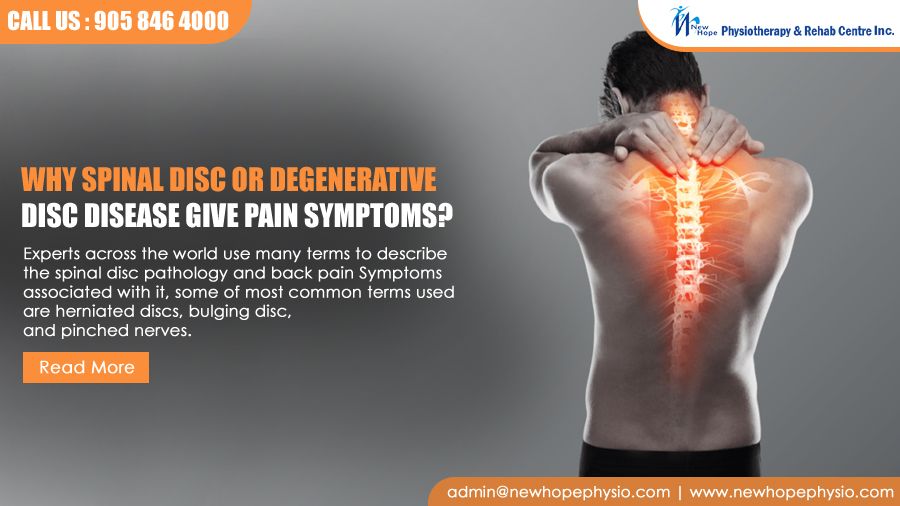
Why Spinal Disc or Degenerative Disc Disease Give Pain Symptoms? : Experts across the world use many terms to describe the spinal disc pathology and back pain Symptoms associated with it, some of most common terms used are herniated discs, bulging disc, and pinched nerves.
These terms are likely explain different symptoms, and at times the terms uses by experts are interchangeably because they do not agree on defining these terms precisely.
Also Read: What Should You Not Do After Cupping?
And at times it leads the frustration of patients when they come across that their diagnosis referred to in so many terms.
There are several terms like slipped disc, ruptured disc, bulging disc, degenerative disc disease and many others that are for identify the problems of a spinal disc.
Also Read : Dealing With Sciatica Pain? Give Physiotherapy A Try!
Spinal disc Problem-Understanding symptoms are imperative.
So the patient’s focus should not be on the term used to describe the spinal disc problems, rather it is more important for them to gain a clear understanding and know the actual symptoms.
The experts who can have an understanding of symptoms and causes of back pain. And if we talk about herniated disc symptoms, it includes numbness, burning, tingling, dull ache to severe pain, muscle weakness and loss of bladder control or bowel.
Also Read : Decrease Your Pain And Increase Your Energy With These 5 Easy Tips
Sitting posture also matters.
Sitting posture has always been one of the concerns of those who are having degenerative disc disease. If you are sitting for long duration, then it will be very painful for you. The reason behind is simple and well known, long hours of sitting create extra pressure in the back.
And the malady makes the people love to stand through the day, but they are hardly aware about the fact that long hours of standing may worsen the condition.
They can shuffle between standing and sitting, but the question arises how long one can go with such idea of shuffling. All it matters is the good posture that can help you to cure the malady to a large extent.
Also Read : How To Alleviate Pelvic Girdle Pain During Pregnancy?
Duration counts.
So standing alone is not going to resolve the problem. And is important to understand the importance of good posture.
But if you are standing at a particular place for a long duration in a correct posture, it will also lead to cause pain.
What is more important is to create a blend of sitting and standing and that too in a correct posture. Time and again we talking about the duration and right posture, so how long a posture needs to maintained is the question arises here.
It’s good to have a posture not more than for 20-30 minutes. Which means you have to get up and move after this duration
Also Read : Physiotherapy For Neck Pain And Headaches Treatment

Different people experience pain differently. If they are suffering from spinal problems like degenerative disc disease, slipped disc, bulging disc, and others. In most cases the physiotherapist suggests such people go for strengthening exercises, flexibility stretches targeting core and back muscles.
A physiotherapist can also advise you the practical ways to mitigate the pain Symptoms. Physiotherapy has its benefits when it comes to spinal problems. They focus on mitigating the pain, increasing functioning and educate. The patients in a way to prevent the further recurrence of pain.
Also Read : How To Get Rid Of Back Pain Fast
FAQS:
1. How can I stop degeneration of the spine?
You may not be able to completely stop spinal degeneration, but you can slow it down. Regular exercise, good posture, maintaining a healthy weight, and avoiding smoking can help keep your spine healthier for longer.
2. Can you live pain-free with degenerative disc disease?
Yes, many people with degenerative disc disease live with little or no pain. Physiotherapy, stretching, exercise, and healthy lifestyle habits can help manage symptoms and improve daily comfort.
3. How long does pain from degenerative disc disease last?
The duration varies from person to person. Some people experience pain for a few weeks, while others may have recurring symptoms over months or years. Proper treatment can help reduce pain and prevent flare-ups.
4. How risky is surgery for degenerative disc disease?
Spine surgery is generally safe when performed by an experienced surgeon, but like any surgery, it carries some risks such as infection, bleeding, or nerve injury. Surgery is usually considered only when other treatments have not provided relief.
5. What is the best treatment for degenerative discs?
The best treatment depends on your symptoms. Common options include physiotherapy, exercise programs, pain management, lifestyle changes, and posture correction. In severe cases, a doctor may recommend injections or surgery.
Also Read: 10 Gentle Workouts to Help Lower Back Pain at Home
6. What is degenerative disc disease?
Degenerative disc disease happens when the discs between the bones of your spine wear down over time. As the discs lose water and flexibility, they may not absorb shock as well, which can lead to pain and stiffness.
7. Why do spinal discs cause pain?
A damaged or worn disc can irritate nearby nerves, cause inflammation, or reduce the space between the spinal bones. This may result in pain in the neck or back and sometimes pain that travels to the arms or legs.
8. What are the common symptoms of degenerative disc disease?
Common symptoms include:
- Back or neck pain
- Stiffness
- Pain that gets worse with sitting, bending, or lifting
- Numbness or tingling in the arms or legs
- Weakness in the muscles if a nerve is affected
9. Can degenerative disc disease get better without surgery?
Yes. Many people feel better with physiotherapy, exercise, good posture, pain management, and lifestyle changes. Surgery is usually only recommended if other treatments do not help or there is severe nerve damage.
Also Read: 5 Common Types of Back Pain You Should Know
10. Who is more likely to develop degenerative disc disease?
The risk is higher with:
- Aging
- Heavy lifting
- Poor posture
- Repetitive movements
- Smoking
- Being overweight
- Previous back injuries
11. How can physiotherapy help with spinal disc pain?
Physiotherapy can help reduce pain, improve flexibility, strengthen the muscles that support your spine, and improve posture. A personalized treatment plan can also help you return to your daily activities safely and lower the risk of future pain.
Also Read: What Should You Not Do After Cupping?
Medical Disclaimer:
This content is for general information only and does not replace professional medical advice. Spinal disc problems can have different causes and symptoms. Please consult a qualified healthcare professional for proper assessment and treatment.


Leave a Comment