
Welcome to New Hope Physiotherapy
- Brampton 905-846-4000
- Malton 905-364-3900
- Orangeville 519-217-9300
- admin@newhopephysio.com
How Many Months Does Pelvic Floor Therapy Take?
8 May 2026
- Comments
- 77
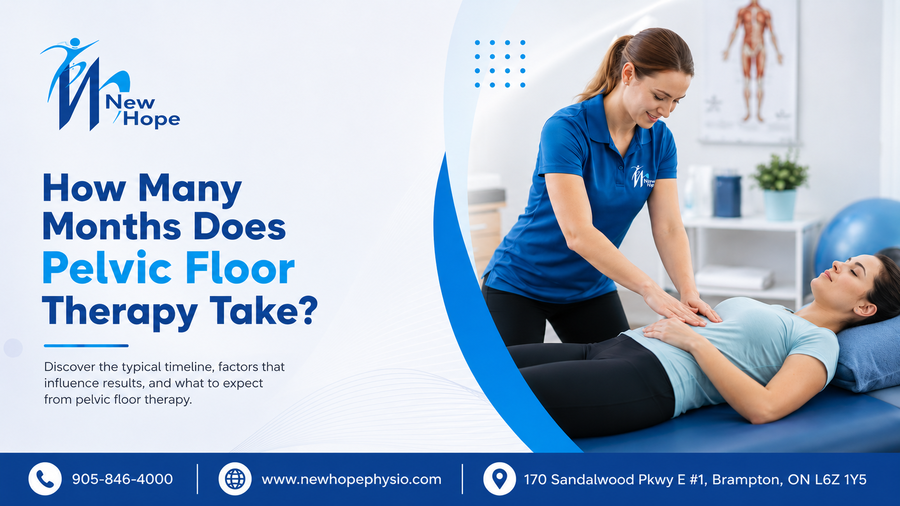
How Many Months Does Pelvic Floor Therapy Take?
This is one of those questions where you kind of want a straight answer… like “3 months” or “6 weeks” and that’s it.
But pelvic floor therapy doesn’t really work like that. I tried to find a clear answer at one point and everything online felt either too clinical or too vague. Like “it depends”… which is true, but also not helpful when you’re just trying to plan your life.
So yeah, if you’re wondering how many months pelvic floor therapy takes — the honest answer is somewhere between “not that long” and “longer than you think.” Which I know is not ideal. But I’ll try to explain it in a way that actually makes sense.
Also Read: Strengthen Your Pelvic Floor: 8 Essential Yoga Poses
How it usually starts
For me, it didn’t start with something dramatic. It was more like small issues that kept repeating.
Discomfort. Weird pressure. Sometimes feeling like something just wasn’t working properly down there… which is hard to explain without sounding vague.
A lot of people go for pelvic floor physiotherapy for different reasons:
- After pregnancy (pelvic floor physiotherapy pregnancy is a big one)
- Bladder issues
- Pain during certain movements or even sitting
- Core weakness that doesn’t improve with regular workouts
And sometimes you don’t even know it’s pelvic floor related at first. You just know something feels off.
So… how long does pelvic floor therapy actually take?
Okay, this is the main thing.
From what I’ve seen (and experienced), most people are looking at around 2 to 4 months of pelvic floor therapy. Sometimes shorter, sometimes longer.
But here’s the part that doesn’t get said clearly enough — it’s not just about how many months you go to sessions. It’s about what you do in between.
Also Read: 36 questions should I ask a Physiotherapist?
Like, you might have:
- Weekly sessions at first
- Then bi-weekly
- Then check-ins
But the real progress? That comes from the exercises you do at home.
Pelvic floor muscles exercises are usually simple, but also kind of easy to forget. Or do halfway. I definitely didn’t get them right at first.
So yeah, someone could technically finish in 2 months… or take 5. It depends how consistent things are.
What it actually feels like
I thought pelvic floor therapy would be mostly exercises. It is… but it’s also a bit more than that.
There’s a lot of awareness involved. Like learning how to even find your pelvic floor muscles properly. Sounds obvious, but it’s not.
Sometimes it feels like nothing is happening. Then suddenly you notice small improvements. Like better control, less discomfort.
And then some days it feels like you’re back at the start. Which is frustrating.
Also, side note, it felt a bit awkward at first. Not gonna lie. But that goes away pretty quickly once you realize it’s just… normal for them.
Also Read: 10 Gentle Workouts to Help Lower Back Pain at Home
Things that actually helped speed things up
I kept thinking there must be a way to make it go faster. Not in a rushed way, just… more efficient.
A few things helped:
Doing the exercises regularly
This sounds obvious, but missing a few days actually made a difference.
Not overdoing it
At one point I thought doing more reps would help. It didn’t. It just made things feel more strained.
Understanding the “why”
When I understood what the exercises were doing, it was easier to stay consistent.
Getting proper guidance
This is where something like Pelvic Floor Physiotherapy (especially at places like New Hope Physio in Brampton, Mississauga, or Orangeville) helps. They don’t just give random exercises — they adjust things based on how you’re progressing.
Which, honestly, makes it less confusing.
When it takes longer than expected
Sometimes it doesn’t follow that 2–4 month range.
That can happen if:
- The issue has been there for a long time
- You’re not consistent (happens more than people admit)
- There are other factors involved, like posture or core strength
Also, pelvic floor muscles female can behave differently depending on things like pregnancy, stress, or even daily habits.
So yeah, it’s not always a straight line. Some weeks feel like progress, others feel like nothing changed.
Also Read: 5 Quick Home Remedies for Leg Cramp Relief and Prevention
When you should probably get help instead of guessing
If you’re trying to figure things out on your own and it’s not improving, it’s probably worth looking into proper pelvic floor physiotherapy near me (wherever you are).
Especially if:
- Symptoms keep coming back
- You’re unsure if you’re doing exercises correctly
- There’s pain involved
- Things feel… off but you can’t explain how
I tried figuring things out through random advice (even went down a pelvic floor physiotherapy Reddit rabbit hole at one point), and it just made things more confusing.
Getting proper guidance made things clearer pretty quickly.
FAQs
1. How many months does pelvic floor therapy take?
Usually around 2 to 4 months, but it depends on consistency and the issue.
2. Can pelvic floor therapy work faster?
Sometimes, if the issue is mild and you stay consistent with exercises.
3. Do I need sessions every week?
At the start, usually yes. Then it becomes less frequent.
4. Are pelvic floor muscles exercises hard?
Not really, but they take practice to do correctly.
5. Is pelvic floor physiotherapy only for pregnancy?
No, it’s for many different conditions. Pregnancy is just one common reason.
6. Can I do pelvic floor therapy at home?
You can do exercises at home, but guidance helps a lot.
7. Why is progress sometimes slow?
Because the muscles are small and need consistent training over time.
8. Is pelvic floor therapy uncomfortable?
It can feel a bit awkward at first, but not usually painful.
9. What if I don’t see results after a month?
That can happen. It doesn’t always improve quickly.
10. Does everyone need the same amount of time?
No, it varies a lot from person to person.
Conclusion
If I had to give a simple answer — pelvic floor therapy usually takes a few months. Not forever, but not instant either.
The part I didn’t expect was how much consistency matters. It’s not just about showing up to sessions, it’s what you do in between.
And honestly, it’s a bit of trial and error at first. Figuring out what works, what doesn’t, what actually helps.
If things aren’t improving or you’re just not sure what you’re doing (which is fair), getting proper Pelvic Floor Physiotherapy — whether in Brampton, Mississauga, Orangeville, or nearby — probably makes the whole process smoother. Or at least less confusing. Which, for me, was a big part of it.
Also Read: Top 10 Questions Athletes Ask About Sports Physiotherapy


Leave a Comment