
Welcome to New Hope Physiotherapy
- Brampton 905-846-4000
- Malton 905-364-3900
- Orangeville 519-217-9300
- admin@newhopephysio.com
How We Successfully Treated Frozen Shoulder in a 60-Year-Old Brampton Patient
 30 Jun 2026
How We Successfully Treated Frozen Shoulder in a 60-Year-Old Brampton Patient
Frozen Shoulder Can Make Everyday Life Difficult
A Frozen Shoulder can make even simple tasks feel frustrating. Lifting your arm, reaching for a shelf, getting dressed, or sleeping on one side can become painful. Many people think it will go away on its own, but without the right care, it can take a very long time to improve.
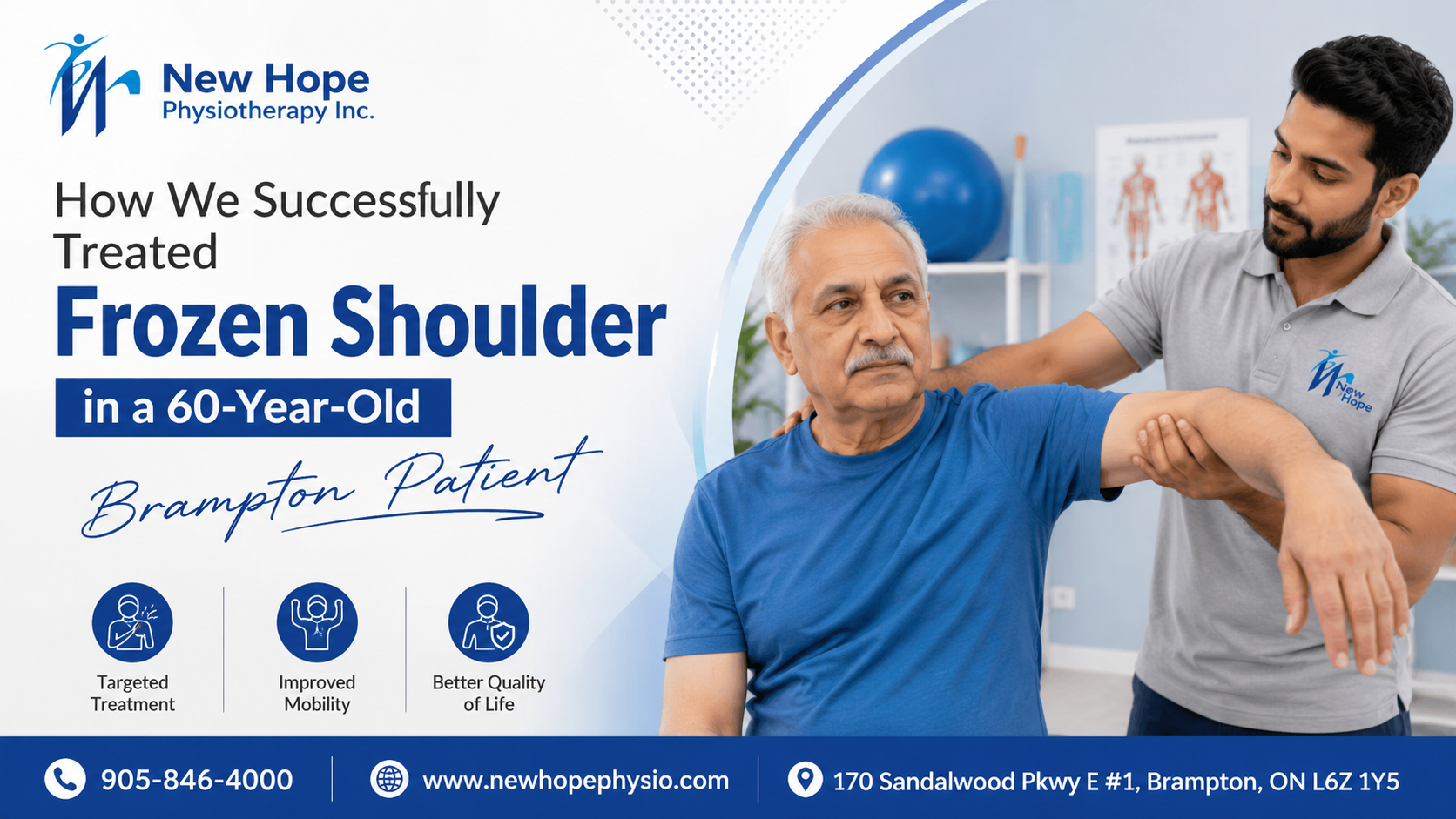
At our clinic, we recently helped a 60-year-old patient from Brampton recover from a painful frozen shoulder. Every patient is different, but this story shows how the right plan, patience, and Frozen Shoulder Physiotherapy can make a big difference.
Also Read: Frozen Shoulder vs. Rotator Cuff Tear: Key Differences and Symptoms
What Is Frozen Shoulder?
Many people ask, what is frozen shoulder?
It is a medical condition characterized by stiffness and pain in the shoulder joint. The tissues surrounding the joint tighten making movement of the arm difficult.
Common causes include:
- Diabetes
- Shoulder injury
- Surgery
- Long periods without moving the shoulder
- Sometimes it develops without a clear reason
It usually develops slowly over several months.
Frozen Shoulder Symptoms
Some of the most common Adhesive Capsulitis symptoms include:
- Pain in the shoulder
- Stiffness that gets worse over time
- Difficulty lifting the arm
- Trouble reaching behind your back
- Pain while sleeping
- Limited range of motion
Many people notice that even brushing their hair or putting on a jacket becomes difficult.
A Real Patient Story
One of our patients, a 60-year-old Brampton resident, came to our clinic after living with shoulder pain for several months.
The pain started gradually. At first, it only bothered her while reaching overhead. Later, even simple tasks became difficult. She could not comfortably fasten her seatbelt, reach kitchen cabinets, or sleep on her right side.
She had already tried resting the shoulder, but the stiffness continued to get worse.
After a full assessment, we found that her shoulder movement was very limited, which matched the signs of Frozen Shoulder.
We created a treatment plan that included:
- Gentle stretching
- Range-of-motion exercises
- Manual therapy
- Heat therapy when appropriate
- Home exercise program
- Regular progress checks
The first few weeks were slow. That is normal with Adhesive Capsulitis.
After several weeks, she noticed less pain. Then she slowly regained movement.
Within a few months, she could lift her arm much higher, drive comfortably again, and sleep with much less pain.
Her recovery took time, but steady treatment helped her return to her normal daily activities.
Also Read: Shoulder Pain Solutions: 7 Essential Exercises for Quick Relief
Frozen Shoulder Treatment
Everyone’s frozen shoulder treatment is unique.
Your physiotherapist will evaluate your shoulder before devising your treatment strategy.
Treatment may include:
- Gentle stretching
- Manual therapy
- Joint mobilization
- Pain management
- Home exercises
- Education about daily activities
This does not mean that you need to stretch but that you need to gain mobility while minimizing pain.
Frozen Shoulder Exercises
Simple frozen shoulder exercises are often one of the most important parts of recovery.
Examples include:
- Pendulum swings
- Finger wall walks
- Cross-body stretches
- Towel stretches
- Gentle shoulder rotations
These exercises should be done correctly. Doing too much too soon may increase pain.
Always follow your physiotherapist’s advice.
Frozen Shoulder Physiotherapy
Frozen Shoulder Physiotherapy helps improve movement in a safe way.
Your physiotherapist may use:
- Hands-on treatment
- Guided stretching
- Mobility exercises
- Strengthening exercises
- Home exercise plans
- Advice for daily activities
Treatment is adjusted as your shoulder improves.
Small improvements each week often lead to good long-term results.
How to Cure Frozen Shoulder Quickly
Many patients ask, how to cure frozen shoulder quickly?
The honest answer is that Adhesive Capsulitis usually cannot be rushed.
However, recovery may improve by:
- Starting treatment early
- Following your exercise program
- Staying consistent
- Avoiding complete rest
- Attending physiotherapy appointments
Trying to push through severe pain or ignoring the problem may delay recovery.
Also Read: 10 Gentle Workouts to Help Lower Back Pain at Home
How We Help Treat Frozen Shoulders
Our clinic focuses on helping patients Treat Frozen Shoulders safely and gradually.
We create treatment plans based on:
- Your age
- Pain level
- Stage of frozen shoulder
- Daily activities
- Overall health
We also teach patients how to safely move their shoulder between appointments.
Looking for Frozen Shoulder Treatment Brampton?
Frozen Shoulder Treatment Brampton – Early Diagnosis is Key!
Some patients may have to wait for months until they seek treatment due to the belief that their pain will go away on its own.
By having your condition diagnosed at an early stage, you will be able to start treatment without having your stiffness worsen further.
We provide treatment for people of any age with the goal of reducing pain and improving movement.
Tips for Recovery
Here are a few simple tips:
- Keep moving your shoulder gently.
- Follow your home exercises.
- Don’t skip physiotherapy appointments.
- Avoid lifting heavy objects if painful.
- Be patient with your recovery.
- Sleep in a comfortable position using pillows if needed.
Recovery is often gradual, but small improvements add up over time.
Also Read: 5 Common Types of Back Pain You Should Know
Frequently Asked Questions
1. How do you treat a frozen shoulder in the older people?
Treatment usually includes physiotherapy, gentle stretching, pain management, and home exercises. The goal is to reduce pain and slowly improve shoulder movement.
2. Can you get frozen shoulder at 70?
Yes. Frozen shoulder can happen at age 70 and beyond. Older adults often benefit from early physiotherapy to maintain shoulder movement.
3. What is the average age for a frozen shoulder?
Adhesive Capsulitis most commonly affects adults between 40 and 60 years old, although it can occur outside this age range.
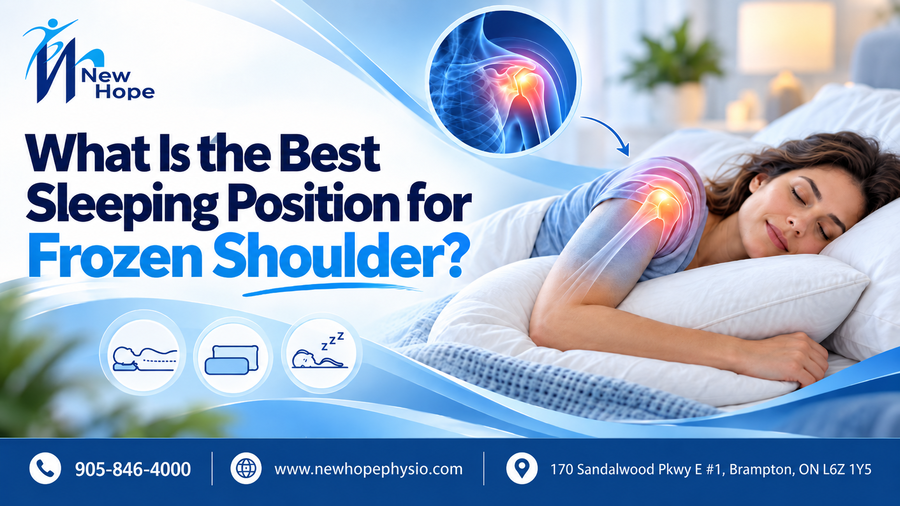
4. How to sleep with a frozen shoulder?
Sleep on your back or on the unaffected side. Placing a pillow under the affected arm may improve comfort during the night.
5. How long does it take to rehab a frozen shoulder?
Recovery varies from person to person. Many people improve over several months, while some cases may take one to two years for full recovery.
Also Read: What Should You Not Do After Cupping?
6. Does heat help a frozen shoulder?
Heat may help relax muscles and reduce stiffness before stretching or exercise. Your physiotherapist can advise when heat is appropriate.
7. Can a chiropractor help frozen shoulder?
Some people may find temporary relief with chiropractic care, but physiotherapy is commonly recommended to improve shoulder movement through guided exercises and rehabilitation.
8. How long does a frozen shoulder last?
Adhesive Capsulitis often lasts between one and three years, depending on the stage of the condition and the treatment received.
9. What not to do with a frozen shoulder?
Avoid forcing painful movements, lifting heavy objects without guidance, or completely stopping all shoulder movement for long periods.
10. What not to eat if you have frozen shoulder?
There is no specific diet that causes or cures frozen shoulder. Eating a balanced diet with fruits, vegetables, lean protein, and whole grains supports overall health.
11. Does wearing a sling help with frozen shoulder?
A sling is usually not recommended for long-term use because keeping the shoulder still may increase stiffness. Your physiotherapist will advise if short-term support is appropriate.
Also Read: 5 Conditions Causing Your Shoulder Pain
Leave a Comment