
Welcome to New Hope Physiotherapy
- Brampton 905-846-4000
- Malton 905-364-3900
- Orangeville 519-217-9300
- admin@newhopephysio.com
Foot Pain After Standing All Day: Causes and Simple Relief Tips
 28 Aug 2026
Foot Pain After Standing All Day: Causes and Simple Relief Tips
Standing for many hours can leave your feet tired, sore, or swollen. You may notice aching in your heels, arches, toes, or even the top of the foot.
For some people, the pain improves after resting. For others, it keeps coming back every day.
If you often deal with foot pain in Brampton, it can help to understand what may be causing it and what simple steps may provide relief.
Also Read: What Are Foot Massages? – Techniques and Benefits
Why Do Your Feet Hurt After Standing All Day?
Your feet support your full body weight whenever you stand or walk. Long hours on hard floors can place extra pressure on the muscles, joints, ligaments, and tendons in your feet.
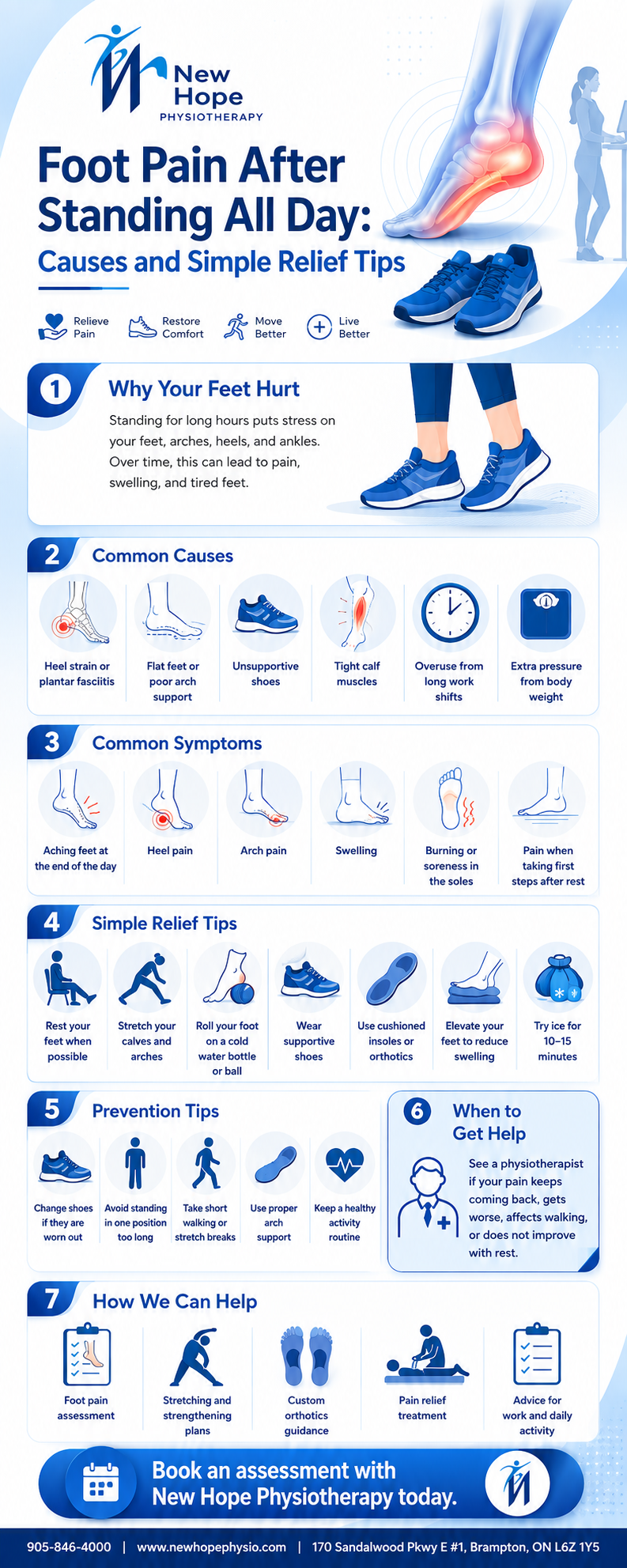
Common foot pain causes include:
- Standing for long periods
- Wearing shoes with poor support
- Walking on hard surfaces
- Flat feet
- High arches
- Tight calf muscles
- Being on your feet more than usual
- Overuse during work or exercise
- Previous foot injuries
- Poor foot posture
Jobs that involve retail, construction, healthcare, warehouses, restaurants, and factories can put extra strain on the feet.
Common Types of Foot Pain
There are many types of foot pain, and the location of the discomfort can provide clues about the cause.
Heel Pain
Heel pain may become worse after standing or walking for several hours.
It can sometimes be linked to irritation of the plantar fascia, which is the strong band of tissue along the bottom of your foot.
Foot Arch Pain
Foot arch pain can happen when the muscles and tissues supporting the arch become tired or strained.
People with flat feet or very high arches may notice this more often.
Pain on the Bottom of the Foot
If you are wondering how to relieve pain on the bottom of the foot, rest and gentle stretching may help in mild cases.
Supportive shoes may also reduce pressure.
Also Read: Revitalize Your Body: The Incredible Health Advantages of Foot Massage
Top of Foot Pain
Top of foot pain can sometimes occur because of tight shoes, overuse, tendon irritation, or increased activity.
Avoid shoes that place pressure directly over the painful area.
Sudden Foot Pain Without Injury
You may occasionally develop sudden foot pain without injury.
This can happen from overuse, footwear changes, inflammation, or other foot conditions. Sudden or severe pain should not be ignored, especially if you cannot walk normally.
Simple Ways to Relieve Foot Pain After Standing
If your pain is mild and related to a long day on your feet, a few simple steps may help.
1. Give Your Feet a Break
Sit down when possible and avoid unnecessary walking for a short time.
Elevating your feet may also help if they feel swollen.
2. Stretch Your Feet and Calves
Gentle stretching can reduce tightness.
Try this simple stretch:
- Face a wall.
- Place one foot behind the other.
- Keep your back heel on the floor.
- Slowly lean forward.
- Hold for about 20 to 30 seconds.
- Switch sides.
Do not force a stretch if it causes sharp pain.
3. Roll the Bottom of Your Foot
A gentle massage may help tired foot muscles.
You can slowly roll your foot over:
- A tennis ball
- A massage ball
- A cold water bottle
Some people searching for how to relieve foot pain in 30 seconds may find that a short foot roll or gentle stretch gives temporary relief. However, ongoing pain usually needs more than a quick fix.
Also Read: 10 Gentle Workouts to Help Lower Back Pain at Home
4. Check Your Shoes
Your shoes should fit properly and give your feet enough support.
Avoid footwear that is:
- Too tight
- Worn out
- Completely flat
- Unsupportive
- Too narrow around the toes
Proper footwear can make a major difference when you stand for long hours.
Can Custom Orthotics Help?
For some people, foot pain is related to how the foot moves or how body weight is spread across the foot.
Custom Orthotics in Brampton may be recommended to provide added support and help reduce pressure on certain areas.
Orthotics may help people with:
- Flat feet
- High arches
- Heel discomfort
- Arch pain
- Uneven foot pressure
- Certain walking problems
Custom orthotics differ from general orthotics available at stores. They are created after an assessment of your feet and their needs.
In case you consider Orthotics in Brampton, a foot assessment will help to figure out whether they are appropriate for you.
Also Read: 5 Common Types of Back Pain You Should Know
When Should You Visit a Foot Clinic?
Foot pain that keeps returning should not simply become part of your daily routine.
Consider contacting a Brampton foot clinic or healthcare professional if:
- Pain lasts for several days
- Pain keeps getting worse
- You cannot put weight on your foot
- Your foot becomes very swollen
- You notice redness or warmth
- You experience numbness or tingling
- Your pain started after an injury
Searching for a foot clinic near me may help you find professional care if home remedies are not enough.
Preventing Foot Pain at Work
Small changes during your workday may reduce strain.
Try to:
- Change positions regularly
- Sit during breaks when possible
- Stretch your calves and feet
- Wear supportive shoes
- Avoid standing completely still for hours
- Replace worn-out footwear
- Use supportive insoles when appropriate
Taking care of your feet early may help prevent minor discomfort from becoming a bigger problem.
Also Read: What Should You Not Do After Cupping?
Frequently Asked Questions
1. How to relieve foot pain from standing too long?
Rest your feet, elevate them, gently stretch your calves and arches, and wear supportive footwear. A gentle foot massage or rolling your foot over a ball may also provide temporary relief.
2. What are 5 foot symptoms you should never ignore?
Seek medical advice if you have severe pain, major swelling, numbness, redness or warmth, or if you suddenly cannot put weight on your foot. These symptoms may need further assessment.
3. What is the best sleep position for foot pain?
There is no single sleep position that works for every type of foot pain. Keeping your feet in a comfortable and relaxed position may help. If swelling is present, slightly elevating the foot may feel more comfortable.
4. What exercises can I do to relieve foot pain?
Gentle calf stretches, toe stretches, ankle circles, and rolling the bottom of your foot over a ball may help with mild tightness. Stop if an exercise increases your pain.
5. Why do the bottoms of my feet hurt after standing all day?
Long periods of standing can strain the muscles and tissues on the bottom of your feet. Poor footwear, flat feet, high arches, and hard flooring can make the discomfort worse.
Also Read: Knee Pain After Sitting Too Long: Causes and Tips
6. Can custom orthotics help foot pain?
They may help certain people by supporting the feet and changing how pressure is spread while standing or walking. An assessment can determine whether custom orthotics are appropriate for you.
7. Why does the top of my foot hurt without an injury?
Possible reasons include overuse, tight footwear, tendon irritation, or changes in activity. Persistent or sudden severe pain should be assessed by a healthcare professional.
8. Should I walk if my foot hurts?
Light walking may be fine for mild discomfort, but avoid activities that make the pain worse. If you are limping or cannot comfortably bear weight, seek medical advice.
9. How long should foot pain last after standing all day?
Simple tiredness may improve after several hours of rest. Pain that continues, becomes worse, or happens repeatedly may need professional assessment.
10. When should I visit a foot clinic for foot pain?
Consider visiting a healthcare professional if your pain keeps returning, limits normal activities, follows an injury, or comes with swelling, weakness, numbness, redness, or difficulty walking.
Medical Disclaimer:
This article is for general information only and is not a substitute for medical advice, diagnosis, or treatment. If you have ongoing, severe, or sudden foot pain, speak with a qualified healthcare professional.
Also Read: 6 Natural Knee Pain Remedies You Can Easily Try at Home
Gauravdeep Randhawa, Registered Physiotherapist
Gauravdeep Randhawa is a caring and experienced physiotherapist with over 17 years of experience helping patients recover and improve their quality of life.
She started her own practice in Canada in 2009 and has treated many patients with muscle, joint, sports, neurological, and pelvic health conditions. She has also owned and operated multidisciplinary clinics.
Gauravdeep is a Certified Manual Therapist and has completed training in Contemporary Medical Acupuncture and Pelvic Floor Therapy. She uses hands-on treatment, personalized exercise programs, and evidence-based care to support each patient’s recovery.
Her goal is to help people reduce pain, restore movement, improve function, and achieve long-term wellness in a comfortable and supportive environment.


Leave a Comment