

Welcome to New Hope Physiotherapy
- Brampton 905-846-4000
- Malton 905-364-3900
- Orangeville 519-217-9300
- admin@newhopephysio.com
Osteoarthritis Treatment in Brampton: Exploring Physiotherapy and Rehabilitation Options
 9 Nov 2024
- newhope
- 0 Comments
- 876
Osteoarthritis Treatment in Brampton: Exploring Physiotherapy and Rehabilitation Options
Arthritis rheumatoid is classified as a type of arthritis that affects the masses especially as individuals grow old and is probably some of the most popular arthritic conditions. Rheumatism is an outcome of gradual wearing of the cartilages of the body and leads to pains, stiffnesses of the joints, and reduction in movements. However, there are many choices when it comes to physiotherapy and rehabilitation services for osteoarthritis in Brampton, and therefore a higher quality of life. In this blog I have used info on several treatments, some that don’t even require surgery but are supposed to offer the patient the permanent fix and healthy joints.
Also Read: What Should You Not Do After Cupping?
Osteoarthritis: How, Why & What It Will Do
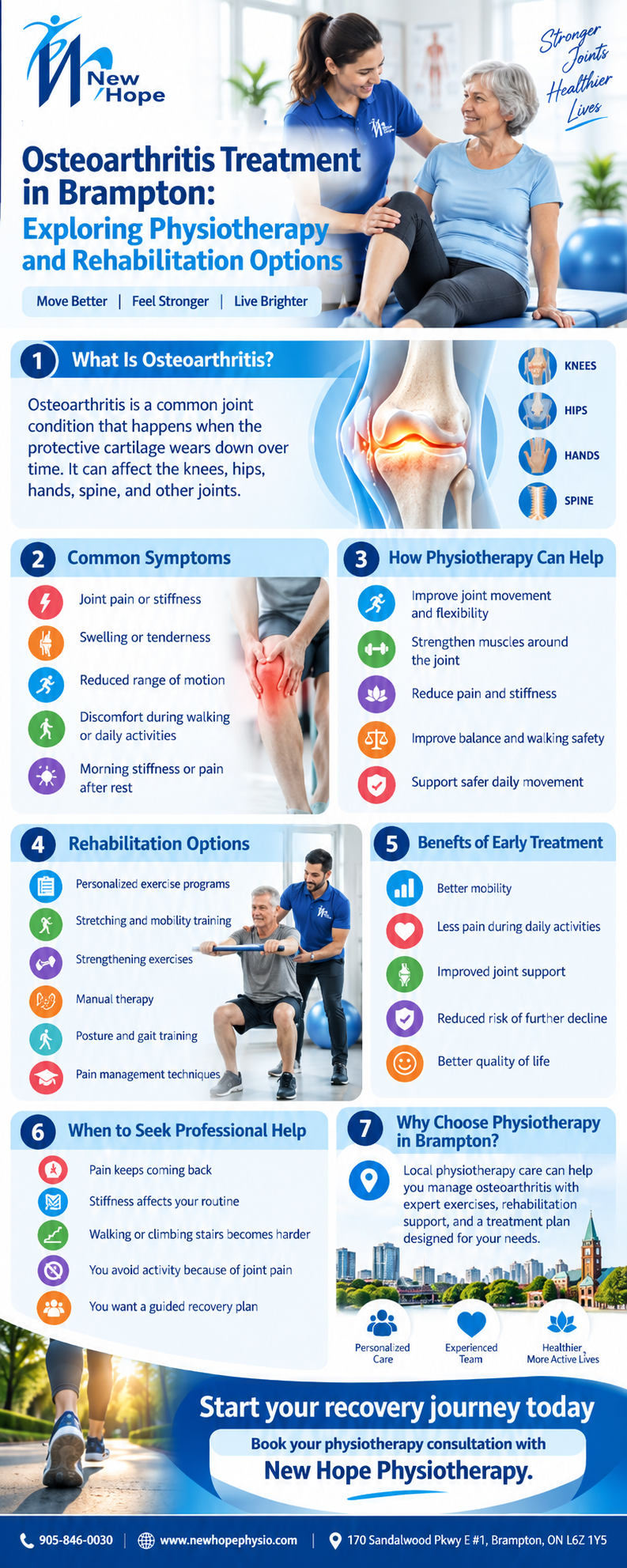
Rheumatic disease of osteoarthritis can manifest in any joint with involvement of the knee, hip, spinal, and palm joints being more observed. In the course of years the cartilage disappears from the affected joints allowing the bones to grind directly against each other and creating pain and inflammation. There are actually behaviours or no symptoms in some cases; however, there might be moderate to severe disability in some patients. Causes of osteoarthritis include ageing, joint injury as well as obesity and hence are important when planning for treatment.
Also Read: 5 Quick Home Remedies for Leg Cramp Relief and Prevention
Types of Osteoarthritis
This paper presents several forms of osteoarthritis that patients in Ontario as well as other regions may suffer from and which should be managed differently. Primary osteoarthritis is hereditary but associated with the aging process while secondary osteoarthritis results from conditions that put pressure on the joints. Understanding of such differences helps in the formulation of proper treatment regimens within the physiotherapy and rehabilitation prospective to eradicate the complaints within the needs of the client.
Osteoarthritis Physiotherapy for Osteoarthritis Treatment in Brampton
Physiotherapy is one of the most recommended treatments and actually very effective if one wants to get an osteoarthritis treatment in Brampton. They then work with patients to help the muscles surrounding affected joints develop flexibility and use techniques that reduce pain.An individualized physiotherapy treatment can ensure the mobility of the joints and the non-significant pain; however, most people desire to undergo osteoarthritis surgery.
Also Read: World Arthritis Day 2026: Common Arthritis Mistakes to Avoid
Integrative therapy, including the use of hands on the patient’s affected joint to facilitate joint and/or soft tissue movement, is typically a large component of osteoarthritis treatment in Brampton. Such sessions enhance the ability to move in order to relieve pain without necessarily employing surgeries or other bold actions. Electrical stimulation, ultrasound therapy, heat/cold treatment may also form part of the exercises for a certain recovery process.
Rehabilitation and Lifestyle Change
Brampton, Orangeville, and Malton rehabilitation facilities provide extensive programs that help to treat more than just the signs. These programmes are intended to change behaviour patterns and throughput are directed at altering diet, exercise and carrying out alterations in ergonomic factors which relieve pressure on joints. The specialists also advise and counsel patients on certain movements and positions to avoid throughout the day that worsens osteoarthritis and general joint health.
In some cases, doctors may recommend further treatment, such as injections or even surgery, for osteoarthritis based on its severity. However, rehabilitation aims to prevent the need for invasive procedures. Osteoarthritis is often manageable with physical therapy and positive lifestyle changes.
Read More: 36 questions should I ask a Physiotherapist?
Conclusion
Brampton’s current available treatment for osteoarthritis means involving the use of physiotherapy and rehabilitation can help with pain-free and non-invasive approaches that can help with joint health. Mentioning, with the help of a professional and supporting changes in the lifestyle, patients can improve the quality of their lives and decrease inconveniences because of osteoarthritis.
Read More: Arthritis : Physiotherapy Treatment and Management
FAQs:
1. What is osteoarthritis?
Osteoarthritis is a common joint condition that happens when the protective cartilage wears down over time. It can cause pain, stiffness, swelling, and difficulty moving the joint. It often affects the knees, hips, hands, and spine.
2. Can physiotherapy help with osteoarthritis?
Yes. Physiotherapy can help reduce pain, improve joint movement, strengthen muscles, and make daily activities easier. A physiotherapist creates a treatment plan based on your condition and goals.
3. What treatments are included in physiotherapy for osteoarthritis?
Your treatment may include:
- Gentle stretching exercises
- Strengthening exercises
- Manual therapy
- Balance and walking training
- Heat or cold therapy
- Education on protecting your joints
The treatment plan depends on your symptoms and the joints affected.
4. Which joints are most commonly affected by osteoarthritis?
Osteoarthritis most commonly affects the knees, hips, hands, spine, and shoulders. Knee osteoarthritis is one of the most common types seen in adults.
5. Can exercise make osteoarthritis worse?
No. The right exercises are usually one of the best ways to manage osteoarthritis. Low-impact exercises such as walking, cycling, swimming, and strengthening exercises can reduce pain and improve movement when done correctly.
Also Read: 10 Gentle Workouts to Help Lower Back Pain at Home
6. How long does it take to see results from physiotherapy?
Many people notice less pain and better movement after a few weeks of regular treatment and home exercises. Recovery time depends on the severity of osteoarthritis and how closely you follow your rehabilitation program.
7. Can physiotherapy help delay joint replacement surgery?
In many cases, yes. Physiotherapy can improve strength, flexibility, and joint function, which may reduce pain and help some people delay surgery. However, severe cases may still require joint replacement.
8. Is osteoarthritis completely curable?
There is no cure for osteoarthritis, but the symptoms can be managed successfully. Early treatment, regular exercise, weight management, and physiotherapy can help improve your quality of life and keep you active.
9. Who is at higher risk of developing osteoarthritis?
The risk increases with age, previous joint injuries, excess body weight, repetitive joint use, family history, and certain medical conditions. Even younger adults can develop osteoarthritis after sports injuries or accidents.
10. When should I visit a physiotherapy clinic for osteoarthritis?
You should book an assessment if you have ongoing joint pain, morning stiffness, swelling, difficulty walking, or trouble doing everyday activities. Early treatment can help reduce pain, improve movement, and slow the progression of symptoms.
Also Read: 5 Common Types of Back Pain You Should Know
Medical Disclaimer:
This information is for general education only and does not replace professional medical advice. Osteoarthritis treatment may vary for each person. Please consult a qualified healthcare professional for a proper assessment and treatment plan.

Leave a Comment