

Welcome to New Hope Physiotherapy
- Brampton 905-846-4000
- Malton 905-364-3900
- Orangeville 519-217-9300
- admin@newhopephysio.com
What is Physical Therapy / Physiotherapy?
 25 Mar 2023
- newhope
- 0 Comments
- 998
What is Physical Therapy / Physiotherapy?
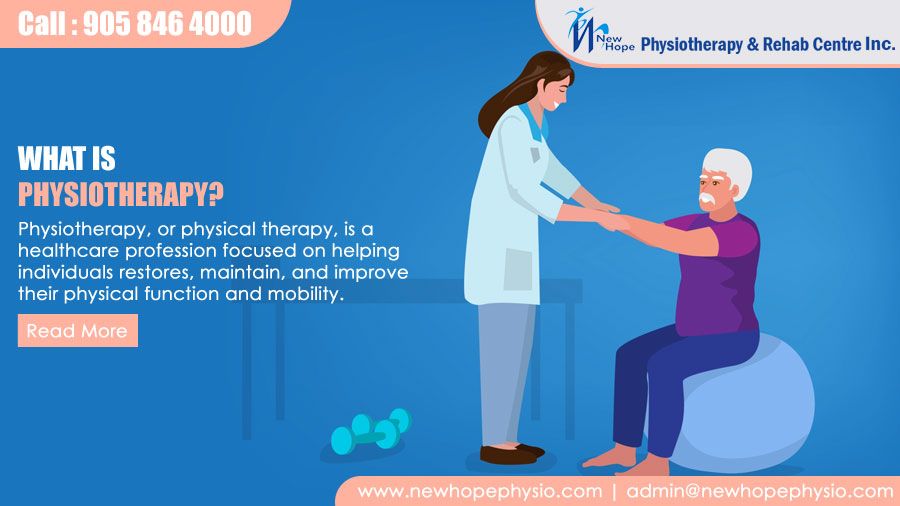
Physiotherapy, or physical therapy, is a healthcare profession focused on helping individuals restores, maintain, and improve their physical function and mobility. It involves using non-invasive techniques and exercises to treat various conditions and injuries affecting the musculoskeletal, neurological, and cardiovascular systems.
Also Read :10 Gentle Workouts to Help Lower Back Pain at Home
What Is Physiotherapy?
Physiotherapy — also called physical therapy — is a healthcare treatment that helps you move better, hurt less, and function more fully.
It uses exercise, hands-on treatment, and education to treat injuries and conditions affecting your muscles, joints, nerves, and more.
The Core Goal:
Physiotherapy aims to restore your body’s normal function — naturally, without surgery or medication.
What Makes It Different from Other Treatments:
| Physiotherapy | Medication | Surgery |
| Treats the root cause | Masks symptoms temporarily | Invasive — with recovery time |
| Drug-free and non-invasive | Side effects possible with long-term use | Risks and complications possible |
| Builds strength and mobility | Does not rebuild physical function | Often needs physio after anyway |
| Empowers self-management | Creates ongoing dependency | Limited self-management aspect |
Tip: Physiotherapy is often the best first step before considering medication or surgery — and sometimes prevents the need for either.
Also Read : 10 Exercises To Help Relieve Knee Pain
What Does a Physiotherapist Do?
A physiotherapist — also called a physio or physical therapist (PT) — is a trained and licensed healthcare professional.
They specialise in understanding how the body moves — and what happens when it doesn’t move properly.
Their Job Involves:
- Listening to you — understanding your symptoms, history, and goals
- Assessing your body — checking movement, strength, posture, and flexibility
- Diagnosing the problem — finding the root cause, not just where it hurts
- Building a treatment plan — personalised to your specific condition and lifestyle
- Treating you — using hands-on therapy, exercise, and specialist techniques
- Educating you — teaching you how to manage your condition independently
- Tracking your progress — adjusting the plan as your body responds
Physiotherapists work in hospitals, private clinics, rehabilitation centres, sports facilities, schools, and home care settings.
In Ontario, physiotherapists must be registered with the College of Physiotherapists of Ontario and hold a university degree in physiotherapy.
Also Read : 5 Common Injuries Treated By Physiotherapists In Ontario
What Conditions Can Physiotherapy Treat?
Physiotherapy can help with a much wider range of conditions than most people realise. It’s not just for sports injuries or back pain.
| Category | Conditions Treated |
| Muscles & joints | Back pain, neck pain, arthritis, sprains, strains, tendinitis, joint pain |
| Nervous system | Stroke, Parkinson’s disease, MS, spinal cord injury, sciatica, concussion |
| Respiratory system | Asthma, COPD, cystic fibrosis, post-COVID breathing difficulties |
| Heart & circulation | Post-heart attack rehabilitation, cardiac surgery recovery |
| Pelvic floor | Bladder leaking, pelvic pain, prolapse, pre/postnatal recovery |
| Balance & inner ear | Dizziness, vertigo, balance disorders (vestibular conditions) |
| Sports injuries | ACL tears, shoulder injuries, fractures, muscle tears, overuse injuries |
| Post-surgical recovery | Hip/knee replacement, spinal surgery, rotator cuff repair |
| Chronic pain | Fibromyalgia, long-term back/neck pain, complex regional pain syndrome |
| Paediatric conditions | Cerebral palsy, developmental delays, gait problems, scoliosis |
Not sure if physiotherapy can help your condition? Call a clinic and ask. Most physiotherapy teams are happy to answer a quick question before you book.
Also Read : 5 Conditions Causing Your Shoulder Pain
What Techniques Do Physiotherapists Use?
Physiotherapy is not one-size-fits-all. Your physiotherapist will select the right combination of techniques based on your specific condition and goals.
Exercise Therapy
Exercise is the foundation of nearly every physiotherapy programme. It builds strength, restores mobility, and helps your body heal from the inside out.
- Stretching — improves flexibility and reduces muscle tightness
- Strengthening — builds muscle support around injured or painful areas
- Balance training — improves stability and reduces fall risk
- Cardiovascular exercise — improves endurance and overall fitness
- Functional movement — retrains the body for real-life activities
Manual Therapy
Hands-on treatment applied directly to your body by the physiotherapist.
- Massage — releases muscle tension and improves blood flow
- Joint mobilisation — gentle movements to restore smooth joint motion
- Manipulation — precise, controlled movements to improve alignment
- Myofascial release — targets tightness in connective tissue (fascia)
- Dry needling / Acupuncture — fine needles to release muscle trigger points
Electrotherapy
| Technique | What It Does | Best For |
| TENS | Blocks pain signals to the brain | Chronic and acute pain |
| Ultrasound therapy | Reduces deep inflammation | Soft tissue injuries |
| Laser therapy | Promotes tissue healing | Inflammation, tendon issues |
| Shockwave therapy | Stimulates healing in tendons | Chronic tendinitis, heel pain |
| Electrical stimulation | Activates weak muscles | Post-surgical weakness |
Heat and Cold Therapy
| Therapy | When to Use | What It Does |
| Heat therapy | Chronic stiffness and muscle aches | Relaxes muscles, improves blood flow |
| Cold therapy | Acute swelling and sharp pain | Reduces inflammation, numbs pain |
Hydrotherapy (Aquatic Therapy)
Exercise performed in warm water. The buoyancy of water reduces pressure on joints — making movement easier and less painful. Particularly helpful for arthritis, neurological conditions, and chronic pain.
Also Read: 5 Common Types of Back Pain You Should Know
Education and Self-Management
This is one of the most important parts of physiotherapy — and often the most overlooked.
- Understanding your condition — why it developed and what drives it
- Home exercise programmes — to maintain progress between sessions
- Posture correction — for daily activities, work, and sleep
- Ergonomic advice — for your workspace, car, and home setup
- Lifestyle guidance — nutrition, activity levels, stress, and sleep
What Happens in a Physiotherapy Session?
Many people feel nervous before their first physiotherapy appointment. Here’s exactly what you can expect.
Your First Appointment:
| Step | What Happens |
| 1. History taking | Your physio asks about your symptoms, how long you’ve had them, your daily activities, and your goals |
| 2. Physical assessment | They assess your posture, movement, strength, and flexibility |
| 3. Diagnosis | They identify the root cause of your problem — not just where it hurts |
| 4. Treatment plan | A personalised plan is explained clearly and agreed with you |
| 5. First treatment | In most cases, treatment begins at this first session |
| 6. Home programme | You receive exercises to do between appointments |
How Long Is a Session?
Most physiotherapy sessions last between 30 and 60 minutes. Your first appointment may take a little longer due to the assessment.
Also Read: 5 Quick Home Remedies for Leg Cramp Relief and Prevention
How Many Sessions Will You Need?
| Condition Type | Typical Number of Sessions |
| Minor acute injury (recent sprain, strain) | 4 to 8 sessions |
| Moderate injury or pain | 8 to 12 sessions |
| Post-surgical rehabilitation | 12 to 24+ sessions over several months |
| Chronic or complex conditions | Ongoing — reviewed regularly |
| Neurological conditions (stroke, Parkinson’s) | Long-term — focused on maintenance and function |
The number of sessions you need depends on your condition, how long you’ve had it, and how consistently you do your home exercises.
The Benefits of Physiotherapy
Physiotherapy offers benefits that go far beyond just reducing pain. Here’s what consistent physiotherapy can do for you.
| Benefit | What It Means for You |
| Pain relief | Less pain during daily activities and better quality of life |
| Improved movement | Greater range of motion, flexibility, and physical freedom |
| Stronger muscles | Better joint support and reduced risk of re-injury |
| Faster recovery | Return to work, sport, and normal life sooner |
| Avoid surgery | Many conditions resolve fully with physiotherapy alone |
| Less medication | Reduced reliance on painkillers as function improves |
| Injury prevention | Addresses imbalances before they cause problems |
| Better mental health | Less pain and more movement leads to improved mood and energy |
| Long-term independence | Especially important for older adults and those with chronic conditions |
Physiotherapy is one of the only healthcare treatments that empowers you to actively participate in your own recovery — building skills you can use for life.
Is Physiotherapy Right for You? — Quick Guide
Physiotherapy is likely a good fit if you:
- Have pain that hasn’t improved after a few days of rest
- Are recovering from an injury, surgery, or medical event
- Have a chronic condition affecting your movement or daily life
- Experience recurring pain that keeps coming back
- Want to prevent injury and improve your physical performance
- Have been told by a doctor that you may benefit from physiotherapy
You probably don’t need physiotherapy if:
- Your pain is very mild and improving on its own within a day or two
- Your concern is purely cosmetic with no physical impairment
- You have a serious medical emergency — go to the ER first
When in doubt — book an assessment. A physiotherapist will tell you honestly whether they can help, and refer you elsewhere if something else is more appropriate.
FAQs
Q1. What conditions can physiotherapy help with?
Physiotherapy can help with various conditions, including musculoskeletal injuries, neurological conditions, respiratory problems, sports injuries, and chronic pain.
Q2. Do I want a specialist’s reference to seeing a physiotherapist?
Often, a doctor’s referral is unnecessary to see a physiotherapist. However, some insurance companies or healthcare plans may require a referral for coverage.
Q3. How long does a physiotherapy session last?
The length of a physiotherapy session can vary depending on the nature and severity of the condition treated but typically lasts between 30 and 60 minutes.
Q4. Can physiotherapy be painful?
Physiotherapy can be uncomfortable at times, especially during manual therapy or exercise. However, your physiotherapist will work with you to manage discomfort and ensure the treatment is as comfortable as possible.
Also Read : What Is The Fastest Way To Heal A Frozen Shoulder?
Q5. How many physiotherapy sessions will I need?
The number of physiotherapy sessions required varies depending on the nature and severity of your condition. Your physiotherapist will work with you to develop a treatment plan and provide an estimate of the number of sessions required.
Q6. How long does it take to see results from physiotherapy?
The time it takes to see results from physiotherapy varies depending on the nature and severity of the condition treated. Some patients may see improvements within a few sessions, while others may require more time.
Q7. Can physiotherapy prevent future injuries?
Yes, It can help prevent future injuries by improving muscle strength, flexibility, and overall physical function. Your physiotherapist can also provide advice on injury prevention strategies.
Q8. How do I find a qualified physiotherapist?
You can find a qualified physiotherapist by asking for a referral from your doctor, checking with your insurance company, or searching online for licensed physiotherapists in your area. Ensuring your physiotherapist licensed and has experience treating your specific condition is important.
Final Thoughts
Physiotherapy is one of the most effective, evidence-based healthcare treatments available — and it’s far more versatile than most people realise. It treats everything from a simple ankle sprain to the complex effects of a stroke.
Whether you’re in pain right now, recovering from surgery, managing a chronic condition, or simply want to stay active and healthy for longer — physiotherapy has something to offer you.
The most important step is simply getting started. Book an assessment, find out what’s actually causing your problem, and take the first step toward moving better and feeling better.
Also Read: Dry Cupping vs Wet Cupping: Key Differences & Treatments

Leave a Comment